UlasanAnime.com – As the anime seasons conclude, a review of the shows I’ve been following seems appropriate. Perhaps it will serve as a reminder that life extends beyond the confines of the Arctus Prima.
Simoun vs. Ouran High Host Club
While I don’t shy away from comparing dissimilar things, it struck me that Ouran High Host Club lacks precisely what makes Simoun so compelling.
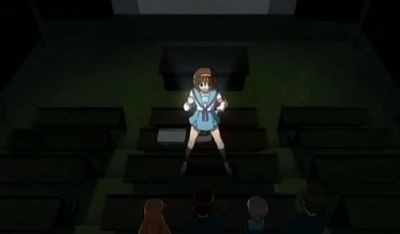
I often find myself critiquing Suzumiya Haruhi no Uuutsu, suggesting that Kyoto Animation, with the exception of perhaps Air, has struggled to imbue their shows with a certain “feel.” It’s difficult to articulate, but it’s akin to cooking chicken breasts incorrectly, resulting in a texture like soft chalk. Admittedly, the effect isn’t nearly as pronounced. FMP: TSR was as close to that as it gets, and even then, it wasn’t terrible. Perhaps it’s a matter of consistency? Does it lack “soul”?
However, I believe this is precisely why Ouran High Host Club reminds me of Suzumiya Haruhi no Uuutsu. Despite its visual impressiveness, Ouran fails to achieve the visceral impact that Suzumiya Haruhi possessed. Yet, much like Suzumiya Haruhi, Ouran offers a highly cerebral experience; it is remarkably intelligent. The characters are designed to be both flat and multidimensional to facilitate the gags, both visual and mental, and I feel the show executed this competently. Furthermore, my favorite aspect of the show is its direction, which is sharp and clever. Even in its less successful moments, it consistently impresses. In certain technical aspects, it surpasses many anime I recall, even if it couldn’t reach the exceptional peaks of shorter TV anime that are produced with significant passion and resources.
I anticipate that in the future, I will come to appreciate Haruhi once more. But for now, this show stands as the diametric opposite of Simoun: it is polished, it doesn’t foster deep emotional attachment, it impresses visually and intellectually, yet it leaves one with a sense of longing.
Tsuyokiss vs. Simoun
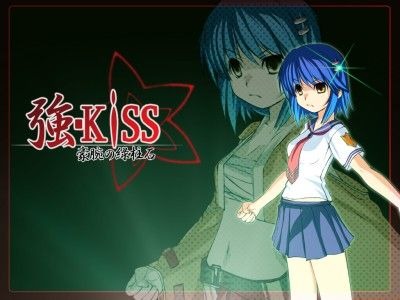
In some respects, Tsuyokiss only scratched the surface of what Simoun achieved. However, by dedicating all 13 of its episodes to that singular focus, it succeeded remarkably well when viewed through that specific lens. That singular focus, perhaps best described as a dialogue between the anime production team and the audience, attempts to entice and gratify. It acknowledges its source material is flawed and doesn’t shy away from that fact, even if it represents a severe case of original-adaptation-cide. It is unapologetic, implicitly expecting the viewer to recognize this. Ultimately, it delivers something akin to a B-grade high school group project, but because you were part of the group, a sense of sentimentality arises.
Simoun, on the other hand, moved past such a stage when Mamiina erupted with raw emotion. Given its length, which is double that of 13 episodes, it cannot afford to adopt a similar approach. Their initial journey with Wauf was entirely dedicated to this theme.
Simoun vs. Blood+
Blood+ is a remarkably polished series, with its production values shining through. It is intelligent, yet it adopts the pacing of a typical 90s anime aiming for dramatic effect. In retrospect, the story is powerful. However, much of its impact was diminished by a formulaic, one-fight-per-episode structure that was decidedly mediocre. While there’s a sense of overarching planning and vision, on a granular level, it fails to engage, entice, or amuse. It strives too hard to be cool throughout, when it could have achieved more by shedding the melodrama and simply moving the plot forward, incorporating some unexpected twists.
Alternatively, one could view this as a sign of respect. Blood+ assumes the audience is aware of its intentions, and it’s merely a matter of waiting for them to unfold. Nevertheless, it feels as though this formalistic pretense hinders my ability to connect with Saya’s plea.
Simoun vs. Honey & Clover 2
I sincerely hope Mamiina did not confuse rats with hamsters.
The concluding 12 episodes of Honey & Clover were quite good, in my opinion. However, the hiatus between episode 26 and the recap episode 27 significantly detracted from the experience. We were poised to accept the conclusion of the first 26 episodes (which I thought was a fitting end to something that “doesn’t end”). Yet, now there is a definitive closure.
You might also be interested in : Another Decade of Nurturing the Yamato Nadeshiko Spirit
By episode 26, one has a clear understanding of Takemoto’s trajectory and the dynamics between Rika and Mayama; Yamada and Nomiya; and, of course, Hagu. I cannot claim to be entirely surprised, but the way it concluded felt appropriate; things resolved as they should have (apart from the minor peculiarity concerning Hanamoto-sensei, which is likely to confuse many).
But was this resolution solely for the sake of having an ending? Is it merely an extended concluding sequence? This would certainly make Honey & Clover a remarkably unique anime. Not only was it unconventional as a romantic comedy, but it also featured the longest ending sequence ever.
Higurashi no Naku Koro ni vs. Simoun
Satoshi visits the Spring, only to discover that boycotts and local conspiracies led to the murders of Onashia and her relatives due to dam construction at the ruins. Add to this drugs, dogfighting, gruesome torture, and identity crises. Tempus Spatium makes a brief appearance in the form of Mion’s tattoo.
Higurashi was excellent up to episode 5. From that point onward, it attempts to explain and expand upon the seemingly wholesome mix of “loli horror,” but it never quite recaptures its initial peak. I would describe its trajectory as a largely linear decline. While this genre is not particularly to my taste, I did find enjoyment in the limited aspects of the show that appealed to me. The opening theme itself was remarkable for effectively setting the mood.
Bokura ga Ita vs. Simoun
One evokes a feeling of discomfort in me, the other does not? And while I believe I could comfortably watch Bokura ga Ita with others who are not anime enthusiasts, I would feel uneasy watching it even by myself. During those moments, I wish I were watching Ouran High instead. It’s less unsettling and more aesthetically pleasing.
Nevertheless, it offers a pleasant, alternative perspective within the same genre. I’m simply uncertain if I can endure it at all. It drives me to distraction.
And let’s not forget. I would rather have someone walk in on me watching Neviril kiss another equally “moe-looking” character than witness stick-figure Yano and Bokura ga Ita’s simplistic visuals. It’s that bad. Or perhaps, that good? I suppose this is shoujo anime in its purest form.
Simoun vs. Coyote Ragtime Show
I would be quite pleased if Angelica were to form a relationship with Amuria or Onashia, or someone similar. She is an elegant, enlightened, and old-fashioned young woman, and I believe without her, the Coyote Ragtime Show would be a mere shadow of its current self. I enjoyed the show, that said, because it possesses a certain tenacious spirit. Unfortunately, objectively speaking, the show faltered in several significant areas. I attribute this squarely to Katana, Bishop, and Mister themselves. Given their importance to the narrative, they are remarkably… lame. Swamp, as the token black character, at least fulfilled his role adequately. Considering we have three (potentially four or five if the Coyotes split up) narrative perspectives, at least two out of the three involve something less tedious, such as the 12 Sisters or Chelsea and Angelica. The show was not entirely unenjoyable to watch. However, as a proof of concept, I believe it fails miserably. Perhaps it would have been more effective if Bishop and Katana had more significant roles rather than serving as mere sidekicks.
Simoun vs. Aria the Natural
An episode of Aria, once any trace of conflict is removed, is akin to an episode of Simoun. While the characters may not kiss each other, their interactions are suggestive of such. I believe what truly makes Aria work is the Super Deformed (SD) animation. I disliked Aria-prez when Aria was first animated some time ago, and now that is largely a distant memory – it demonstrates the remarkable capacity of the human brain to ignore or filter out elements it finds unpleasant. This can even extend to perceived same-sex romantic undertones. It would be as irritating as Aria-prez’s incessant whining.
And some might even find enjoyment in that!