UlasanAnime.com – The discourse surrounding anime and feminism often prompts questions about the quantity of media one needs to consume to form a comprehensive understanding. This inquiry also touches upon the viability of the “otaku academic” and whether it’s a path one must tread alone.


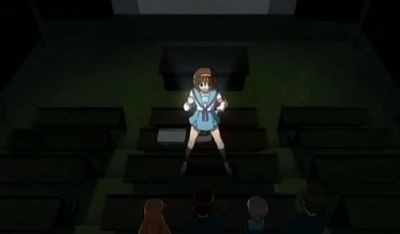
The broader context for these discussions is the ongoing gender revolution in Japan. Over the past few decades, significant shifts have occurred in the cultural, social, economic, and political spheres concerning women’s roles. Examining this from the perspective of media consumers is one of many analytical frameworks academics employ. When discussing Japan, it’s essential to incorporate “popular visual culture,” a concept that might resonate with works like Genshiken.
However, for many, the changes observed through the lens of anime and manga appear modest. Personal experiences often corroborate this sentiment.
In Zyl’s column, it’s evident that some share this view. This perception might stem from the inherent nature of Japanese media – its corporate structure and entanglement with significant financial interests, mirroring global industries, particularly those in the US. This observation extends to the academic literature discussing women and their portrayal in popular media, including manga and anime. The notion of entrenched academics, detached from contemporary issues, is not uncommon, especially when examining fields where women are underrepresented or focusing on anime primarily marketed towards a male audience. A significant portion of anime, especially those that gain international traction, are adaptations of shounen and seinen manga.
This post will delve into some reactions to Zyl’s column and the subsequent comments.
First: Defining a compelling example of feminist empowerment in anime characters is crucial. Western scholars frequently cite Miyazaki’s heroines, such as Chihiro from Spirited Away and San from Princess Mononoke. While these are popular choices, the character of Sophie from Howl’s Moving Castle might offer a stronger example, though perhaps less frequently considered.
Age is a significant factor. Sophie carries herself with the maturity of a young adult, whereas San and Chihiro exhibit more childlike qualities. The critique here is that a child-like demeanor, regardless of gender, doesn’t inherently lend itself to a particularly poignant feminist analysis. It lacks the probative force. Sophie, along with Kiki from Kiki’s Delivery Service, presents a more compelling case. The character of Nausicaä is more complex and warrants further examination later.
Gender-based achievement is another critical point. A common observation regarding Chihiro is that many of her accomplishments could have been achieved by any attentive and diligent child. The question arises: if the Wolf-God in Princess Mononoke had adopted a boy instead of a girl, would San’s character arc remain the same? While the film’s narrative might change, San as a character and plot device might remain consistent. This is less easily asserted for Sophie, and perhaps even Kiki, though there’s more flexibility in Kiki’s portrayal.
The role of gender within the film’s narrative is also pertinent. Kinsella’s observation about Spirited Away and its parallels to historical brothels is insightful. While it might have been unconventional for a boy to work in Chihiro’s capacity, the film’s context renders it fancifully ambiguous. This point can be interpreted in various ways concerning cultural significance and the interplay of the female gender in contemporary society. The traditional Chinese tale that inspired Disney’s Mulan shares a similar message about piety, celebrating female ingenuity, tenacity, and overcoming dire difficulties. The pertinent question is whether gender roles themselves are merely another obstacle these heroines conquer. This also relates to the critique of Nausicaä. San, in many ways, serves as a foil for Ashitaka, and her gender might primarily serve to highlight the romantic undertones of their relationship.
Moving beyond Ghibli, positive examples can be found outside of the most prominent North American releases, such as Eboshi Gozen. The core argument is the necessity of moving beyond superficial analysis and applying a healthy dose of context.
Second: The role of men is intrinsically linked to discussions about women. This point becomes particularly relevant when considering characters like Major Motoko Kusanagi from Ghost in the Shell. She navigates a predominantly male-dominated world. In real life, law enforcement and military fields tend to have a higher proportion of men than women. Her team of ex-military personnel, coupled with Aramaki’s political maneuvering, highlights the pervasive nature of politics, another male-dominated sphere. The Major’s unique disposition within this setting, which mirrors real-world sociological patterns, might be making a deliberate point. Kinsella’s interpretation of this as “fantasy-fulfillment” and “phallic girls” is a perspective, but its applicability to Ghost in the Shell is debatable.
However, the television series adaptation of Ghost in the Shell presents a slightly different portrayal of Motoko Kusanagi. The “motherhood episode” comes to mind, but beyond that, the series depicts a cutthroat world where the Major strategically utilizes her sex appeal and gender positioning as tools for manipulation.
Comparing Ghost in the Shell with more conventional “girls-with-guns” anime raises interesting questions. Perhaps older series like Gunsmith Cats offer a closer comparison, or even Black Lagoon.
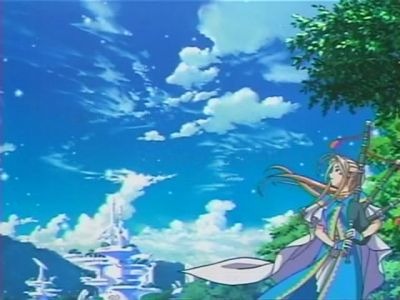
Third: To effectively discuss feminism in anime, selecting the appropriate series is crucial. For instance, using Aria THE ANIMATION might be less relevant, while Naruto and One Piece offer more substantial ground for analysis. Paprika also presents a compelling case, though Ghost in the Shell: Innocence might be less suitable for a feminist critique.
The criteria for selection involve considering the intended audience and the overarching themes of the work. Paprika, while an arthouse film, is based on a renowned sci-fi author’s work and delves into gender roles. One Piece boasts a massive female fanbase, and Naruto also attracts a significant number of female viewers. Aria is more of an escapist seinen fantasy, while GITS: Innocence is an arthouse film deeply preoccupied with a specific set of philosophical and technological themes.
Thematic content is another key factor. Paprika explores a woman’s journey of self-discovery amidst dreams, reality, and a labyrinth of mysteries. Aria focuses on young women training to become gondola operators in a fantastical Venice. One Piece centers on pirates, crew-building, and treasure hunting. Naruto is a coming-of-age story about self-redemption. GITS: Innocence follows a detective grappling with a new reality and a criminal investigation involving his former partner, who has become an artificial entity.
A significant challenge, as alluded to in the initial paragraphs, is the potential lack of familiarity within academia with the nuances of these works. A deep engagement with anime and manga requires not only an understanding of otaku culture but also a thorough consumption of the media itself. To apply a feminist lens seriously, one needs individuals who possess both academic rigor and a genuine understanding of the medium’s intricacies.
You might also be interested in : Sphere Observation
Further discussion could explore elements like the ability to naturally reassign one’s sex at age 17, as depicted in Simoun, which can be interpreted as a profoundly empowering feminist subtext.