UlasanAnime.com – The concept of franchising allows for the creation of characters and worlds that extend beyond their original medium, fostering a unique form of engagement with audiences. This is particularly evident in the anime industry, where characters can become iconic figures, transcending their initial narratives to permeate various forms of merchandise and fan creations.
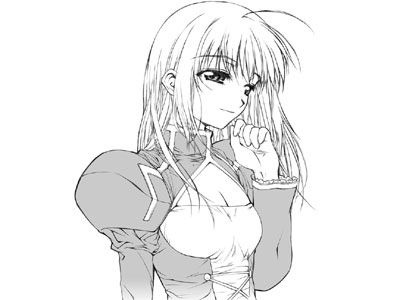
The article delves into the discussion of how certain characters, through the nature of their franchise, become more than just elements of a story. They develop a distinct presence that allows for their recognition and appreciation even when removed from their original context. This is exemplified by the characters from Type-Moon’s Fate/Stay Night, Saber and Rin Tohsaka.
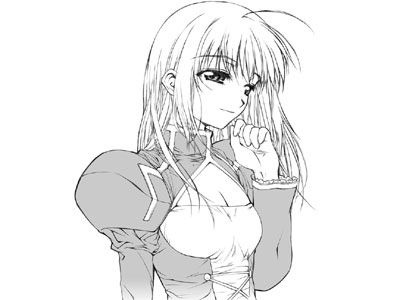
Saber, for instance, is recognizable by her role as a summoned magical being participating in a contest, her heroic yet deceased status, her gender, her swordsmanship, her distinctive blonde hair and blue eyes, and her practical armor. Her solemn demeanor and serious nature are also key identifiers, often reflected in her official character art.
Rin Tohsaka, while also a serious female character, diverges significantly in her portrayal. She is depicted with a darker aesthetic, a blend of gothic and Japanese schoolgirl styles. Her expressiveness through facial gestures and body language, a trait less prominent in Saber, contributes to her distinct personality. Rin embodies an attitude that might remind some of the Oujosama archetype.
The author points out that both Saber and Rin are characters within a franchise, and much can be understood about them without needing to recall specific plot points from the anime or game. This approach is a common modus operandi in anime concept and character design. Anime companies actively market franchises, not just individual products like DVDs or television advertisements. They attach products to concepts, be it the story, the characters, or even just a name, thereby generating revenue through a wide array of merchandise ranging from video games to cell phone straps, massagers, and even maid cafe services.
However, the article contrasts this with characters like Youko Nakajima from Twelve Kingdoms. The author praises Twelve Kingdoms as an exceptional high-fantasy show with strong characterization, but suggests that its characters, including Youko, tend to remain confined within the narrative of the screen or the pages of text detailing their adventures.
You might also be interested in : Altered Reality
While this confinement doesn’t inherently prevent merchandise from being created around these characters, the author questions whether these characters truly live on in the minds of fans and readers in the same way as those from more franchised properties. The article ponders if this leads to the same level of intense fandom that inspires the creation of fanfiction, doujinshi, and other derivative works.
The author posits that Youko Nakajima is a character “imprisoned by her story.” The significance of her existence is deeply tied to her narrative context. Despite the rich elements within the Twelve Kingdoms setting, such as the Shokei and Suzu arc, the author feels that Youko’s journey is framed more as a serialized drama within juvenile fantasy novels, potentially hundreds of years in scope, rather than a narrative that encourages broad character extrapolation.
There’s a desire to know what happens next with Youko and to participate in her character growth and the ongoing exploration of the Twelve Kingdoms’ world. However, the author suggests that this desire is somewhat constrained, preventing fans from venturing independently into the character’s potential future or alternate scenarios.
This leads to a reflection on the power of creative expression and the dynamic between creator and consumer, where the consumer can also become a creator. It’s described as a subtle yet amusing concern related to the content layer of a franchise.
Ultimately, the article concludes by advocating for “open endings” as a concept that fosters greater creative freedom and fan engagement, allowing characters and their narratives to resonate more broadly and inspire a more dynamic form of fandom.