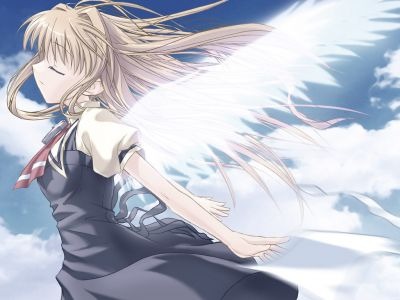
UlasanAnime.com – The world of anime is vast and diverse, with a significant portion dedicated to science fiction narratives. These stories range from the lighthearted and whimsical, like “Aria” and “Manabi Straight,” to the epic and sprawling, such as “Legend of the Galactic Heroes” and the myriad “Gundam” series. Some lean towards fan service, like “Vandread” or “Gravion,” while others offer complex, mind-bending experiences akin to “Serial Experiments Lain” or “Megazone 23.” Across this spectrum, anime set in a science fiction context can be broadly, though not exclusively, categorized into three main types.
You might also be interested in : Buyer’s Remorse Returns
The first category is drama-oriented anime. Shows like “Manabi Straight” and many “Gundam” titles fall into this group. While the plot might be driven by a science fiction or fantasy element inherent to the setting—such as a school-wide video podcast system being hijacked or an unending war between Earth and its colonies—the core appeal often lies in the viewer’s emotional investment in the characters. These series essentially present familiar storytelling tropes within a sci-fi framework, adding a unique flavor. Other examples include “Utawarerumono” and “Evangelion.” “Legend of the Galactic Heroes,” as a space opera, is an obvious fit, while “Tenchi Muyo!” is practically a “Star Wars” homage where the audience’s primary concern is the romantic entanglements of the protagonist.
The second category is setting-oriented anime, where the backdrop and subject matter are crucial to the appeal. For those who appreciate intricate geopolitical landscapes in speculative futures, “Ghost in the Shell: Stand Alone Complex” (GITS: SAC) offers immense enjoyment due to its detailed world-building. Similarly, “Starship Operators” captivates with its blend of politics and a focus on low-tech space warfare. The acclaimed “PLANETES” excels in this regard, as does “Last Exile,” which combines charming characters and developing personalities with a breathtakingly atmospheric setting. Early and later episodes of “Evangelion” also heavily emphasize their unique settings.
The third category is idea-oriented anime. This classification includes shows that prioritize a central concept or idea over the substance of their setting or character drama. The expression of these core ideas often overshadows the narrative’s character development. “Ghost in the Shell,” particularly the theatrical films, can be seen as fitting here. “Serial Experiments Lain” is a prime example, and “Bubblegum Crisis” might also qualify, though it heavily relies on its setting. The “Evangelion” movies could also be considered in this category.
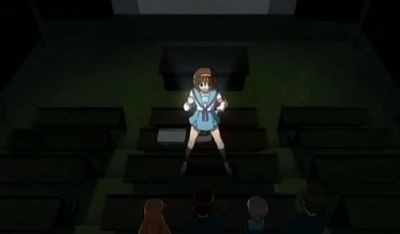
Some anime successfully blend all three elements, but it’s arguable that every science fiction anime touches upon at least one of these categories. For instance, “The Melancholy of Haruhi Suzumiya” can be viewed as both setting and drama-oriented, with a central idea driving the narrative. The plot unfolds as a juvenile sci-fi mystery, focusing on “what happens,” but viewers are equally invested in the relationships between the characters. “Evangelion” spans all three categories, but it notably uses character drama to convey its fundamental ideas, often leading to intense and impactful moments. “Scrapped Princess” follows a similar structural pattern, employing a straightforward theme that doesn’t require overt exposition. The elaborate setting, much like in “Evangelion,” serves to draw the audience in. Shows like “Ergo Proxy,” “Solty Rei,” and “Kurau: Phantom Memory” utilize fantastic settings as an initial hook, but their core lies in character drama with a sci-fi mystery plot serving as the primary draw.
Ultimately, while these three elements—drama, setting, and idea—are frequently present in the science fiction anime genre, they serve distinct purposes. Pursuing satisfaction in one category may not necessarily fulfill expectations for another, highlighting the diverse ways in which sci-fi narratives are constructed and experienced within anime.