UlasanAnime.com – TV anime distinguishes itself from other forms of animated television through its emphasis on soundtracks, a characteristic that often shines through even in less impressive series, demonstrating significant investment.
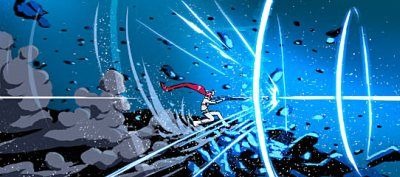
This year, the standout anime for its original soundtrack is undoubtedly The Heroic Age. However, this selection would solely be based on its soundtrack. If the criteria were broadened to include how effectively the music is integrated into the show alongside its inherent quality, then Gurren Lagann would be the clear choice to satisfy that particular preference.
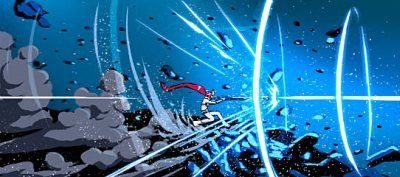
Gurren Lagann, irrespective of individual opinions, undeniably made a significant impact this year. Gainax revisited and attempted to redefine the giant robot genre for the 21st century. While the success of this endeavor is debatable, it’s undeniable that they crafted a vibrant and engaging portrayal of the history of giant robots from their unique perspective.
In this retrospective, a discussion of the fan response to Gurren Lagann, encompassing both positive and negative reactions, would be appropriate. However, to maintain brevity and prevent this post from becoming excessively long, a mere mention of the fan reception should suffice to recall events such as the controversies surrounding Mixi, changes in staff, and the author’s personal appreciation for the visual style of episode 4.
(As a side note, Gainax consistently demonstrates a responsiveness to fan feedback and implements swift adjustments. This is a quality that one wishes could be attributed to the majority of anime corporate entities.)
You might also be interested in : Seeking Quality Industry Blogs
Furthermore, the conclusion of Gurren Lagann warrants mention, particularly its treatment of Nia and Simon. This is because life is best lived by those who embrace its journey with energy and passion, rather than those who approach its end with timidity. Both Nia and Simon certainly lived their lives to the fullest. While the ending might be disappointing for some, it remains honest in its own subtly deceptive manner. The epic montage that characterizes the first half of the series gives way to ambiguity, reflecting a loss and rediscovery of purpose for characters whose lives were defined by fighting and love. This narrative arc offers redemption even as hardship and heartache loom.
In a similar vein, Gurren Lagann presents an arguably artificial notion of masculinity. Comparing it to older samurai films, where the concept of manliness is depicted with more subtlety and restraint than the “ROW ROW FIGHT DA POWAH” ethos, reveals a shared, realistic approach to the fate of a warrior who has outlived their purpose. A beautiful parallel exists here, one that may not have been explicitly drawn: just as samurai faded with Japan’s modernization during the Meiji era, so too do childhood dreams disappear with adulthood. The fantasies of fighting robots find little place in the adult world. Individuals like Simon, in today’s society, are often perceived as rugged, uncouth, drunk, or as losers, deviating from the idealized figures often portrayed in anime.
Finally, the music deserves commendation. The rap tie-in is appreciated for its exploitative effect and the compelling tension it creates between the orchestral background and the foreground dialogue. It is both amusing and slightly irritating that the soundtrack is mixed like an OST, causing the vocal tracks to stand out jarringly when creating a personal mix, thus requiring normalization. Nevertheless, Taku Iwasaki delivered his signature masterful instrumentation and orchestration, offering a stylistically diverse range of music that complements the expansive scope of the work.
Setting aside the often-overlooked image album releases (a habit the author has adopted, partly due to the overwhelming volume of Kyoani-related merchandise), Gurren Lagann‘s primary shortcoming was the unavailability of its complete soundtrack for purchase. However, this is a common issue and one that can be overlooked, especially since the handful of tracks that personally define the show for the author were included on the Best Sounds CD.
With all that has been discussed, there are likely several other notable soundtracks from the year that deserve mention. A good starting point for further exploration is j1m0ne’s top 3 soundtracks for 2007. For instance, Asatte no Houkou would receive more recognition if it were a 2007 release, but it remains an excellent soundtrack nonetheless. Numerous other soundtracks warrant discussion, which would necessitate a dedicated blog post. Therefore, readers are encouraged to seek out other reviews for a broader perspective.
This post is the fifth in a series dedicated to highlighting the most memorable and remarkable moments of 2007, with a particular focus on soundtracks at times. Were the author not musically illiterate (to a degree) and capable of reading Japanese, a dedicated anison blog would likely be in existence, as the topic is one the author never tires of discussing.
- Introduction
- Part 1 – Makoto Shinkai
- Part 2 – Baccano!
- Part 3 – Sola
- Part 4 – Hitohira
- Part 5 – Gurren Lagann
- Part 6 – Code Geass
- Part 7 – ef, Hidamari Sketch, Sayonara Zetsubo Sensei
- Part 8 – Manabi Straight
- Conclusion