UlasanAnime.com – When Kamiyama visited the USA last year, he inquired about what made people find “Eden of the East” interesting. While there are many appealing aspects to “Eden,” it’s believed he was particularly focused on its social commentary. “C,” in many respects, shares this characteristic.

This season, it felt as though John Titor was impersonating Juiz, rather than Msyu. This Noitamina show doesn’t shy away from its message. In fact, episode 8 was perhaps overly explicit in attempting to highlight Japan’s issues, almost stating them outright. This approach is understandable, given that the premise and execution are already somewhat exaggerated.
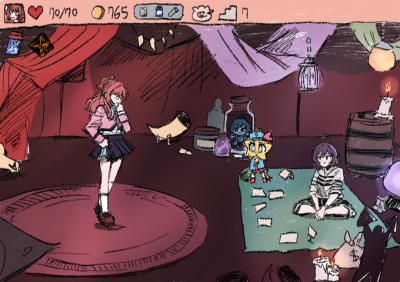
It’s hard to imagine using virtual Pokémon battles to illustrate the concept of “you don’t know what you’ve lost until you’ve lost it.” At least some money was spent, which is an improvement over “Speed Grapher,” as the latter explained the meaninglessness of such actions. And we’re not even halfway through the series.
The questions I have are similar to those Kamiyama might pose: What do you believe “C” is about? Unless you’ve read articles about the broader financial and social challenges facing Japan’s future, does this show even make sense?
You might also be interested in : 2011 Convention Season: Early AX Scouting
It’s somewhat amusing to consider that in America, there are distinct Democratic and Republican parties. In Japan, they are still striving to fully establish a two-party system, and it remains a dynamic between “the Established” and the rest. One wonders why this isn’t as pronounced in the American economy. Perhaps it’s due to higher rates of procreation and a greater willingness in the US to allow immigration on a larger scale, unlike a more xenophobic Japan. It’s also possible that people are genuinely more inclined to move to the US, having navigated the crucible of racial integration for the past 200 years, and continuing to do so. The outcome remains uncertain.
This leads to a thought: anime? Really? Shouldn’t the aim be a broader medium than a 2 AM TV show targeted at otaku? There’s an empowering aspect to understanding the bigger picture, and how otaku are often part of this “lost generation,” as plainly illustrated by “Eden.” The challenge lies in determining the appropriate context. It can be argued that anime and manga have consistently been at the forefront of controversial topics in modern Japan, and now it’s simply engaging in a different kind of discourse.
However, there’s also a sense of exploitation, considering how anime and media-mix projects are financed and who the ultimate consumers are. Irony is an unavoidable aspect of a capitalist society, isn’t it.