UlasanAnime.com – The American anime convention landscape, and its significant role in the evolution of what is now recognized as “nerd culture,” is a fascinating subject, though the latter part of this observation might be considered a speculative leap.

The core of this discussion revolves around American anime conventions and their surprising position as precursors to the modern con phenomenon. This idea has been brewing for a while, but it crystallized after reading Lance Heskill’s blog post detailing his eight-year tenure as a marketing professional for Funimation. His experiences, which involved attending various specialized conventions beyond just anime-related ones, highlighted this connection. His article, “Why I Love Fan Conventions and Why They Matter,” is highly recommended, especially for those curious about anime cons or for sharing with others.
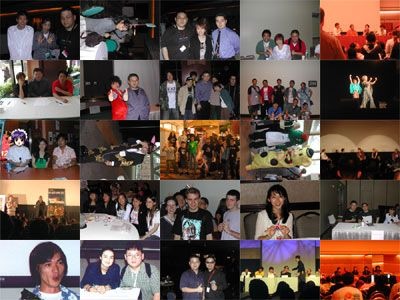
 By 2011, the significance of anime conventions in shaping modern con culture was likely already evident to seasoned attendees. Roland Kelts touched upon this in his 2008 book, “Japanamerica,” and by 2009, the observation seemed quite apparent. San Diego Comic-Con, for instance, had already achieved massive scale. The combined influence of events like AX and SDCC presented a compelling model for conventions across the US. These events infused a sense of grandeur and occasion, fostering the excitement of cosplay and the opportunity to connect with like-minded enthusiasts from across the nation and even internationally. Coupled with special programming designed to amplify fan engagement, the experience of being surrounded by passionate individuals, even strangers, created a unique atmosphere. Anime conventions stand out as a particularly strong example of this, and arguably, one of the earliest manifestations.
You might also be interested in : Food Coma in Hanasaku Iroha
A key element to consider is the rise of cosplay culture, which distinguishes anime cons from what might be termed “LARP” style cosplay prevalent at fantasy and sci-fi conventions. While cosplay in the anime context often leans towards a fashionable expression for many Americans, the “LARP” style can be more escapist. In reality, both motivations often intertwine. The outcome at anime conventions is that many attendees treat cosplay like a masquerade – a distinctive outfit rather than a complete persona. My hesitation in making definitive statements stems from limited experience with sci-fi cons, having attended only a few. More broadly, people don costumes at all types of cons, making generalizations difficult. Regardless of the underlying reasons, the significant increase in costumed attendees at anime cons means that cosplayers no longer stand out as an anomaly. This is one of several factors contributing to the progressive nature of anime cons and their transformation into what are now widely recognized as “cons.” Events like SDCC, BlizzCon, NYCC, and the PAX series serve as examples of this evolution.
However, this dynamic has likely always been present at conventions, whether anime-focused or not, within America. There’s a natural ebb and flow between older gaming and sci-fi cons and the anime scene. Anime conventions, in particular, have served as a focal point, an offshoot with a more specialized appeal than a general sci-fi convention. This specificity has helped to amplify certain aspects of con culture for broader consumption, repackaged into something slightly distinct. Cosplay is a prime example of this repackaging. As Kelts noted, this trend can be traced from 1970s sci-fi cons to their Japanese counterparts, and then back to what is practiced in the US, creating a continuous loop. It’s a Möbius strip of influence. Ultimately, this has significantly integrated into mainstream culture, de-alienating costume play and making it a widely accepted part of American nerd culture.
There may be further nuances to explore, perhaps for another time.