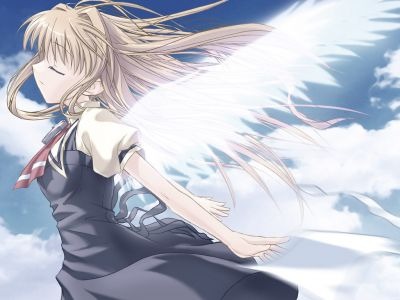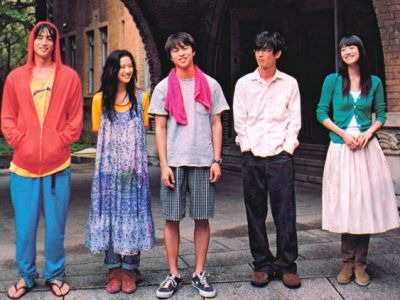
UlasanAnime.com – The anime landscape often presents a unique blend of realism that can be particularly striking for viewers accustomed to Asian live-action dramas. This realism is achieved through a specific set of conventions and a vernacular that viewers interpret within the drama’s context. Anime, too, possesses its own distinct set of conventions, though a noticeable gap often exists between what is considered typical anime and what is seen in J-dramas.
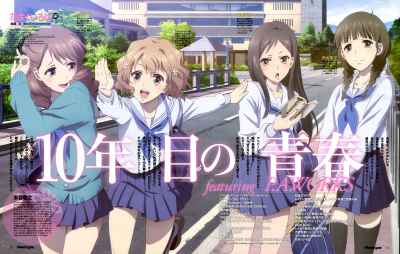
Shows attempting to bridge this gap sometimes appeal to those who seek out anime solely for its perceived slight differences from the norm. However, viewers familiar with both vernaculars, or those who are particular about a more live-action-esque context, may find the mixing of these signals less than ideal.
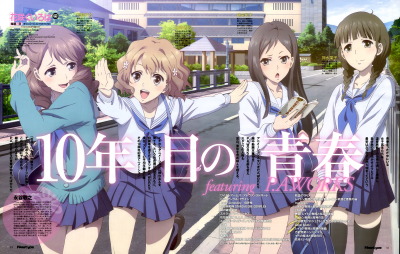
This is precisely where Hanasaku Iroha excels. The series is imbued with a palpable sense of realism, evident from its animation and artistic direction. One can point to the seemingly whimsical “gimmicks” that contribute to this, such as Ohana and Ko meeting on a pedestrian overpass, or Satsuki’s dramatic leap from the pool during Enishi’s nostalgic reverie.
Further examples include the entire arc surrounding Enishi’s film club origins, or the instances where Nako, Jiromaru, and Takako all take a plunge fully clothed. Even the fox deity appearing in Ohana’s feverish dreams adds to this distinctive flavor. The frequent train rides further evoke the feeling of watching an independent Japanese film.
Perhaps the most remarkable aspect is how Mel Kishida’s distinctively “moe” designs were reinterpreted. They transformed into logical, albeit sometimes freakish, expositions pushed to the animators’ extremes. This approach showcased a diverse range of body shapes, sizes, ages, and genders, depicting characters as cute, sexy, unsexy, uncute, or simply hilariously unappealing.
In many ways, this presented an anti-moe aesthetic. Ohana’s saving grace, arguably, were her two flower ribbons. These might have even granted her “twice the vote power in Saimoe.” If one were not informed that Minko-hime is a “hime,” it would be difficult to guess based on her appearance. While she possesses style, much of the time she appears aghast, her unusually large eyes seeming to recede due to her early morning routines.
If any character were to embody the typical moe archetype, it might have been Yuina. However, her personality ultimately detracts from this potential. Yet, even Yuina’s pampered appearance serves as a deliberate contrast, highlighting the relatively spartan lifestyles of Ohana and Minko.
This design philosophy extends to all characters in the show. There’s a sense that the audience is never pandered to based solely on appearance, though it’s acknowledged that for some, even naked high-school girls can be enough to elicit excitement. Every character possesses a backstory, and their appearance appropriately reflects their role, nothing more.
This approach represents a significant departure from the typical anime character design where characters often look identical, distinguished only by their hair and apparel. In many respects, this alone made the series worth the effort of waking up early on a Sunday morning to watch. The author expresses a sentiment of missing the show after its conclusion in a few weeks.
The narrative relies heavily on the visual representation of its cast to convey the story. However, it’s also important to discuss some of the writing elements, such as the utilization of the “fest-it-up” concept to convey deeper meaning.
A pertinent question arises: what does love look like? As depicted in the confession scene of episode 24, it can be interpreted as standing and surveying the land with the person you love. This interpretation, at least in this context, seems fitting. The show arguably makes its strongest case in the opening sequences, where both the first and second features showcase the Kissuisou family actively engaged in their work, bustling about.
This “fest it up” sentiment, as described by Crunchyroll’s subtitles, leads back to the initial point: does this emphasis on hustle and bustle truly work? Does animating people engaged in such activity convey the same impact and “look and feel” as it would in a live-action format?
There’s a palpable sense of grittiness when Nako and Ohana rush across the screen with a pile of trays, a feeling distinct from the more cartoony aesthetic that might be associated with 3D rendered content. The author poses these questions to the reader, seeking their perspective and agreement on whether these observations resonate.
You might also be interested in : Meta Fanfiction in Nichijou