UlasanAnime.com – The author expresses a preference for making every episode engaging rather than relying on a grand, attention-grabbing pilot episode. They cite the 47-minute first episode of Fate Zero as an example, noting a lengthy segment focused on a relic, which they felt could have been more visually interesting while still conveying the concept of a “conceptual weapon.”
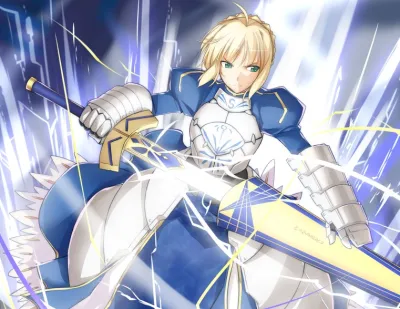
However, the author acknowledges that for dedicated fans of a franchise, such an introduction might be exactly what they desire. They draw parallels to moments in other series, like the appearance of the original crew in the second Patlabor movie, Saito in Tsuiokuhen, Akito in Prince of Darkness, or any One Piece character in Strong World. The scabbard of Excalibur is highlighted as such a significant icon within the Fate lore that it could potentially warrant its own spin-off series, likening its storied history to a powerful D&D RPG weapon with its own epic narrative.
You might also be interested in : Catching Fate
 Returning to the main point, while a “big bang opening” can be appealing, the author finds it leaves a somewhat unpleasant taste, recalling its prevalence in 2000s Hollywood productions. This sentiment extends to a critique of pacing and rhythm, drawing a comparison to the repetitive “unce unce unce” beat in club music or classical pieces, which can become irritating if overused. The author suggests that when a significant portion of content, say 50% or more, follows the same pattern, it can become tiresome. They liken it to an overabundance of candy or an action movie with a predictable structure that offers no genuine surprises, only disappointing ones.
The author further elaborates on this point by referencing Dogs Days, a show they describe as enjoyable, with some viewers appreciating its “American Ninja” style animated sequences. They note that such game show formats have been popular in Asia for decades and are also entertaining in anime. This leads to a discussion of similar stylistic choices appearing in Majikoi and Horizon, which the author finds less compelling.
Interestingly, the author finds Horizon‘s approach slightly more palatable, despite the visual elements, because it functions as the anime equivalent of a car chase. They lament the current scarcity of truly well-executed car chases, even in films dedicated to cars, and their rarity in anime. This observation underscores their central argument: even when adopting a similar concept, there are ways to significantly differentiate one’s work. A good hook, they suggest, doesn’t need to be grand; it simply needs to be effective. Therefore, instead of aiming for a massive impact, it might be better to simply execute well.
In contrast to the “subdued dialogue torrent” of Fate Zero episode 1, the author questions how people endure high school, describing it as a far more dull and lengthy experience that is, nonetheless, compulsory.