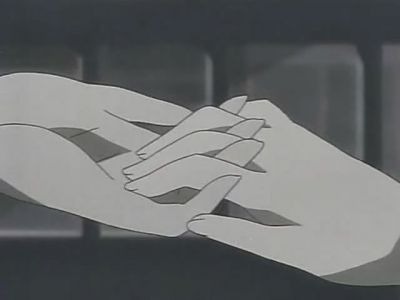
UlasanAnime.com – There’s a certain appeal in witnessing animation that may not be visually polished, yet effectively portrays characters grappling with the challenges of a lower-class existence. Kaiji serves as a prime example of this, and Ben-to achieves a similar effect. The following scene, for instance, elicited a hearty laugh:


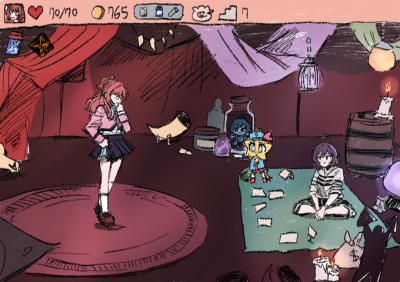
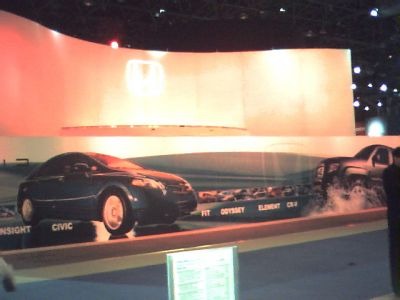
To clarify, it appears that whoever was responsible for the backgrounds simply pulled images from the internet, likely from supermarkets, and incorporated them as sprite elements. While this approach might be acceptable, the lack of even basic smoothing of artifacts when compositing JPEGs into the background suggests a cost-saving measure. It’s the kind of imperfection that a DVD or Blu-ray release would typically rectify for paying customers, who undoubtedly deserve a superior product.
If we consider anime as animation produced on a shoestring budget, then such practices could potentially be seen as a strategic move. This is especially true if visual integrity can be somewhat compromised for the sake of commercializing disposable entertainment as an expressive art form, mirroring the increasingly commercialized cultural landscape of today. The irony might become more pronounced upon deeper examination, but I’ll spare you that convoluted analysis.
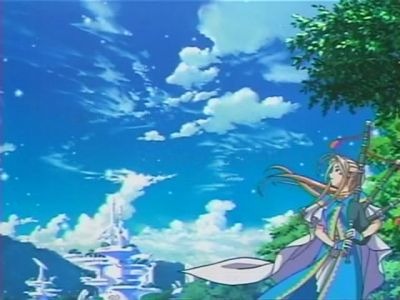
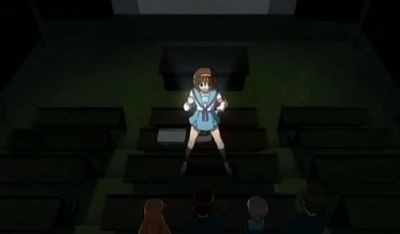
My contemplation then shifted to Akiyuki Shinbo’s cost-saving techniques. His gradual transformation of anime, from dynamic motion to static slideshows, and more significantly, the audience’s capacity to appreciate the latter as a form of entertainment, points to a form of conditioning. It was once (and to some extent, still is) common for fans to criticize such anime paradigms. One might recall discussions about “talking heads” in Fate/Zero or, perhaps more prominently, Stand Alone Complex, which are considered high-budget productions within the realm of television anime. However, there’s a deliberate design in how scenes progress, a concept that JP has elaborated on. This holds true whether the slideshow consists of quotes from a light novel or a character simply walking in circles.
[Damn it ufotable! Quit doing that.]
I ponder whether a form of information resolution is at play. Actions conveyed through facial expressions and similar cues often require a degree of focused attention and the ability to process information beyond the instinctive comprehension of body language. It’s arguable that anime and manga are not the mediums best suited for conveying such subtle expressions; rather, they tend to emphasize them through exaggeration.
This line of thought extends to the concept of infographics. I generally find them to be quite unappealing, with a strong preference for the meticulously crafted work found in xkcd. I would venture to say that my issue isn’t with infographics as a concept, but rather with the execution of most I’ve encountered. They often lean more towards numerology than a truthful representation of information. To draw an analogy, it’s akin to attempting to write rhyming poetry while disregarding the meaning of the rhymes. This might be a stark illustration of how truth and beauty can be entirely at odds, yet it clashes with my ideal of pursuing both simultaneously. Furthermore, it feels very much like a database-driven, impersonal approach. For many, the success of an infographic seems to hinge on catering to a certain percentage of the audience while achieving a specific level of entertainment value, thereby passing the test. Even if the end product is neither beautiful nor truthful, its ability to generate interest and ultimately sell DVDs and Blu-rays makes it noteworthy.
It is within this context that I find Ben-to to be a far more honest and, despite its questionable production quality, a much more enjoyable experience.
You might also be interested in : The Weight of Guilt and the Celebration of Needs in Popular Media
PS. Did Sato wear the anti-zettai ryouiki?