UlasanAnime.com – This article presents a collection of humorous and observational captions related to anime and its fandom, compiled under the title “Brainstorming Guilty Glares.” The content is presented as a series of short, punchy lines, often framed as dialogue or internal thoughts, reflecting common tropes and inside jokes within the anime community.
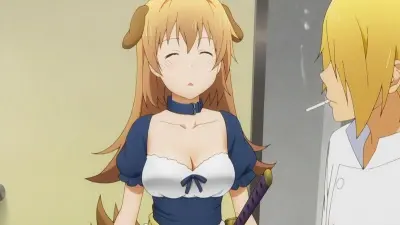
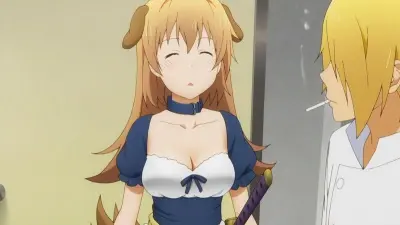
The collection opens with a series of quoted lines that evoke various anime scenarios. One such line, “Oh, I forgot this turns you on,” suggests a moment of playful or unintentional provocation. This is followed by a slightly more challenging, “Are you disappointed that I couldn’t turn you on more?” hinting at a dynamic of attraction or performance.
The article then shifts to observations about the office environment within an anime context, with “I forgot there are other people working at the office.” This line pokes fun at characters who might become overly engrossed in their interactions, forgetting their surroundings.
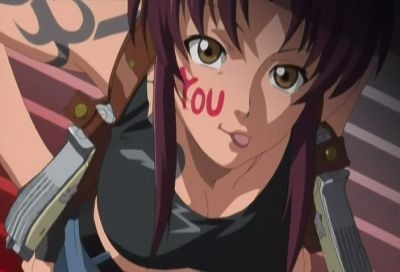
A nod to visual appeal in anime is made with “That smoking pose, so cool!” This highlights the aesthetic choices often made in character design and animation. The following line, “Why are you looking at me like that?” introduces an element of playful suspicion or curiosity between characters.
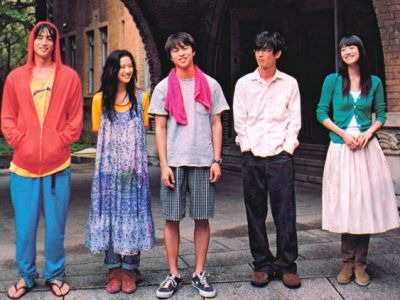
A meta-commentary on the power of anime-related content appears with “The cosplay is mightier than the sword.” This suggests that dedicated fan creations can be as impactful, if not more so, than traditional narrative elements. The article then presents a classic, albeit stereotypical, line often associated with gender roles in older media: “Get back in the kitchen.”
Further dialogue explores themes of mistaken identity and social awkwardness. “You’ve got me confused with some wan wan wan else” uses a playful, almost dog-like sound to express being mistaken for someone else. The uncertainty of social cues is captured in “Are you checking me out? Because I can’t tell under your bangs,” which points to the difficulty in reading expressions when key facial features are obscured.
A more self-aware, character-driven line is “You know, Kyouko-san never taught me the correct reaction-face in these kind of situations.” This implies a lack of guidance on how to respond to unexpected or emotionally charged moments, a common theme in character development.
The article then delves into more specific, often fan-driven, curiosities. “How does Inori’s clothes stay on her?” is a humorous and common question about character design, particularly for characters with revealing or unconventional outfits. This is followed by a similarly playful, anthropomorphic question: “Can you wag your tail?” referencing characters with animalistic traits.
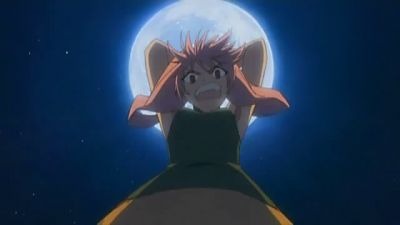
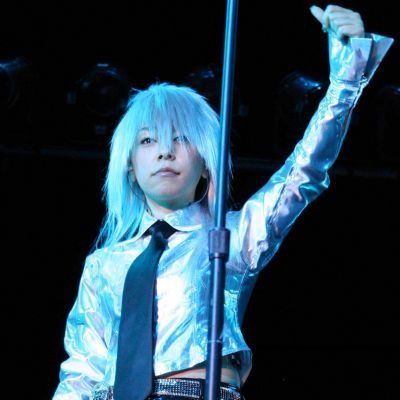
The theme of visual aesthetics returns with “Smoking cosplay.” This likely refers to characters or cosplayers adopting a “cool” or rebellious pose involving smoking, a recurring visual trope. The article then includes a nonsensical, yet recognizable, chant: “Chi-ha-ya Furu–furu furu moooooon.”
A simple, yet evocative, one-word entry, “Japan,” grounds the context, reminding readers of the origin of the cultural phenomena discussed. This is followed by a statement of helplessness or lack of ideas: “I’ve got nothing.”
A well-known pop culture reference is then injected: “That’s what she said.” This phrase, popularized by the sitcom “The Office,” is often used humorously to reframe innocent statements with a double entendre.
The article playfully addresses narrative expectations with “No, it’s not the plot device you’re looking for.” This acknowledges that sometimes the focus of a scene or story might be on something other than the main plot, perhaps a character interaction or a visual gag.
You might also be interested in : Considering Infodump and Fanservice
A simple anatomical observation, “Collarbones,” is presented, highlighting the visual details that fans often notice and appreciate in character art. The article concludes with an open invitation for reader engagement: “[Insert your own captions below]”. This encourages the audience to participate by contributing their own humorous or insightful lines, fostering a sense of community and shared understanding of anime tropes.