
UlasanAnime.com – The classic romantic trope of scandal often draws parallels to Shakespeare’s “Romeo and Juliet,” where insurmountable barriers, be it fate or circumstance, separate two devoted lovers. In “Fortune Arterial,” this barrier is presented as vampirism, though the narrative steers away from the conventional interpretation.
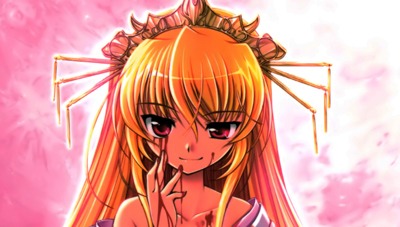
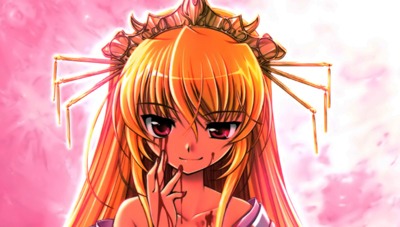
It appears Ms. Veep, or Erika, harbors feelings for Hasekura, a sentiment reciprocated within this animated adaptation of an eroge. Erika is not inclined to live as a typical “vampire” as defined within this universe. She possesses her own distinct vision for how to exist, how to live as a human, and how to coexist with humans. However, familial expectations, specifically a rule imposed by her mother, create a central conflict. This pride-driven struggle, stemming from the clash between her vampiric identity and her human aspirations, forms the core of their story. Compounding this is Erika’s vampiric nature, which compels her to desire Hasekura’s blood.
You might also be interested in : Sorakake Girl is a Harbinger of Destruction
To illustrate, imagine Erika’s mother pushing for an arranged marriage to secure family fortunes. Erika resists due to pride, especially given her strong connection with Hasekura. In the context of an eroge, Hasekura actively pursues Erika, aiming for intimacy. Simultaneously, Erika’s suppressed vampiric urges, which she tries to control with her conscious mind, also lead her towards a similar desire for closeness. Ultimately, it boils down to her wanting to drink blood – a desire that mirrors the romantic pursuit.
The mechanics of this situation are somewhat ambiguous. However, the underlying implication suggests a narrative that might not align with feminist ideals. Hasekura, while portrayed as a kind individual, inadvertently becomes an instrument of tradition, undermining independent thought. His kindness, on the surface, appears commendable and is encouraged, yet it also serves to diminish Erika’s human dignity and, more pragmatically, unlocks the game’s CGs by fulfilling certain objectives.
This narrative presents a rather disheartening exploration of the regression of individual agency and the power to choose. One might expect female vampires to embody the opposite of such constraints. Alternatively, this could be interpreted as the logical outcome of a Japanese vampire family raising a child according to typical Japanese parenting norms. What does this suggest about conservative Japanese family values? It’s a question that invites a wry smile.





















