UlasanAnime.com – The Idolmaster franchise, despite its game-centric origins, has evolved into a multifaceted entertainment phenomenon, extending its reach far beyond the digital realm into live performances and anime adaptations. The core of its appeal, as explored in the context of “The Idolmaster 2” for PS3 and the broader “Project iM@S” initiative, lies not solely in its rhythm-based gameplay but in its unique approach to franchise building and fan engagement.
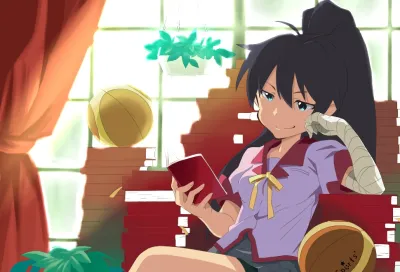
The genesis of an “iM@S” (shortened for sanity) encounter for many, particularly those fitting a certain demographic profile, might be deeply intertwined with the cultural landscape of East Asia. This personal connection, while seemingly tangential to gameplay, is presented as fundamental to understanding the role of the “Producer-san,” the player’s in-game avatar.
The article draws a parallel between “Project iM@S” and the “Sakura Taisen” franchise as pioneers in achieving “mix-media franchising immortality.” Unlike games that simply endure due to their inherent quality, “iM@S” is likened to a caterpillar creating a cocoon. The game itself might eventually be overshadowed by newer titles, but the franchise persists, sustained by a dedicated fanbase actively participating in its extended activities.
However, the analogy for “Sakura Taisen” shifts to a “zombie butterfly,” suggesting a form of immortality that is undying but not immune to decay. In contrast, the “iM@S” live shows are depicted as vibrant events where actors and actresses, some seasoned stage performers and others “seiyuu idol variety,” embody both their characters and their own stage personas. They are required to sing, dance, and act, blurring the lines between their fictional roles and their real-life performances.
You might also be interested in : Roman Baths, French Metalwork, Boats, and Cars: A Cultural Exchange
As “iM@S” approaches its eighth year, recent developments like the PS3 port and anime adaptation are expected to attract new fans and pique curiosity. The author’s initial interest, however, was drawn to the live shows, described as a culmination of “sentimental energies and collective moments of orgasm” among male otaku, alongside the appeal of seiyuu fandom. The observation of a high male-to-female ratio at these events is noted without surprise.
The significance of stage personalities is highlighted through an anecdote about a specific performer. The author immediately recognizes the performer as embodying a character, Azusa, even before being reminded that the same actress plays the role in the anime. This seamless transition from character to performer on stage is a key element of the “iM@S” live experience.
The “The World Is All One” two-day live event, held on July 3rd and 4th, 2010, at Makahari Messe, is a focal point. Day 2, in particular, is recommended for fans of Kugimiya, with both days offering significant appeal for her supporters. The author acknowledges the widespread admiration for this particular performer and references a detailed write-up of Day 2 for those seeking a comprehensive account of the event.
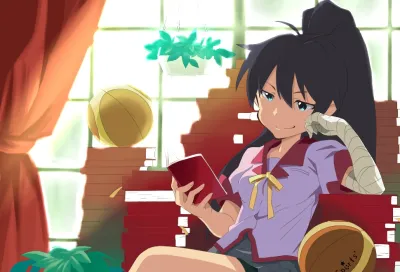 It is at these events, where fantasy intersects with reality, that the meta-layer of the franchise truly shines. The author suggests that a personal ranking of the 13 girls would differ significantly from a previous anime-focused ranking. True fans, it is argued, develop a “cumulative” score for each character, factoring in their real-life performers, their on-screen portrayals, and everything in between.
The author admits to having achieved an 80% success rate in identifying the faces of the girls behind the “iM@S” characters, a significant improvement from before the anime’s release. The game itself is credited with training players to distinguish between voices, a testament to its immersive nature. However, a considerable “learning curve” is noted for new entrants to “iM@S” fandom, given the franchise’s longevity and the games’ lack of self-documentation, despite being more accessible than “Sakura Taisen.” The voiceovers, while helpful, are deemed insufficient to navigate the vast amount of content.
Instead of a song-by-song breakdown of the live performance, the author opts for a more concise ranking of the performers:
- Hibiki – Praised for sharp looks, dance moves, stage presence, and singing ability, deemed a “winner.”
- Ritsuko – Described as slightly less sharp but effective in fulfilling fetish points without being overtly so. Considered the best embodiment of the “weird iM@S concert concept.”
- Miki – This Miki is noted for carrying the “full deal” and possessing potential, though not fully realizing it. This realization contributes to the feeling of it being a “seiyuu event” rather than a pure idol live.
- Azusa – Celebrated for “CHUPA RIKO” and Chiaking’s accomplished entertainment skills, including dancing, singing, and structuring performances. High respect is given for her abilities.
- Chihaya – The author feels her singing is better on CD and questions her hairstyle. The game’s delivery of LPCM 5.1 is appreciated.
- Makoto – Noted for a “seiyuu-ish” appearance, but praised as one of the best performers with strong stage presence, comparable to Hasegawa.
- Iori – An apology is extended for not ranking her previously. Kugyuu’s live performance is well-received, with her appearing “langly.” Her understated approach and the focus on her being “cute and upstanding” are highlighted, with Kugimiya fulfilling these expectations.
- Haruka – Eririn is described as unremarkable, similar to her character, but effective in engaging the crowd with good stage presence.
- Mami/Ami – Asapon’s performance is solid vocally, though not exceptionally “cute.” The author admits a predisposition to Asapon influences the ranking.
- Takane – Her character is seen as an embellished version of her on-stage performance, with a pleasant appearance.
- Yayoi – Receives the highest respect. The performance is noted as un-lipsynched and “terrible” visually, but carried by sheer willpower and presence, described as “magic made of unrelenting willpower.” Maya-chan’s performance is impressive despite its visual shortcomings.
- Kotori – The author is glad she was present, implying she might have felt the same.
- Yukiho – Placed last due to being the least notable, although the “NEW Yukiho” is considered more attractive. The position is attributed to being the easiest to fill the #12 slot.
The author concludes by acknowledging the difficulty in fully describing the magnitude of the two-day live event. It was a significant occasion for those invested in “iM@S,” representing a convergence of various elements that made it “greater than the sum of its parts.” The experience is framed as a culmination of specific life experiences, interests, and upbringing.
Ultimately, the author feels they may have “missed the train” in fully grasping the event’s impact.
The remaining challenge is to learn all the songs, a task deemed too daunting for casual engagement. The author expresses a desire for a “short fling” with “iM@S,” humorously stating they don’t want to become overly engrossed, despite acknowledging the catchy and amusing calls within some of the songs.