UlasanAnime.com – The Ghibli Challenge concludes with a look at two distinct yet impactful films: “Arrietty” and “Grave of the Fireflies.”
This marks the end of the challenge, save for a couple of entries that were unfortunately lost. It’s time to wrap things up, and frankly, it’s already overdue.
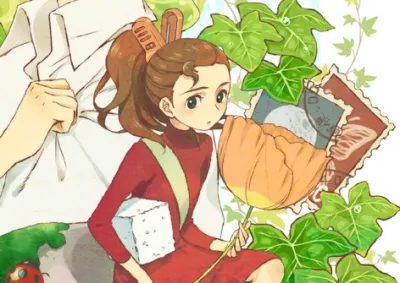
Having only seen a screener of “Arrietty” and being under an embargo for blogging about it until a specific time, I’ll focus on the essential details. Given its upcoming release next week, it seems like the perfect moment to discuss “Arrietty,” doesn’t it, Disney? Even though the Japanese Blu-ray has been available for some time.
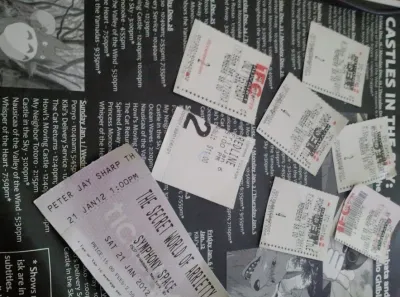
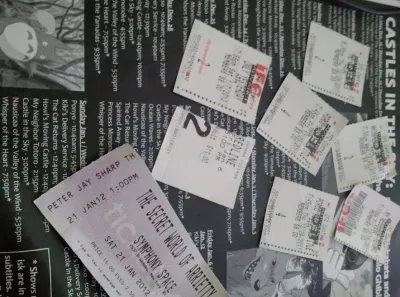
I first watched “Arrietty” back in January. I thought it would be a fitting way to conclude my “12 Days of Ghibli” event. And it was, although it turned out to be the tenth film, not the twelfth. I never managed to reach the final film.
It was on a snowy afternoon that I headed west to Symphony Space. The venue was packed, likely due to the significant snowfall the previous night. The audience consisted of many children, as it was an 11 am showing.
Regardless, I arrived just in time, and the screening was even delayed, possibly also due to the snow.
As I left the theater, I was excited to discover that the New York International Children’s Film Festival, a premier destination for new anime films in the city, was hosting “A Letter to Momo.” They were also showing Shinkai’s “Children Who Chase Lost Voices.” I’ve seen the latter numerous times (thanks, Otakon!), and knowing what “A Letter to Momo” is about, I’m incredibly eager to see it. You should definitely catch it if you have the chance.
“Arrietty” is remarkable for its vivid portrayal of scale, sound, and a sense of smallness against the imposing, vertical architecture. There are also some parkour-esque sequences. The voice acting in the dub was solid. For a Ghibli film, it’s quite intense.
And oh, that hairclip! So moe!
You might also be interested in : Fate/Extra
Film number eleven was “Grave of the Fireflies.” I took a shortcut here, as I watched it on home video. It had been too long since my last viewing, and I needed to form an opinion for an article I’m working on for J-Tor. I often feel conflicted about counting “Grave of the Fireflies” as a Ghibli film because technically, they don’t own the rights to it. It was produced by Studio Ghibli, which is what matters, but because they don’t own it (or rather, their parent company doesn’t), it’s rarely shown alongside other Ghibli films, and they can’t release it with the same branding that Disney uses for the Blu-ray re-releases of Ghibli’s catalog in Japan.
There’s not much more to say about it other than it is undoubtedly Isao Takahata’s finest work. I’d also venture to call it the best slice-of-life anime, partly because that’s what it is, and partly to playfully mock those who categorize anime by such labels.
Beyond its quality as a war film, “Grave of the Fireflies” offered me a more profound experience as a film about poverty—the failure to meet the basic needs of the most vulnerable in society. While the war context drives the changes in the children’s lives, it serves as a significant distraction. The core issue isn’t the circumstances themselves, but the human relationships that are strained and tested by those circumstances.
If you pause to truly contemplate the story (something I recommend doing with caution for Ghibli films, with the exception of “Spirited Away”), your interpretation might differ based on your understanding of World War II in Japan. However, that’s not the primary focus here. It’s plainly the tragedy resulting from the war and the breakdown of the social structure, the safety net that typically binds a society and its people together.
It’s not as if everyone in Japan was a starving war orphan; in fact, many people were doing quite well, even if many were strained by the unfolding events. It is the most vulnerable and unfortunate members of society who suffer the fate we witness in “Grave of the Fireflies.”
What is truly shocking is that this is a recurring tragedy across the globe, even today. However, if you remain fixated on the war context, you might miss the connection. Have you ever read “The Grapes of Wrath”? Numerous factors can lead to such an unraveling of societal ties. War is simply the most obvious one.
Of course, I believe the film can be enjoyed if you allow yourself to wallow in its sheer pitifulness. Perhaps that is its intended effect. But I think that would be underselling a rather powerful portrayal of suffering. Furthermore, it’s genuinely a downer! How can you truly enjoy something like this without at least contextualizing it somewhat? It feels wrong to feel good watching the sleek American bombers depicted, bringing horrific suffering to innocent civilians. But honestly, they looked so shiny!
And so concludes the Ghibli Challenge. GKIDS’ Ghibli festival has already begun in California and, I believe, some other locations. It’s coming to Austin this month, so make sure to catch it there! Catch it everywhere!