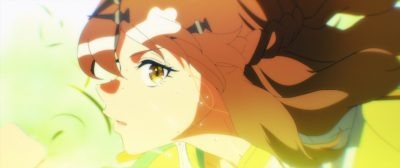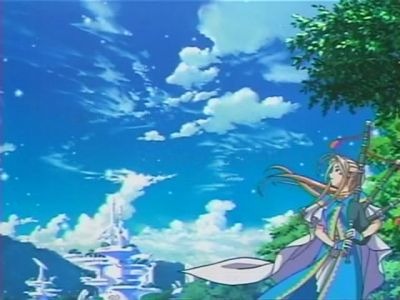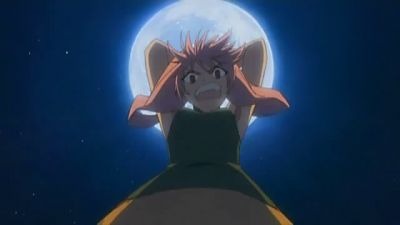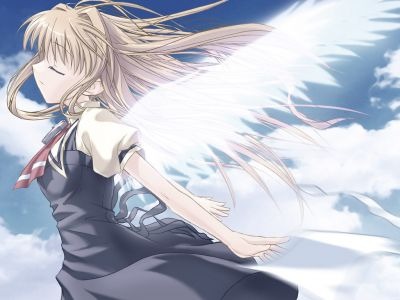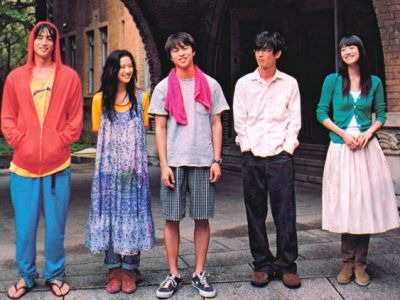
UlasanAnime.com – The character of Remon Yamano in Ano Natsu de Matteru, designed by the same artist as Toradora’s character designer, Tanaka, and directed by Nagai, is the primary element that evokes comparisons to Toradora. Remon, whom the author sometimes refers to as Lemon Ichigo due to her sweet-sour and refreshing nature, bears a resemblance to Taiga from Toradora, albeit with a slightly less pronounced blonde hue than her counterparts in OneTi and OneTwi.
This perceived lack of distinct, impactful elements is identified as a core issue with Ano Natsu de Matteru, especially when contrasted with the sharp hooks that set Toradora apart from other generic light novel romances aimed at a male audience. Despite this critique, the author expresses a strong fondness for the show, finding it engaging enough to warrant a double viewing each week: once with a fansub and again on CR. This practice also serves as a method to discern the nuances in translation, given the script’s reliance on wordplay. The author’s time commitment to Ano Natsu de Matteru significantly exceeds that of other series this season, with the possible exception of Mouretsu Pirates.
The central concern is the show’s deficiency in elements that typically capture viewer attention. It’s noted that at episode 6, the series is still midway through its climactic vacation arc. The author draws a parallel to Toradora, where a significant romantic development, such as Taiga and Yuusaku Kitamura’s confession, occurred in episode 2. In contrast, Ano Natsu de Matteru saw a couple already become intimate by episode 7 of OneTi. The author expresses a desire for such impactful plot points, emphasizing that while not specifically focused on the explicit aspects, the progression of character relationships is a key point of interest. As of the current point in the series, these developments have yet to materialize, raising the question of whether it might be too late for them to occur.
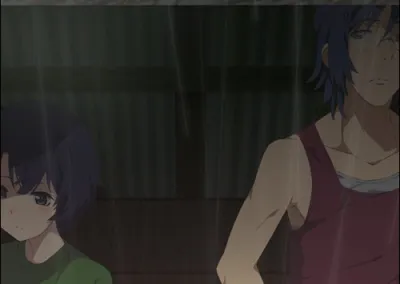
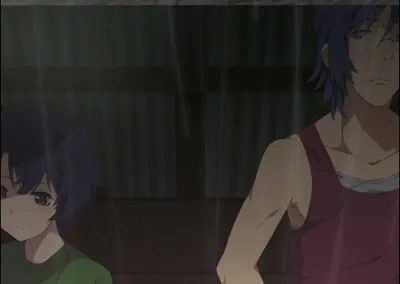
In essence, it can be argued that Kuroda’s writing in Ano Natsu de Matteru demonstrates considerable improvement since his work on Onegai Teacher. The portrayal of romantic frustration within AnoNatsu is described as quite sophisticated, a point the author does not dispute. However, the anticipation lies in the payoff, akin to the memorable moments of Minori Kushieda, the Ami-awakening, or Yamada sulking in the rain. The author speculates that these pivotal moments may not be directly attributable to Kuroda’s writing.
You might also be interested in : Anison’s Gradual Journey
It is also mentioned that Nagai, the director, previously worked on Honey & Clover, a fact that might have been gleaned from the provided links. This raises the question of when these anticipated dramatic developments will unfold, with the expectation that they are inevitable.
Despite the critique, the author maintains patience. The irony is noted in being able to endure five episodes of Marika learning to be a pirate, compared to six episodes of building romantic frustration that feels like a bottle rocket poised for ignition. However, there’s a limit to how long this adolescent teasing can be sustained. The author praises Nagi’s vocals, describing them as excellent “aural sex” that perfectly complements a label like I’ve Sounds.
A recollection of Onegai Twins brings to mind a similar build-up of awkwardness, culminating in a less-than-ideal outcome for a particular character—a cute, dark-haired girl with glasses. While she was perceived as a resilient character, her resolution offered only temporary relief and a somewhat messy conclusion. This is compared to Herikawa’s post-confession subdued state. In contrast, Herikawa eventually developed into a more defined and determined individual, earning the author’s increased support. The author ponders if this is the element that resonates with them, questioning if it constitutes “moe.” Regardless, the confession in that scenario marked only the midpoint of the narrative, suggesting that the current pacing in Ano Natsu de Matteru might be the underlying issue.
The narrative is characterized as a depiction of adolescence marked by heartbreak. The author observes that in a world already populated by aggressive personalities (“tigers” and perhaps “cougars”), when “bombshells” are being launched from orbit, the “good girls” are left with little chance.