UlasanAnime.com – As an individual without formal expertise in defining “Japanese-ness,” my reflections on this topic should be considered personal reactions rather than authoritative analyses of cultural attitudes or typical social interactions in Japan. While I recall a brief undergraduate course on the subject, my academic engagement was minimal, marked by an easy “A” achieved by presenting “weeaboo music” for a class project, notably as the sole student not enrolled in a Japanese language course. Much of the course material has since faded, though I retain a general understanding of concepts like Japan’s layered societal structure, communication styles (such as BICS and CALP), and their influence on social dynamics, alongside a textbook grasp of passive aggression.

Frankly, I find myself somewhat resistant to the quintessential, stereotypical Japanese mentality. There are aspects that consistently feel slightly off to me. While I appreciate its pragmatic outlook and aesthetic sensibilities, I can’t help but feel a sense of amusement or even mild exasperation when encountering certain cultural expressions, like the Hideki Anno quote or details about Hideki Matsui’s personal life. While these can be viewed with good humor, they represent a reality I would find challenging to integrate into my own life, whether in a professional setting within a Japanese company or navigating daily life in Japan, even something as seemingly mundane as sorting trash.
Culture is undoubtedly valuable, but so is progress. I perceive Hyouka as embodying a somewhat nostalgic, classical worldview. Appreciating the anime for its animation, character development, or its insightful deconstruction of classic detective fiction are all valid ways to engage with the work. However, many of the core themes and issues explored throughout its 17 episodes ultimately reflect what I consider to be rather conventional Japanese concerns. The aesthetic, from the rural settings to the subtle manipulation tactics Irisu teaches Chitanda, feels deeply traditional. It adheres to established norms. The notion of visiting a local library to research an old newspaper clipping to understand a junior high teacher’s feelings about helicopters evokes a sense of mannerism that seems increasingly rare in contemporary, fast-paced urban life, finding more resonance in provincial communities.
While this quaintness can be charming and is not inherently disliked, it can also render certain aspects rather dull. My primary reservation regarding the pervasive “Japanese-ness” in Hyouka lies in its reliance on passive aggression as the central driving force behind the emotional motivations for a vast majority of the show’s mysteries. Nearly every puzzle in Hyouka hinges on deciphering an individual’s underlying, unspoken, or suppressed issues—in essence, their passive aggression. This element reached its peak in the Movie Club arc, which I found both frustrating and unsettling. While distinct from the overt horror of Higurashi, the underlying cause of the scriptwriter’s departure felt akin to a cover-up, where those involved are complicit in concealing a hidden problem. This creates a compelling mystery but, in my view, an exceptionally bland motivation, especially when no direct harm or significant interpersonal conflict arises. To illustrate, it’s difficult to imagine the appeal of Higurashi without its supernatural elements, or even consider the potential of a similar narrative like Ookamikakushi.
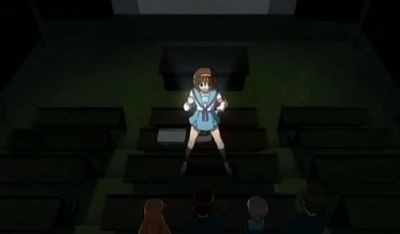
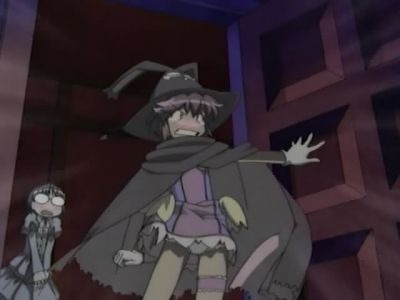
Despite my reservations about this particular facet of the Japanese mindset, Hyouka offers elements that resonate beyond its visual appeal. Reflecting on the first story arc, the climactic revelation was delivered in English. This linguistic choice creates a distinct contrast for a native English speaker compared to a Japanese viewer immersed in the cultural context of the 古?? era. This juxtaposition, this somewhat imperfect integration of foreign (or perhaps progressive, as seen in “Niece of Time”) concepts, provides Hyouka with a necessary balance, though one could argue it remains insufficient. The “let’s troll Mayaka” segment during the school festival arc, featuring appropriate cosplay for each character, was a standout moment, suggesting a deeper narrative layer. It presented a pre-arranged, almost team-bullying scenario where the focus shifts to individual resilience, driven by a desire to influence someone’s choices. This also highlights how certain foreign intellectual traditions (evident in the frequent references to Holmes and Christie) can challenge traditional groupthink, illuminating something rather traditional.

You might also be interested in : The Pitfalls of Inexpensive Localization
PS. My weekly viewing of Hyouka has provided me with an understanding of those who criticized Guilty Crown yet continued to watch it. It’s possible this is the first anime in a very long time that, episode after episode, elicits exclamations of “man, this is the dullest anime ever,” “man, this is so boring,” “LOL, that’s the stupidest motivation,” or similar sentiments.
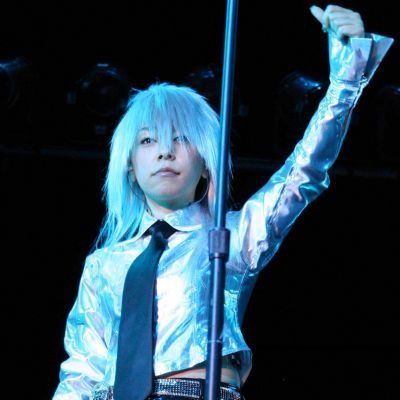
PPS. I find Mayaka’s senpai’s SNK cosplay to be particularly meaningful, especially when contrasted with the Vocaloid outfits. I’m uncertain if my perception of deeper significance in her costume choice is accurate, but it feels intentional. In a way, this reminds me of the Joshiraku episode 4 scene, where the selection of cosplay was intended to convey a message.

PPS. Hyouka is the kind of show where the “gap humor” truly shines when you can summarize each episode or story arc in a single, straightforward sentence. And invariably, you always can.
PPPS. Compared to series like Un-Go, Hyouka feels like it arrived about ten years too early.