UlasanAnime.com – The year 2012 was marked by significant events, and for some, it concluded with a powerful storm that reshaped coastlines and lives. This retrospective looks back at the year through the lens of a dramatic seaside story, drawing parallels between the anime “Tsuritama” and the real-life impact of Hurricane Sandy.
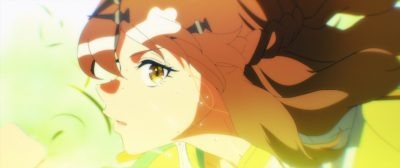
The anime “Tsuritama” is highlighted as a standout TV anime of the year, offering more than just a narrative about fishing. It’s suggested that the show shares a deeper connection with the author, perhaps reflecting shared experiences or perspectives.
The narrative then shifts to Hurricane Sandy, a storm that, while not exceptionally powerful by global standards, had a profound impact on the US Northeast. The article notes that Japan frequently experiences storms of similar or greater intensity, and Florida sees such events every couple of years. However, Sandy’s late arrival in October, coupled with its path along the eastern seaboard, made it a rare and significant event for the region.
The storm’s timing coincided with a high tide, exacerbating its destructive potential. The article emphasizes the rarity of such a storm hitting the US Northeast, with descriptions suggesting it was an event not seen in recorded history, perhaps occurring once every two decades.
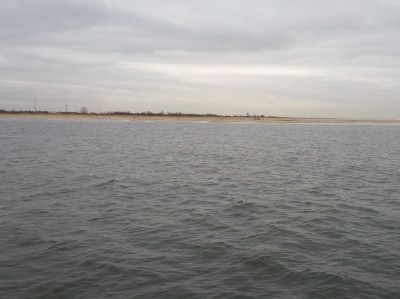
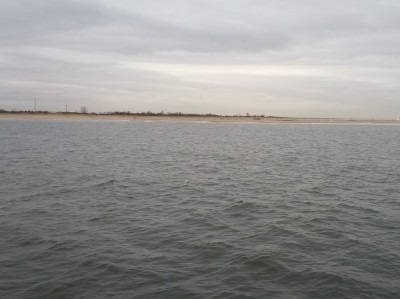
Following the storm, the author recounts a fishing trip to the Jersey shore a month after Hurricane Sandy. Many prime fishing locations were rendered unusable or destroyed, making party boat fishing the most viable option. Conversations with a boat captain revealed how vessels were protected by navigating to the leeward side of nearby islands.
The journey to and from the fishing grounds offered a stark and somber view of the devastation. The shoreline had visibly changed, with remnants like scattered lawn furniture and stranded sailboats serving as poignant reminders of the storm’s power and the lingering sense of dread, even after initial cleanup efforts.
Despite the surrounding devastation, the weather for fishing was surprisingly favorable. It wasn’t excessively cold for a December day at sea, and only light rain fell later in the afternoon, allowing for a pleasant fishing experience. The focus was on catching blackfish, also known as Tautog. This fish is described as not being particularly attractive, nor is the process of catching it as visually appealing as the fictional Mahi Mahi catches of “Tsuritama’s” characters, Yuki and Natsuki.
You might also be interested in : 2012: Tinjauan Musik Tahunan
The method of catching blackfish is detailed, involving bottom fishing with bait on a weighted rig. The murky waters of the North Atlantic, where visibility is limited, meant that fancy polarized glasses were unnecessary. Tautog are known to inhabit areas with wreckage and rocky terrain, feeding on local crustaceans, making small crabs an ideal bait.
Successfully baiting a hook required precision, including selecting the right hook size and hooking the crab correctly, whether whole or in pieces. Streamlining the rig was also crucial due to the high risk of snagging on the seabed in such environments.
The challenge of hooking a Tautog is further explained. Tautog are described as intelligent fish that don’t immediately swallow the bait. Instead, they test it with their specialized lips and then chew on it with their molars, making them difficult to hook compared to fish that engulf their prey whole.
When sensing danger, the blackfish tend to retreat into the rocks, adding a layer of difficulty to the timing of the hook set. Pulling too early or even at the right moment might result in no catch, while pulling too late could lead to snagging on the bottom or missing the fish entirely. The lack of visual cues made this process particularly challenging.
To simplify the technique, the author adopted a quick count of three after feeling a bite. Using fishing rods, pointing them downwards towards the water maximized the pull distance, allowing for a swift retrieval of the fish away from potential snags on the bottom.
Winter is identified as blackfish season, and the fishing grounds visited that day offered numerous bites, including sightings of very young fish. The legal limit was six fish per person per day, with a minimum size of 15 inches. Despite catching around ten fish in a six-hour period, the author had to release nine due to these regulations.
The author reflects that releasing the fish was perhaps for the best, as a single 5-pound blackfish provides a substantial meal. The fish commands a price of $8-15 per pound in markets, yet it remains a local delicacy with limited commercial exploitation, not commonly found in supermarkets. This suggests a balance between small supply and demand.
The taste of blackfish is described as quite good, as expected from a fish that primarily consumes crabs and clams. It lacks the fibrous texture often associated with fluke or flounder.
A point of contemplation arises regarding the portrayal of fish consumption in “Tsuritama.” The author questions the lack of emphasis on freshly caught fish in the anime, considering it’s set in Japan, a country known for its seafood culture. While acknowledging the presence of shirasu (small fish), it’s noted that this isn’t a freshly prepared catch.
The article touches upon the potentially morbid aspect of fish consumption given the character dynamics in “Tsuritama,” but suggests that such a theme would align with the anime’s quirky nature. The author expresses respect for the anime’s depiction of “catch and release” and a polite environmentalism, where fish are not over-exploited.
However, this is contrasted with the perceived reality in Japan and East Asia, where such conservation practices might not fully reflect the situation. The author likens playing it safe to releasing the nine tautogs caught, respecting their survival and hoping they might be caught again by another angler, larger and stronger.
The piece concludes by stating that sometimes, nature’s intentions are unavoidable. The author was fortunate to escape Hurricane Sandy without significant loss, experiencing only temporary power and internet outages. These inconveniences provided an opportunity for quiet relaxation with handheld games and, more importantly, a chance to help others in the community.
Looking ahead, the author mentions catching a dogfish, describing it as a fierce and enjoyable catch.
Year in review 2012:
- Introduction
- iM@S
- Sengoku Collection
- Tsuritama
- Music
- Seiyuu
- N-list