UlasanAnime.com – The Winter 2013 anime season presents a unique challenge for viewers with short attention spans, with many short-form series capturing significant attention. This has led to a landscape where fewer titles are truly holding the author’s sustained interest. Here are some of the anime that have been occupying the author’s thoughts, presented in a bullet-bolded style.
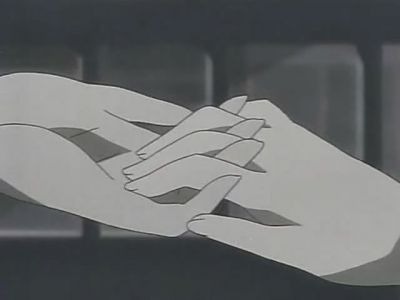
Maoyu is a series the author genuinely enjoys, though it somehow falls short of being utterly compelling. While it’s difficult to label it as uncompelling, given the eagerness for the next episode after each installment, it stands out as the season’s premier “healing” anime. This is partly due to its romantic portrayal of a couple whose lives are defined by their actions rather than solely by their romance. This dynamic is perfectly illustrated by Maou’s hug pillow, both literally and metaphorically, symbolizing their connection and shared purpose. This resonates with the author’s observations of real-life working couples who cherish their time together despite periods of separation. The hug pillow serves as a concise representation of this togetherness, among other symbolic meanings that Maoyu itself elaborates on. The author also appreciates the series’ straightforward, unapologetic focus on plot and setting for the majority of its runtime.
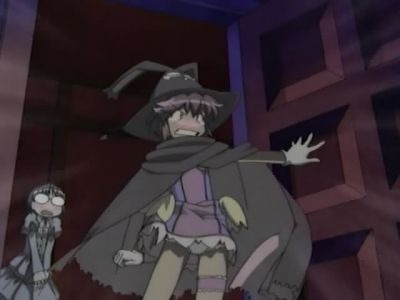
However, Maoyu’s compelling nature doesn’t quite reach the level of the Zettai Karen Children spinoff, which is described as simply “solid anime.” If there were a quantifiable measure for “anime-ness” in anime, this show would be brimming with it. The direction is competent, and while the plot occasionally treads familiar ground, it remains engaging due to the ZKC references and a setting with substantial depth. It serves as an excellent introduction for newcomers to the franchise, allowing them to engage with the story without being overwhelmed by potentially off-putting elements. This isn’t a significant concern for the author personally. It’s one of those quietly excellent titles that consistently appears on the to-do list, prompting immediate viewing whenever a new episode is released. For context, the author has only watched two episodes of the original Zettai Karen Children.
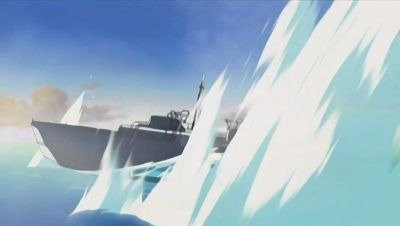
The Infernal Cop skit featuring an underwater shooting scene is still highlighted as the best.
The author questions if Osaka Mama is perhaps a surprisingly serious moe anime, emphasizing its seriousness about moe rather than being a serious show itself.
You might also be interested in : Confessions of a Ni no Kuni Player
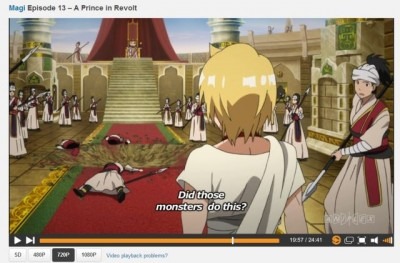
Magi on Crunchyroll appears to be uncensored, with a note that the TV broadcast might differ, citing a tweet as evidence.
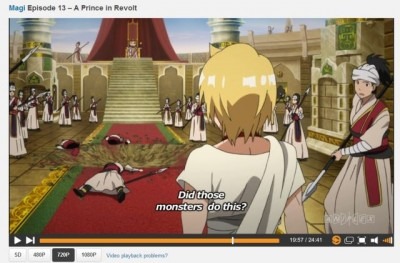
The author reflects on Alibaba’s strong words towards his “animator-gods,” leading to a contemplation on the role of fansubbers. If Crunchyroll, and by extension networks like The Anime Network (TN) and Funimation (FUNi), are considered distribution channels, shouldn’t fansubbers be more focused on the raw source material? The author uses the example of Girls und Panzer, where a version with and without the song Katyusha presents a significant difference. Broadcast edits and calls can profoundly impact the viewing experience, beyond just the translation itself.
Under the heading “Cancer watch,” the author poses a rhetorical question about a “cancer” killing anime this season, mentioning Vividred Operation. The author suggests that if people were genuinely concerned about “moe cancer,” they would likely realize it’s the same small group of individuals producing the content they criticize.
The author found Sasami-san episode 4 to be wonderful, as usual, but felt there was little to say about it beyond the meta-narrative, unless one possessed knowledge of creation myths or legends about Amaterasu’s body splitting. The author speculates that Shinbo’s work might eventually achieve a FLCL-esque sensibility, where its coherence stems from the specific way the anime is experienced. This episode is seen as perhaps the closest he has come to that. The author also suggests that the episode’s abundance of fanservice contributed to the lack of commentary.
Anko mochi is the sweetest, a sentiment extended beyond taste to describe the essence of Tamako Market. Despite this, the author believes the series might still fall short of achieving universal status as the definitive combination of mochi and filling.
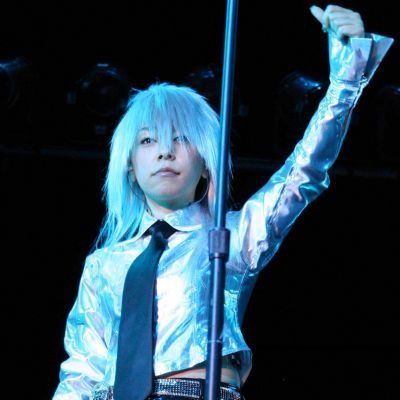
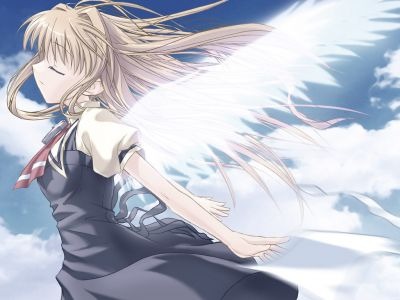
A confession is made: the author was never a fan of Yukarin, finding little to connect with outside of Galaxy Angel. While her solo performances are spectacular, they were more relatable as a catalyst for wotagei moves and a subject of study for 2.5D culture than for their content. Nevertheless, the author was impressed by her performance in Oreshura. Regarding Oreshura itself, beyond the Jojo references and the cuteness of the characters, the author is unsure of its other merits, though the color designs in the opening and ending sequences are praised.
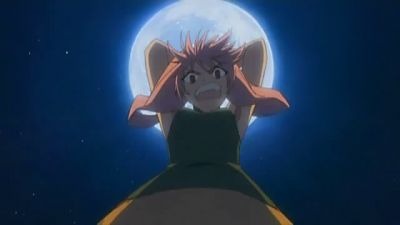
The author expresses a desire to play Ni no Kuni, acknowledging the impossibility of watching all the current anime and finishing the game before 2014. A second voice within suggests that Kurousagi from Mondaiji-tachi ga Isekai kara Kuru Soudesuyo deserves weekly attention. The author agrees, citing not only her “bunny girl” appeal but also her alpha-female persona, which would be a popular choice for fanfiction protagonists and self-inserts. The author muses that if Sword Art Online had featured her instead of Asuna, they might have finished watching it, suggesting a preference for female characters who are treated as equals by the narrative, rather than just being objects within it. The author humorously adds that they would “ice her any day,” referencing games.
The author draws a parallel to comparisons between Maoyu and Spice & Wolf, stating that Horo would have “eaten the two serfs.” They express satisfaction with skipping Dog Days entirely to attend a camp related to Mondaiji, suggesting it was for the best.
Vividred Operation is analyzed by assigning character archetypes: Vivid Green as Miku, Vivid Blue as Kos-Mos, and Vivid Yellow as Mami with a hint of Saber. The author finds this concept “really cool” and is surprised it took so long for an anime to implement such a structure.
The author concludes by stating this marks the end of their blogging attention span, questioning if playing long, grinding JRPGs might help, though they doubt it.
PS. The author intends to stop reading Peter King on Mondays, especially with the American football season over.