UlasanAnime.com – The anime “GJ-bu” features a cast predominantly under the age of 17, leading to a humorous observation about it being a “youth movement.” However, this isn’t the first or the youngest cast in terms of seiyuu age within the otaku anime sphere.
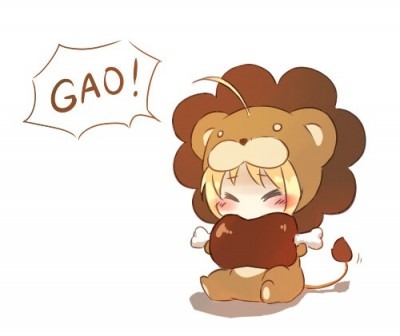
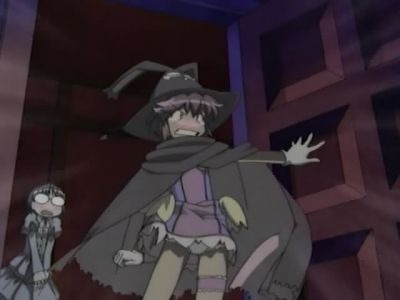
For instance, “Sasami: Magical Girls Club,” now licensed, had its main voice acting cast all at the tender age of 13. This series likely found its way to licensing due to its tangential connection to the “Tenchi Muyo” franchise, suggesting it might not be a terrible show, though its quality remains unknown.
The significance of “GJ-bu” isn’t just its young cast, but rather the subtle evolution of the seiyuu idol profession. In contrast to “Magical Girls Club,” which seemed to serve as a launchpad for aspiring teenage idols already on an idol entertainer path, the girls in “GJ-bu” are more directly on the seiyuu track, being groomed to potentially become seiyuu-idols.
Seiyuu idols have been a recognized career path for a couple of decades, producing notable figures like the Shiinas and Hayashibaras. However, one Nana Mizuki doesn’t represent the entire industry; she’s an icon within a larger ecosystem of businesses and entertainers with varying degrees of success. Nana Mizuki’s career is more aligned with “anison” (anime songs) than with the “idol” persona, which is more akin to artists like Yukarin Tamura and Yui Horie.
These latter artists, while also following similar career steps, are nurtured by a dedicated cult following rather than massive hit success. Their business models are similar, yet the author speculates that Nana’s generation might not produce another seiyuu capable of filling a Tokyo Dome.
Some might dispute the assertion that Nana Mizuki is mainstream, drawing parallels to the mainstream status of “AKB0048.” However, defining “mainstream” becomes problematic when comparing individuals like Ibuki Kido, who is undeniably mainstream, to a slightly older Juri Takahashi of AKB48. Nana Mizuki’s appearance on Kohaku certainly qualifies her as mainstream. If she isn’t considered mainstream, then by extension, everyone else would be extremely not-mainstream.
It is encouraging to see a more profound integration and talent cultivation for individuals like Ibuki Kido and Miyamoto. Similarly, debutante Chika Arakawa might build upon her potential success. It’s not simply about children voicing child characters; many current favorites, such as Miyuki Sawashiro, began their careers at 13, and ex-child performer Maaya Sakamoto started at 15.
This differs significantly from Yuuki Aoi’s portrayal of Murasaki at 15, where the casting choice seemed to be about hiring a child to play a child, rather than grooming her for a future career akin to Aoi’s current trajectory. The author questions the exact nature of Yuuki Aoi’s career goals, contrasting them with the path Yui Ogura appears to be taking.
You might also be interested in : New Oppression: Winter 2013
This line of thought leads to the question of whether the “Forever-17 club” is simply catering to the audience’s preference for seeing young anime characters voiced by young actors, or if there’s a more deliberate strategy at play in cultivating these young talents.