UlasanAnime.com – The localization of the three iDOLM@STER Shiny Festa games for iOS has reignited the author’s enthusiasm for the series, especially after finally playing all three titles. Owning “Rhythmic Record” on iOS and “Groovy Tunes” on PSP, the author was able to complete the set with a friend’s help, focusing on the Chihaya-centric game.

For those familiar with iDOLM@STER, the Shiny Festa games offer no surprises, delivering the same engaging experience. The games feature a mix of new and old songs, including popular tracks, character songs, and some less impressive ones. While the music itself might not be the main draw, watching the characters dance to the rhythm is an enjoyable aspect. The author likens the experience to transforming idol concerts into a video game, drawing a parallel to how wotagei (idol fan culture) can create participatory, game-like situations, albeit with a humorous exaggeration comparing it to a religious ritual with bonuses.
Ultimately, Shiny Festa remains a set of video games that are fun due to the music, dancing, core game design, polished presentation, visual appeal on the iPad, and the inclusion of beloved characters.

The games are filled with jokes, which are described as the very fabric of the iDOLM@STER fandom. The entire franchise is characterized by corny jokes interspersed with showmanship, gameplay, and commercial aspects, a statement the author claims is barely an exaggeration.
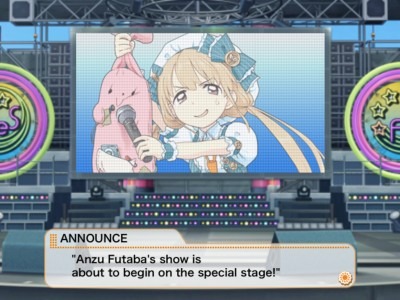



The sight of Ami and Mami momentarily reminded the author of other characters, prompting questions about abbreviations like “TBC” and the concept of “HOOBIES,” highlighting the quirky and often nonsensical humor present in the franchise.
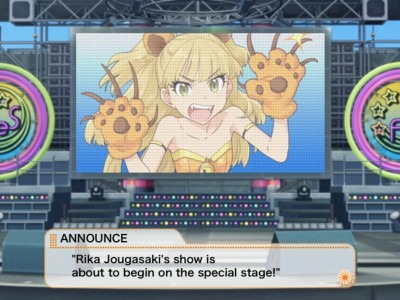
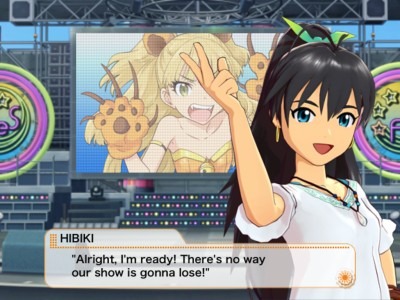
The “Animal Tamer” character’s statement that “idoling is not a competition where you win by making up the best name for a pet” is presented as a humorous observation, suggesting that the arbitrary nature of some in-game elements is part of the charm.
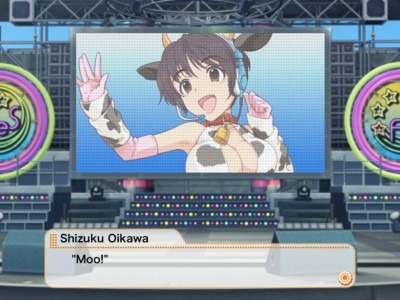
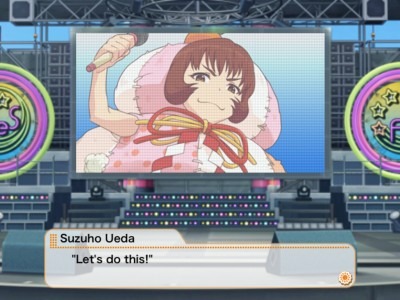
Haruna’s “unbelievably campy catch line” is mentioned as something that feels surprisingly normal within the context of the game’s humor, indicating a high tolerance for outlandish dialogue among fans.
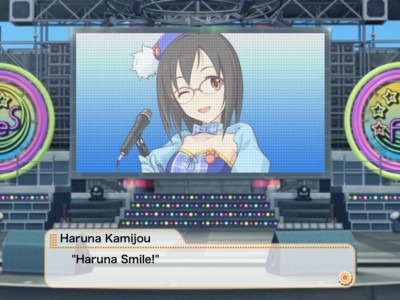
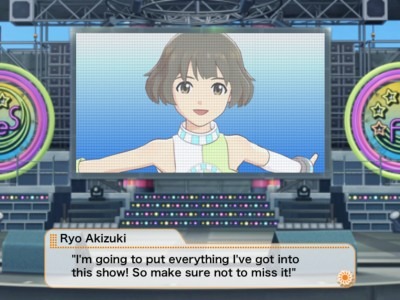
Even characters like Akizuki Ryo, despite their potential issues, are portrayed as being welcomed into the game’s narrative, further emphasizing the inclusive and often lighthearted tone.
Members of Jupiter, who are ranked higher than the 765Pro girls, are presented as less welcomed opponents, described humorously as “prettier final bosses.”
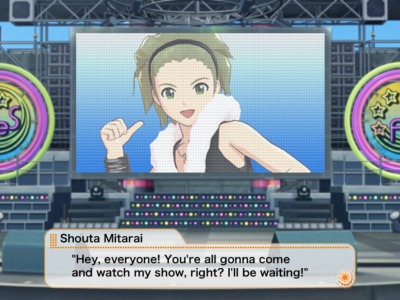
The author anticipates encountering more outrageous opponents as they progress through collecting cards in “Rhythmic Record,” in addition to the regular characters from 765Pro and 876Pro, and Jupiter.
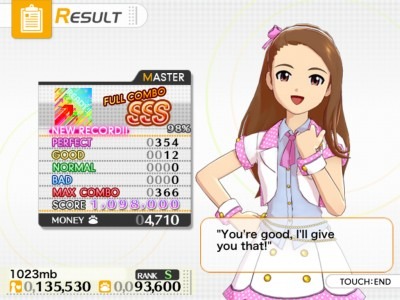
A visual representation of the author’s current progress in the game is shown, indicating a long way to go, particularly with challenging songs like “Kazahana.”
The author notes a peculiar dissonance between the iDOLM@STER franchise and the Sakura Taisen series. While Sakura Taisen’s localization arrived as a diminished version of its former glory, iDOLM@STER is experiencing peak popularity. The author questions how many game franchises achieve such significant growth over eight years, comparing it to Touhou and Halo. Despite the differences, the localization effort for Shiny Festa is seen as having parallels with Sakura Wars for Wii/PS2, albeit with less ambition. The advantage lies in its availability on the widely accessible iOS platform, which boasts more devices than the Wii and PS2 combined. However, the author points out that the timing isn’t ideal for full-fledged console games on iOS, and the marketing feels somewhat dated, if not entirely stagnant.
The English localization of the game has made it more engaging for the author. While they enjoyed “Groovy Tune” on the PSP the previous autumn, the import nature of the game limited their playtime. In contrast, the English iOS version of “Funky Note” has garnered more playtime in a shorter period. This increased engagement is attributed to several factors: improved graphics, higher-definition video, a nearly flawless port to the iPad Mini (despite minor typographical errors like “Hoobies”), and, most significantly, the localization itself. The author acknowledges that the visual and gameplay experience might differ on iPhones and iPads, noting that the iPad Mini felt heavy for prolonged handheld play, and playing on a flat surface or lap was not ideal. Tapping too forcefully could also cause the tablet to shift. The experience on an iPhone 5 is expected to be similar to the Mini, with the added consideration that the game’s design is not optimized for a 4:3 screen.
You might also be interested in : Reddit AMA: Ringkasan Tanya Jawab DQ/GSC
Finally, the author mentions that a review covering all three Shiny Festa games is in development, though it will be geared towards a general audience rather than a deep dive. They also express surprise at the lack of reviews for the English-language Shiny Festa iOS games, suggesting that neither reviewers nor mobile game sites received review copies. The author encourages readers to share any serious reviews they find and points to a forum rant with links to various reactions, which has prompted the author to consider writing about piracy again.