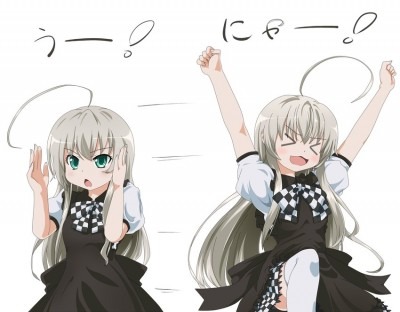
UlasanAnime.com – The term “Gaijin Smash” is a humorous concept used to describe the experience of foreigners in Japan, where they might achieve their desires by inadvertently breaking unwritten local customs. This idea resonates with the anime series Nyarko-san, whose official English title is “Nyaruko.”
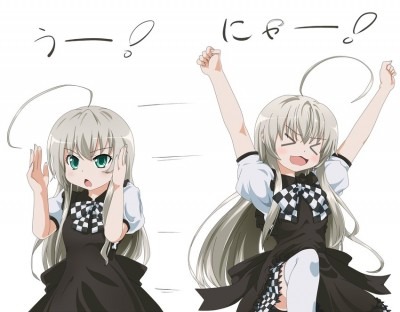
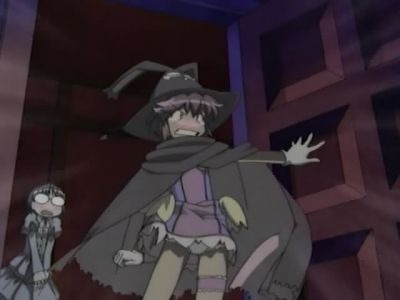
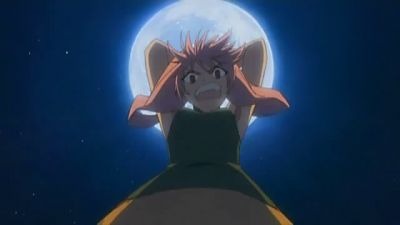
The author finds it difficult to spell the name as “Nyaruko” and will use “Nyarko” interchangeably. The core dynamic of Nyarko-san’s two TV series involves Nyarko persistently pursuing Mahiru, often with suggestive intentions. Other characters join in these antics, and amidst this chaos, lukewarm, pun-filled adventures unfold.
From Mahiru’s perspective, Nyarko, Kuuko, and Hausta are essentially “monsters” or “Old Ones,” comparable to the youkai in Natsume Yuujinchou. However, unlike Japanese spirits and fairies that operate within familiar cultural philosophies, Nyarko’s “Space CQC” disregards conventional Japanese etiquette, such as avoiding being a “meiwaku” (a nuisance).
Interestingly, when explicitly corrected, Nyarko and the other characters show repentance. This is attributed to the idea that, at their core, these “gaijin” are good people who are simply unaware of subtle yet proper upbringing.
Considering the “meiwaku” concept, the fact that Nyarko and the others are foreigners, and the show is replete with references to both Japanese and Western pop culture, leads the author to view Nyarko-san as a metaphor for aliens visiting a Japanese individual.
The premise of the story itself supports this interpretation, with aliens landing in Japan to acquire its modern cultural treasures. The “Cool Japan™” merchandise serves as the primary loot that Nyarko and company seek, as established in the first season’s introduction and the rationale behind some of the plot’s inexplicable elements.
You might also be interested in : Blog Antologi Akhir Musim
The author questions which non-Japanese country might have been “taken over” by Kamen Rider, distinguishing it from the international phenomenon of Power Rangers, which is not quite the same. In some ways, Mahiru embodies a form of aggressive passive-aggressiveness. He acknowledges that while the foreigners are troublesome and barbaric, they are also powerful, alluring, uninhibited, and energetic, ultimately saving the day.
Hausta is presented as an exception, embodying these traits minus the obnoxiousness, and also being sexually liberated. However, Hausta’s sex and gender remain ambiguous. Despite presenting as a male human, their true nature is unknown, a sentiment also extended to Kuuko, reinforcing a distrust of these “gaijin.”
The author speculates that the construction of the “banshin” (or Nyarko’s confusing timeline for its construction) might be analogous to the perpetually confusing status of people’s visas and the difficulty of becoming a naturalized Japanese citizen. The author wonders if this interpretation is too far-fetched.
Finally, the author expresses confusion about the symbolism of the forks, guessing it might be a pun that they are not comprehending.