UlasanAnime.com – The year 2013 presented a nuanced perspective on the challenges faced by young adults, particularly in Japan, as they navigated a shifting socio-economic landscape. This era marked a transition into a “new world disorder” where traditional notions of career stability and life progression were increasingly becoming relics of the past. The younger generation found themselves confronting a reality where job security was a rare commodity, and achieving the same lifestyle their parents enjoyed decades prior was an improbable dream.

This sentiment was particularly poignant when observing the narrative of shows like “Yuushibu” (I Couldn’t Become a Hero, So I Reluctantly Decided to Get a Job.). The protagonist’s journey, forced to abandon heroic aspirations for a mundane part-time job at a large electronics store, mirrored the broader societal anxieties. This storyline highlighted a crucial aspect of adulthood: it’s not solely about chasing dreams, but about self-discovery and finding one’s place in an ever-changing world, much like a resilient football defense that bends but doesn’t break under pressure.
The anime “Hatarake Maousama” (The Devil is a Part-Timer!) explored a similar theme, albeit from a different angle. Here, a powerful demon lord adapts to life as a diligent assistant manager at a fast-food establishment. The narrative subtly suggested that even seemingly humble jobs, like managing shifts at a big-box store or providing customer service, could offer a decent living, albeit with demanding hours. These roles, while perhaps not glamorous, represented a tangible form of stability in a world where grand ambitions might remain out of reach.
This theme resonated deeply within the context of Japan’s economic situation. While many Asian economies were experiencing robust growth, Japan found itself in a more complex position, akin to a star undergoing significant internal changes. The narrative reflected a societal struggle to reconcile traditional values with modern realities. Service jobs and blue-collar roles, even if more financially viable or personally fulfilling than traditional pursuits like farming or sake brewing, often lacked the societal respect afforded to older professions.
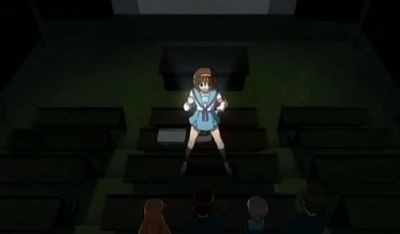
The disenchantment felt by many was understandable, and as the article suggests, anime series like “Yuushibu” and “Hatarake Maousama” offered a form of escapism and relatable commentary. They joined the ranks of other notable anime from 2013 that touched upon similar themes of adaptation and finding one’s path, including “Kyon in Haruhi,” “Goto in Samumenco,” “Log Horizon,” “Outbreak Company,” and “Maoyu,” among others. The prevalence of these narratives suggested a collective reflection on the state of affairs, with many finding parallels in their own lives.
You might also be interested in : Madoka: Rebellion
The article then pivots to discuss the problematic nature of “Sword Art Online” (SAO) in this context. It contrasted SAO’s depiction of a world where the meek conquer the strong with the reality of a new world order that seemed to be discouraging procreation. The author posited that this shift, where virtual experiences might be prioritized over tangible connections, contributed to a declining birthrate, framing it as a consequence of this evolving societal dynamic.
To further illustrate the point about “new world disorder,” the article briefly recaps the premise of “Yuushibu.” It describes how the domesticated devil queen heiress applies big-box retail principles to the demonic realm, a concept initially met with skepticism but ultimately proving brilliant. This unexpected success story serves as a metaphor for finding innovative solutions in unconventional circumstances.

The author then enthusiastically recommends “Love Lab” as another excellent anime that viewers should consider, implying it also contributes to the thematic exploration of the year’s trends.
The article concludes by presenting a “Year in Review 2013 Index,” listing other related articles and their respective topics. This index provides a comprehensive overview of the author’s reflections on the year’s anime landscape, including introductions, short series, media literacy, merchandise, and specific anime titles.
- Introduction
- Shorts
- Literacy
- Figures
- New World Disorder
- Love Lab
- iM@S
- N-list
- Signs from a Mermaid