UlasanAnime.com – In the United States, the Fourth Amendment significantly limits the government’s authority when it comes to searching private individuals. Essentially, it dictates what law enforcement officers can or cannot do to seize your belongings. Understanding the guidelines for when a cop can legally take evidence from you for use in a legal proceeding, like a trial or hearing, is not overly complicated. The general principle is probable cause, meaning there must be a valid reason to suspect you.

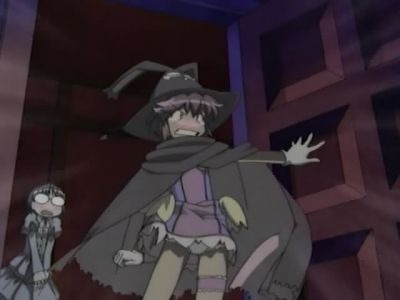
In the anime “Wizard Barristers,” the character Cecil articulates this principle to two officers who wished to search her bag after discovering she is a “Wud.” The author expresses relief that the term “Wug” wasn’t used, finding it amusing. Furthermore, it strikes the author as impressive that anyone could recall the general rule for consent searches so readily in such a situation, particularly from a legal enthusiast’s perspective. Cecil managed to convey this with just a couple of sentences.
You might also be interested in : Here are a few options for paraphrasing “Screaming at the Calm of Tomorrow” in English, keeping your constraints in mind:
The author admits they personally cannot do the same.

Regarding Japanese law on consent searches, the author’s knowledge is limited to the fact that Japan’s constitution was modeled, in part, after the U.S. Constitution’s Bill of Rights, which includes the Fourth Amendment. This is likely why Cecil recited a legal rule similar to the American version, at least as presented in the Crunchyroll subtitles. The author references Article 35 of the Japanese Constitution as evidence of this.
The author humorously contrasts their own interest in legal matters with common perceptions of power, stating, “You guys have your guns and tanks. I have my law stuff.” They playfully inquire about the possibility of a “Penumbra-of-Rights-chan mascot” or a “Ford v. Dodge-chan.” However, acknowledging Cecil’s status as an average anime character, the author suggests there’s still a considerable way to go in integrating such themes. By blending a criminal procedure plot with a sub-class of humans possessing magical abilities, the narrative might be halfway there. The author speculates if the “Butterfly partners” (perhaps Chouno & Chouno) possess special legal powers, seeing this as a meta-level that the director Umetsu could certainly explore, even if it seems unconventional.
The author expresses enthusiasm for the first episode, describing it as both jarring and unpleasant, yet surprisingly fulfilling. This aligns with their expectations of Umetsu’s work. The episode also earns the distinction of being the most “IT’S NOT FOR KIDS” anime of the season, judged by the standards of the “ADVFilms” era. The author notes that “Nourin” is likely the most family-unfriendly anime this season, implying it surpasses “Wizard Barristers” in that regard, and makes a passing comment about Watanabe’s new show.
PS. The author finds the website somewhat useful, providing a link as evidence.