UlasanAnime.com – Some viewers have observed a gender-bending element in the progression of “Witch Craft Works.” While this observation isn’t entirely inaccurate, the situation is not straightforward. It appears more as if various tropes and narrative elements, when arranged in a particular pattern, begin to resemble a gender swap.
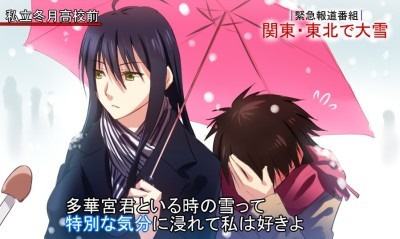
The core issue with “Witch Craft Works'” portrayal from a gender role perspective is the lack of distinct significance regardless of how the dynamics play out. The thematic importance hinges on which aspect of the plot is emphasized. For instance, Honoka’s earnest desire to assist Ayaka is consistently met with positive reinforcement as he translates these feelings into actions and decisions.
However, his actions and decisions don’t always yield substantial rewards. This is somewhat analogous to Ayaka’s calculated approaches, which are often successful due to her proficiency in such matters. Yet, these efforts frequently fall short in the broader context, with Honoka ultimately bridging the gap.
Conversely, Honoka’s assertive, almost masculine behavior is appropriately curbed because these actions are typically ill-conceived. They tend to disregard Ayaka’s feelings and her meticulously crafted arrangements, among other factors.
This aspect is somewhat concerning, as “Witch Craft Works” ultimately presents a positive narrative concerning Honoka and Ayaka. Honoka is poised for growth and development into a respectable individual, framed within the typical anime-harem context regarding their mutual affections. However, in the grand scheme of things, these nuances might not be as pivotal.
You might also be interested in : Mai Mai Miracle: A Kickstarter Success
Comparatively, a series like “RailDex” might be considered a more pronounced offender in similar regards. Yet, it’s important to acknowledge that neither of these stories primarily focuses on gender-related issues. This is why they are structured in this manner, and these aren’t the primary reasons for their appeal to audiences.
The notion of a gender swap in “Witch Craft Works” became more prominent when considering “Silver Spoon.” In a similar vein, Hachiken’s behavior deviates significantly from that of a stereotypical or idealized farm boy. This contrast is what shapes the dynamic triangle between Hachiken, Mikage, and Komaba.
Komaba embodies the archetypal quiet, diligent farmer. Hachiken, on the other hand, exhibits numerous traits often associated with urban or feminine stereotypes. These include his culinary skills, his tendency to cry easily or frequently, and his strong attachment to cute animals.
Furthermore, his bookish nature, his fussiness, his frequent indecisiveness, and his generally emotional disposition contribute to this perception. However, it’s debatable whether gender roles play a substantial part in the narrative in this context, much like the argument against “Witch Craft Works” being a definitive gender swap.
It is interesting to observe Mikage as the more level-headed character, a single child shouldering the responsibility of a family business. This is a common trope in “inaka” (rural) storylines, making the fact that Mikage is a girl almost incidental to the plot.
From a power dynamic perspective, it’s challenging to draw definitive conclusions. In the typical Eastern/anime fashion of glorifying women, the focus often remains on gender roles. Women are depicted as the most powerful and capable within their designated roles, and the same applies to men.
Many recent anime productions (within the last decade) have increasingly placed girls in more aggressive and active societal positions, while boys are sometimes depicted in more domestic or caregiver roles. Therefore, “Witch Craft Works” doesn’t appear to be introducing anything novel in this regard, nor is it particularly advancing any significant discourse on gender reversal.
Does the entire discussion ultimately boil down to the trope of the “princess carry”?
One might argue that time could be better spent discussing topics like “ImoCho.”