UlasanAnime.com – The question of whether fair use exists within Japan’s copyright laws elicits a nuanced answer: yes, in practice, but no, as a distinct legal doctrine.
While the United States copyright law, encompassing legislation, court rulings, and common practices, serves as a model for many WIPO signatories, particularly due to the US’s dominant position in copyright content production and export, Japan’s copyright law, though generally modeled after the US system, possesses its own unique characteristics.
Both Japanese and US copyright laws are WIPO compliant. This treaty mandates that member countries align their copyright laws with WIPO guidelines concerning what is copyrightable, how protection is obtained, and the scope of that protection. While specifics may vary, the fundamental principles are largely compatible between the two nations.
Understanding what constitutes “law” is crucial. In the US, law originates from various sources, including constitutions, legislation, regulatory bodies’ guidelines, and, significantly, court rulings. The US Supreme Court holds the ultimate authority in reinterpreting the Constitution. The US legal system is common law-based, meaning a substantial portion of law is defined by judicial precedent. Modern governance strives to codify common law into legislation, but this process has limitations.
In copyright matters, applying legal rules to specific situations often involves leveraging a court’s tools, which include laws and past legal rulings. These tools are not always explicitly codified, as they are frequently derived from prior decisions on similar, albeit not identical, fact patterns.
The concept of “fair use” itself contributes to the confusion. The US Copyright Act includes a specific provision (17 US §107) related to fair use. However, this provision is not exhaustive of the broader fair use doctrine, which has evolved through judicial interpretation. Fair use in the US is primarily an affirmative defense against copyright infringement. It is invoked when one is sued, and a court’s agreement with the fair use argument can lead to a favorable outcome. This means that even if one believes a use is “fair,” it does not preclude legal action. The determination of whether a use is truly fair ultimately rests with the courts, a principle that applies to both the US and Japan.
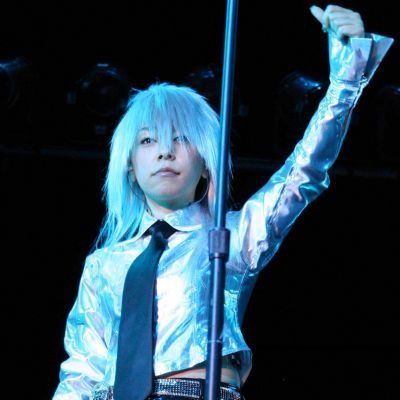
In practical terms, fair use allows for certain actions that would otherwise be considered copyright infringement. Examples include the creation and sale of parody t-shirts without royalty payments to copyright holders, or the creation of cosplay outfits.
The question then arises: does Japanese copyright law permit such activities? The answer is a qualified yes. Japan’s copyright law has incorporated aspects of fair use directly into its legislation. The most pertinent provision is the private use exception. Additionally, the Japanese Copyright Act codifies certain exceptions not found in US law, such as non-commercial and press exceptions, which are arguably included due to fair use considerations. Therefore, while “fair use” as a distinct legal concept may not exist in Japan, the practical outcomes of fair use are often achieved through specific legislative exceptions.
The key difference lies in the absence of fair use as a formal legal doctrine in Japan. This omission removes a significant area of ambiguity present in US copyright law, which many other countries also tend to avoid. Instead, Japan’s approach involves codifying well-established fair uses into legislation, granting less discretionary power to the courts. The commercial predictability of fair use in the US is often criticized due to its reliance on court rulings that are based on specific facts, making it difficult for individuals to ascertain whether their use falls within acceptable parameters.
Consequently, while Japan may not have “fair use” in the American legal sense, it does permit uses that are considered fair for reasons similar to those in the US. In practice, engaging in activities like creating parodies can offer a comparable level of legal protection in Japan as it does in America. The legality of parody itself is a complex issue, even within a fair use regime, often requiring extensive legal consultation and facing challenges in monetization.
This discussion extends to “artist alley merch,” which often operates in a legal gray area. While limited print runs might be acceptable, making a livelihood from such merchandise can be viewed as copyright infringement. The author expresses a strong opinion against the “snarky t-shirt” industry, arguing that it profits from intellectual property without compensating the original creators and that consumers are purchasing visual signifiers built on IP rather than engaging in genuine artistic expression or protest.
The absence of codified fair use factors does not negate their underlying importance in determining allowable, non-copyrightable uses. Ideally, what laypeople consider fair use should not be copyright infringement in the first place; rather, it should be considered non-copyrightable from the outset.
Further reading:
- Japanese government’s unofficial translation of Japan’s Copyright Act: Copyright Act
- A paper examining variations in fair use rights for parody across the US, Canada, and Japan: paper
- Wikipedia articles on US Fair Use and Japan Fair Use.
PS. It is suggested that ANN should engage a legal professional to provide authoritative commentary on legal matters, rather than relying on individuals who may not possess the requisite legal expertise, to avoid potential legal repercussions.
PPS. This post may contain inaccuracies, as the author aimed to avoid excessive detail due to time constraints, necessitating further research for absolute precision.
You might also be interested in : Otakon 2014: A Summary
PPPS. The issues discussed are related to recent events concerning alleged copyright violations. The author omits the fact that such actions are now criminal offenses in Japan, which is considered a significant concern. The author advises against asserting that “there is no fair use in Japan” and then discussing parodies, as parodies themselves are not entirely legal even under a fair use regime. Furthermore, the author cautions against making racist remarks.