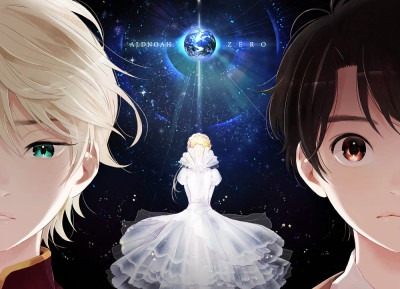
UlasanAnime.com – A recent article discussing Aldnoah.Zero drew attention to the importance of context when comparing different anime series, particularly those within the giant robot genre. While the original piece made some valid points, it could have benefited from a more suitable comparative example than Turn-A Gundam.
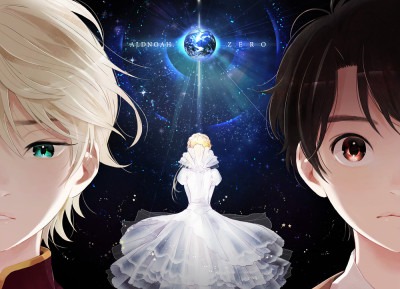
The author suggests that Nadesico would have been a more effective point of comparison. Both Turn-A Gundam and Nadesico were products of their respective eras, reflecting shifts in the landscape of teenage male protagonists in giant robot shows. The post-9/11 world, for instance, influenced series like Celestial Beings and Eden of the East. However, the giant/super mecha genre, especially concerning its protagonist, had already begun to evolve by the time Evangelion, which predates both Turn-A and Nadesico, was released.
Series released after Evangelion, like Nadesico, offer different interpretations of established tropes. Nadesico features a protagonist who is a reluctant cook thrust into a combat role. The tragedy lies in his eventual dedication to fighting to end the conflict, even if he achieves a somewhat happy ending.
You might also be interested in : Japanese Law and Fair Use: A Critical Look
In contrast, Aldnoah.Zero presents a stoic protagonist who utilizes ordinary components to combat specialized, overpowered mechs. These mechs are piloted by individuals who could likely excel with their advanced weaponry. This setup is almost the antithesis of the typical Gundam narrative, where an angsty teen pilots super-powered technology to defeat masses of generic units. This contrast itself serves as a thematic statement.
The comparison to Turn-A Gundam becomes even more amusing in this context. Turn-A Gundam’s world features no commodity components; all giant robots are relics from Earth or the Moon. This aspect of Turn-A is particularly fascinating, as it explores warfare where lost equipment is irreplaceable.
While the comparison with Nadesico also has its shortcomings, it remains more apt. In Nadesico, the Jovians deployed numerous autonomous fighting machines, which the Earth forces countered with their own commodity components. Both sides developed distinct combat strategies, leveraging similar, groundbreaking technologies like phase transmission. The narrative takes an interesting turn with the introduction of super-robot-inspired Jovian special units, blurring the lines between real robots and super robots. Aldnoah.Zero, arguably a step further into non-robots versus real robots, prompts questions about the possibility of making a cohesive point. In Aldnoah, Akito’s success is attributed to luck, drive, or circumstances, making him an effective battlefield element. Inaho’s success, however, stems from attributes that are uncommon rather than unique, perhaps indicating he is simply in the right place at the right time.
With Aldnoah.Zero recently incorporating the White Base trope (or at least an upgraded version of it), it’s understandable to draw comparisons with various Gundam and Gundam-like anime. However, any comparison, regardless of the chosen series, must focus on thematic elements rather than superficial resemblances. To achieve this depth, one must first grasp the context from which these shows emerge.
The author expresses a desire for a comparative analysis with Gundam Build Fighters, suggesting it would be entertaining to explore a scenario where a UC (Universal Century) character loses due to being in the wrong genre or show. The author’s personal approach to fandom, particularly within the mecha genre, is shaped by the ongoing dialogue between fans and creators, and among the creations themselves. This dynamic is likened to a dance hall where themes intermingle, forming a complex tapestry rather than a simple database. It’s a space where things may not always make perfect sense, and that’s acceptable. It is this very characteristic that makes Aldnoah.Zero stand out—a seemingly straight line amidst a sea of narrative noise.