UlasanAnime.com – The crowdfunding campaign for “Under the Dog” (UTD) repeatedly highlighted a key point: creators struggle with production committees that are overly focused on the domestic “moe” audience, neglecting the global market. While this sentiment is understandable, it feels like a superficial observation that misses a larger issue.
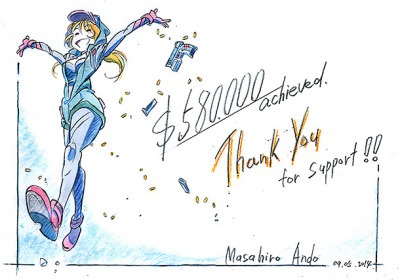
Addressing the risk aversion and the tendency for funding committees to stick to safe, predictable paths is commendable. However, the emphasis on “targeting the overseas audience” feels misplaced. The core of the matter lies in how we define anime and our fundamental reasons for enjoying it.
It’s reasonable to assume that many preferences shared by overseas fans also resonate with Japanese fans, indicating a significant common ground. The real challenge, then, is not about targeting a global audience, but rather about finding effective ways to engage their financial support, especially from those who might not typically purchase merchandise like standees or engage in other forms of direct financial backing.
This approach, unfortunately, risks putting the cart before the horse, prioritizing funding strategies over the product itself. A more organic perspective would focus on enabling the creation of “marketed animation projects” that genuinely delight fans, independent of the influence of traditional creative committees. By “marketed animation projects,” I specifically mean something distinct from pioneering crowdfunded works like “Kick-Heart.”
“Kick-Heart,” a 15-minute art short by Masaaki Yuasa, was a project I also backed. Given the immense effort involved, I considered it a fair exchange. In this context, we were engaging with the production of animation in its purest form: backers paid and received exactly what they paid for. It was a direct purchase of anime, not an advertisement for a related product, nor an entry into a long-term commitment like becoming a producer or engaging in identity politics. It was a straightforward transaction.
I’m not convinced that individuals not inclined towards arthouse animation would significantly contribute to Yuasa’s Kickstarter. Moreover, it’s worth recalling that the “Kick-Heart” Kickstarter also emphasized funding independence and ensuring fair compensation for animators. While it remains unclear if crowdfunding can definitively solve these issues, it’s certainly a positive step to explore. However, from a rational standpoint, the idealistic motivations behind crowdfunding efforts can fade once the initial hype and bandwagon effect subside, leaving behind a desire for practical, demonstrable results.
Naturally, I hope that a sufficient number of enthusiasts will emerge to consistently fund anime productions through crowdfunding. My personal backing of four projects—”Santa Company,” “LWA2,” “UTD,” and “KH” (distinct from localization projects like “BGC,” “Mai Mai Miracle,” and “Time of Eve”)—suggests that financial support exists. This might be one of the reasons why Japan hasn’t fully embraced a more aggressive, land-grab style production approach on platforms like Kickstarter. A legitimate concern is the capacity of the crowdfunding community to sustain anime productions over time, given the inherent costs of creating high-quality animation. Considering the potential for failure in crowdfunding projects, which warrants further business development study, is it truly worthwhile for more animators to pitch on Kickstarter?
These are crucial questions that need answers before we can effectively address broader inquiries, such as those posed by Hiroaki Yura regarding crowdfunding as an alternative to traditional committees.
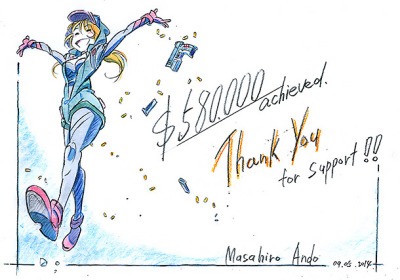
This brings me to “Under the Dog” (UTD). UTD’s primary goal, as I perceive it, is to create something compelling, with the anime serving as the medium. Despite their potentially outdated assumptions about anime fans and fansubs, I appreciate their straightforward approach: they aimed to produce this anime exactly as they envisioned it. I will never dispute that this is a valid reason to venture into the crowdfunding market. However, this implies certain things. For instance, it’s highly probable that Ishii had previously pitched the idea and was dissatisfied with proposed changes. The fundamental question then becomes: why did they want to pursue this project? Based on their sales pitch, the creative team behind UTD believes in Ishii’s script and vision and is committed to bringing it to life. My concern is whether they can deliver, as the final product might be more than just an anime.
I believe there are several pertinent questions that potential supporters should consider:
You might also be interested in : Thinking About Lantis Fest Vegas
1. Why anime? Why not, for instance, a video game? This question struck me as particularly relevant after further reflection. From my understanding of various AMAs, KS updates, and Otakon reports, the answer seems to stem from the creative individuals’ prior experiences, relationships, and circumstances. While this is a valid motivation, it also reflects on the nature of the production itself. For instance, in Ando’s context, anime might indeed be the most suitable format, and I anticipate high-quality work from that group—perhaps not on the level of “GITS” movies, but certainly very good. However, committing to an OVA release dictates a specific format, funding method, and marketing strategy. These aspects change dramatically when considering a PS4 game or a live-action film, which could potentially address some of their funding concerns more effectively.
2. Why the assumption that there’s a substantial audience eager for a 1997-style, “GITS/Akira”-influenced story? These are successful anime franchises that, in recent years, have struggled to achieve significant commercial success. Does UTD adequately address this concern? For older Western “aniota,” memories of numerous failed Western-targeting anime from the 90s might resurface. Do we truly want to revisit the era of “Armitage” or “Appleseed”? Do we even want to cater to fans who are still interested in those titles today? As a bonus, do we even want to cater to fans who enjoyed “Sword of the Stranger”? It was a fantastic movie that garnered little attention in the USA.
[Perhaps we could delve deeper into the idea of creating anime based on nostalgia and question its long-term viability compared to developing something entirely new, but I don’t believe we’re at a stage where such a claim can be definitively made.]
3. How will they market the project? Without the assistance of production companies, how can they reach the non-hardcore audience or lapsed fans who might actually appreciate UTD more than those who gravitate towards modern, post-moe content?
4. What if UTD sucks is not particularly good? This is a concern that “Santa Company,” “LWA,” and “Kick-Heart” are largely immune to. The very fact that Yuasa is creating an anime is enough to elicit excitement; even if he were to draw stick figures, the output would likely be exceptional because he is a true genius, and the merit of his work is judged on its own terms (i.e., Art House vs. Hollywood). “LWA” episode 1 featured “young animators,” and it’s highly improbable that episode 2 would be inferior, especially with the removal of that limitation. At worst, it’s unlikely to be worse than “Kill la Kill” as an animation vehicle, providing a baseline guarantee due to our knowledge of Trigger as a 100% Trigger production. In “Kick-Heart” and “LWA,” backers were essentially purchasing animation for animation’s sake. UTD, however, strikes me more as a scenario where the team says, “Hey, Ishii has a cool idea/script, and these professional animators want to bring it to life, let’s support them.” This is perfectly acceptable, but it demands a significant amount of faith. It reminds me of “CANAAN.” The ironic complication with UTD is that while part of its appeal lies in the hype, this very hype can obscure the clarity needed to assess the production’s quality. In other words, if Yura and the team take the money and create something universally disliked, they must still be able to accept it. We, the audience, must also accept it, even if it deviates from what was initially promised. Is this truly the case?
I don’t wish to appear overly negative, and there’s a valid reason for optimism. UTD is, in many ways, the kind of anime Kickstarter that is more authentically “anime” than most. By “anime” as we know it, I mean that the UTD crowdfunding effort directly addresses the challenges of producing “anime” in the traditional sense. “LWA” and “Kick-Heart,” in my view, don’t align with what most people typically associate with anime; they are not broadcast television productions and are not marketing campaigns designed to sell merchandise. The fact that UTD aims to diverge from this model while still soliciting funding to operate in a similar fashion presents a direct challenge to the committee-based production system. This, my friends, is the true “anime against the machine” crowdfunding.
PS. What if “Santa Company” fails? Answer: It’s impossible. “Santa Company” is an anime about children and Santa Claus, a concept as foolproof as cute babies or quirky Japanese animal mascots. Perhaps this is a more honest approach: the buzzwords used for UTD are triggers. As an anime fan who has been around since “Akira,” I’ve lost count of the number of mediocre shows that have attempted to leverage that moniker for sales over the past 25+ years. I’m not entirely convinced these marketing terms are effective; in fact, the continued reliance on them by the Western anime fandom is a troubling sign. To be fair, this includes fans who describe shows using such terms or simply because certain staff members worked on “Akira,” “Evangelion,” “Bebop,” or other popular works with which these animators have connections. Calling me a skeptic is a truism, and it’s important to view UTD for what it is. Fortunately, it’s not a dire situation.
PPS: Here are some relevant links for “Under the Dog”: Kickstarter for UTD, ANNCast, Live Stream, Reddit AMA, Otakon stuffs?
PPPS: Here’s something fundamental about my perspective on anime. On this blog, I categorize anime using tags, and through WordPress, I employ a parent category to track all these show titles. The parent category is labeled “Franchises.” I understand this isn’t how most people view anime, but someone has to do it. I appreciate, and it intrigues me, that UTD’s marketing approach fundamentally challenges my method of categorization from the outset.