UlasanAnime.com – It is quite accurate to suggest that Idol Jihen, also known as Idol Incidents, shares similarities with an arc from Aikatsu. The narrative is as reminiscent of a children’s cartoon, or at least my stereotypical perception of one, as late-night anime can get. It primarily serves as a framework or a vehicle to present a significant amount of data within the anime itself.


However, I believe it’s more insightful to view Idol Jihen as a clever ruse. The central premise, where idols function as congressional representatives and occasionally resolve issues through their unique idol abilities, is the trick. The underlying message is an encouragement to be politically active and to contemplate what that truly entails.
If your President were an idol, would you lend them your support? Would their political adversaries be depicted as old and portly individuals engaged in shady dealings within opulent dining establishments? More crucially, what otaku character traits would your President possess? Would they be a Honoka, a Kasumi, an Amami Haruka, or perhaps a Shimada Mayu? While these are the aspects that most likely capture our attention, they are also the elements that hold the least significance in the grander scheme of things. I suspect I speak for many when I say that the weaponized emotions of children can be a compelling plot device, one that could be utilized more frequently, at least in moderation. It serves as an effective distraction, preventing one from engaging with the material critically.
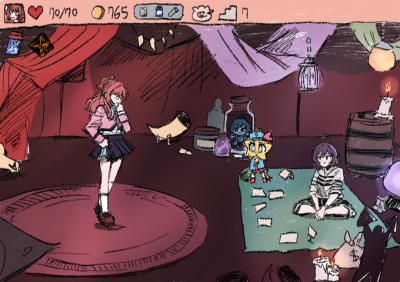
Idol Jihen, for instance, doesn’t resolve the spectral problems presented in episode six through the magic of Aomori Ringo Powers (which are, incidentally, delicious). Instead, it boldly takes a stand against the aspirations of space exploration—a notion quite popular among otaku—being undermined and discarded in favor of more mundane financial concerns. It would be remarkably true to life to observe that members of national lawmaking bodies often bicker over the allocation of public funds; this, in essence, summarizes episode six in a single sentence. In this regard, Idol Jihen proves to be exceptionally convincing because its narrative structure closely resembles low-effort propaganda. Simply converse with individuals who have followed NASA and its budget over the past fifty years, and you will find their core position encapsulated here. The manner in which this narrative unfolds in Idol Jihen is, dare I say, both romantic and pragmatic.
I could delve into the specific issues presented in Idol Jihen in greater detail, but I wish to highlight one more point: the concept of principled governance. One of the most effective defenses against criticism in politics, particularly in this context, is the assertion that one is advocating for their constituents. Certainly, everyone professes this, even if they are demonstrably incorrect and aware of it. This is precisely why every antagonist in Idol Jihen betrays the trust placed in them as elected officials. When this betrayal does not occur (as seen in episode seven), the narrative emphasizes the importance of internal consistency and personal integrity. This sends a strong and unambiguous message. It is commendable that the stories within Idol Jihen uphold the fundamental principle of governance based on integrity, and the vilification is directed towards behaviors typically condemned in governance—such as cronyism, autocracy, and prioritizing personal gain over the common good.
You might also be interested in : Avex Ban
PS. If you wish to elevate the discussion to a more meta level: Idol Jihen is as unsubtle as a trout, because nuance is a losing strategy in politics. If you find yourself explaining, you are already at a disadvantage.