UlasanAnime.com – The rhythm game IDOLM@STER Million Live: Theater Days launched the night before I was packing for Anime Expo. I’ve since invested a considerable amount of time and money into the game, and we haven’t truly experienced a significant in-game event yet. The initial “event” is essentially a period where in-game activities yield increased rewards, complemented by a daily free 30-stamina drink.

While I cannot yet discuss how events impact the game, I can share my thoughts on other noteworthy aspects. Simply put, this is the game we’ve been anticipating since Shiny Festa’s inception. It takes a significant step forward from Deresute, introducing hakomas-style dance groups (fixed at five members) and incorporating audio mixing. Currently, this feature is available for only one song, “Brand New Theater,” but it’s expected that “Thank You,” “Welcome,” and “Dreaming” will also offer this option.
Experiencing and playing “Brand New Theater” in Theater Days (I’m avoiding the nickname “Milishita” for now) is quite immersive. It offers an experience that closely resembles the S4U modes on the PS3. This is something I can authentically label as “IDOLM@STER,” now recreated in a new video game. On this level alone, Theater Days is a success in my opinion, at least comparable to Shiny Festa.
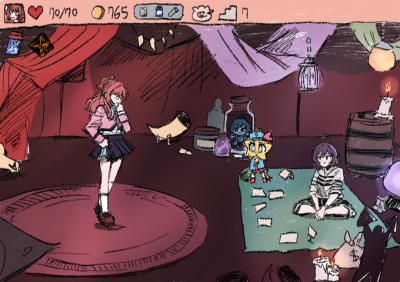
The main interface of Theater Days is rendered in full 3D, with characters gliding across the screen as if they were ships passing in the night. They move between designated points in each “room” and, apart from a few pre-scripted actions, they are largely just present. This might be a limitation stemming from randomly generated character events rather than meticulously scripted ones found in the in-game menus of Platinum Star or BanG Dream. Nevertheless, I appreciate that, on an individual basis, the idols appearing in rooms, lobbies, or hallways perform the actions we wish to see.
Unlike Deresute, I’ve been playing Theater Days with the 3D graphics enabled as much as possible. The 2D mode is rather uninspired, serving only as a static background where outfits or SSRs make no difference. Indeed, this game is designed to prominently showcase that the IDOLM@STER video game franchise is about 3D-rendered idols dancing and singing while the player engages with the game. The gameplay even pauses during the bridge of each song, allowing players to admire the idols’ performances.
I believe this is the game’s primary appeal. Simultaneously, it’s a feature that the market has been gradually moving away from. Most players today are accustomed to playing without these enhancements, primarily to extend battery life. While the hardware available in the market may still have some way to go to fully realize the Theater Days vision, we are quite close, especially with a modern smartphone (like a GS8 or iPhone 7).
The remainder of the game closely resembles Deresute. Team composition, leveling, training, awakening, and limit breaking all function similarly to modern free-to-play rhythm games that currently dominate the market. I won’t dwell on this or the rhythm game aspects of Theater Days, other than to mention that flick notes can be quite frustrating. Perhaps the most significant improvement is that Theater Days incorporates numerous quality-of-life upgrades over Deresute, such as the complete removal of inventory management. This means you no longer need to deal with duplicate cards or store them in dorms. While not a major feature, I certainly appreciate it.
Of course, Theater Days is still in its nascent stages and lacks the extensive features of Deresute. However, it appears that the developers plan to match all basic functionalities in the future. The game also exhibits some occasional bugs and communicates frequently with the server. The core gameplay functions quite well, unlike BanG Dream, which can still unexpectedly crash on my phone (as it did today).
It’s inevitable to compare Theater Days with Deresute, and so far, this comparison has been a helpful guide. While there isn’t a room for SD (Super Deformed) characters to play with, I believe this is intentional, as there’s no such element in the ML card game. The gameplay introduces a “shigoto” mode, which allows players to progress by using stamina to obtain random commus (communications) instead of playing a song. This might also be a quality-of-life feature, as interacting with idols is a hallmark of the franchise. It’s encouraging and significant to see this feature explicitly integrated into the game, rather than solely through unlockable story segments.
One final observation regarding the early days of Theater Days concerns the gacha system. Unlike Cinderella Girls, it is reasonably possible to “collect” all the Million Live characters from the outset. In fact, with 765Pro characters present in the game and receiving new voiced lines and scenarios, I was particularly keen to acquire those 13 characters first, much like in OFA! The harsh reality is that the initial gacha layout offers 26 R and 26 SR cards, splitting the full cast in half. Since there is no “friend point” gacha, you cannot roll for N cards; N cards are exclusively obtained by completing songs and work, and at a “fairly low” rate (given that this is a compu gacha you’re aiming for). Characters whose only non-N cards are SRs are difficult to obtain. Furthermore, with the SSR rate at a commendable 3%, you had a higher chance of pulling an SSR than a specific SR. With the first new batch of limited SSR/SR cards, this ratio has shifted slightly, resulting in a 0.388% chance of pulling an SR (excluding the promoted SR) and a 0.338% chance of pulling a specific SSR, which I consider to be almost the same. However, obtaining all N cards remains a challenge. As of this writing, I have collected 48 Ns, 24 SRs, and 7 SSRs, having only managed to complete all the R cards.
Let’s now discuss the meta aspects.

I’m still finding it challenging to fully grasp Kaori and Tsumugi, both emotionally and intellectually. I don’t believe this is unusual; it took me over half a year to properly get into Million Live, so I expect to feel comfortable with the two Project 39 members by winter of this year at the latest. I certainly don’t dislike them, but seeing them perform live in October would certainly help.
There are some fan-created narratives forming and reforming around Kaori and Tsumugi, and it’s quite enjoyable to witness this process unfold. The game itself breathes life into Million Live by introducing these characters to a wider audience and to opportunistic artists, so I have no complaints about that.
One of the more subtle observations regarding the two new characters is that, at this stage, their less refined characterization has necessarily led to them being somewhat caricatured. They are filling existing roles or fulfilling tropes and jokes within established dynamics. I think Fuuka is particularly feeling the impact of this. Hopefully, this is a temporary situation while Mugi and Kaori develop and come into their own.
With the SideM game also on display (currently in its preregistration period!), we get a glimpse of the multifaceted nature of IDOLM@STER as a game franchise. LOS is clearly charting a different course than TD and SS. It’s logical that the male idol side would take a distinct path from the female idol side. This makes me wonder if we might see another male idol spinoff in the future…
Perhaps the most significant development is related to Taneda Risa and Tanaka Kotoha. Kotoha is notably absent from Theater Days, which is a considerable shift. This suggests to me that IDOLM@STER is committed to avoiding seiyuu (voice actor) changes if circumstances permit, indicating an internal decision. If anything, we should infer that Tanechan is indeed returning, and it’s only a matter of time. Just as the SideM anime announcement confirms that a Million Live anime will happen, it’s also a matter of time…
I suppose I can take solace in the fact that the management is committed to making the right decisions, but it’s difficult to see the positive aspects of this situation. Tanechan is not Kotoha. However, if Tanechan is indeed returning, then we need to keep her role available for her. Perhaps there’s a temporary compromise that allows for improvement. Specifically, could Kotoha be included in the game but remain voiceless?
You might also be interested in : Anime Expo 2017: Final Report
Please get well soon & come back Tanechan, we all miss you (and not just in Million).