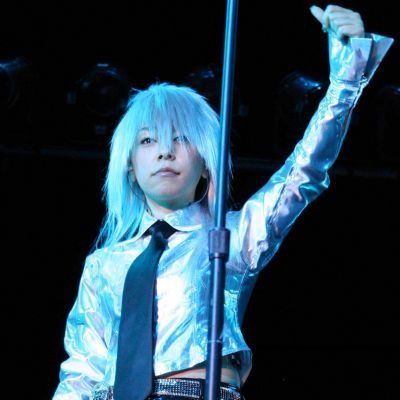
UlasanAnime.com – Anisama, or Animelo Summer Live, is more than just an anime convention; it’s a vibrant music festival that captures the spirit of a Japanese festival, a place where attendees come together to celebrate and have a good time. Twelve hours after the conclusion of Anisama Day 3, the overwhelming sensation that lingered was the intense heat.
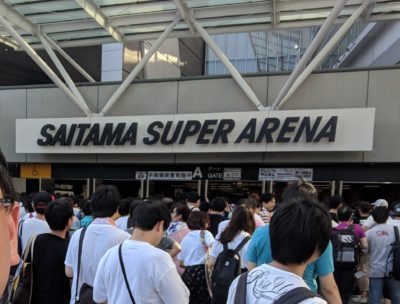
The weather throughout the weekend was scorching, with Sunday being the hottest day. Saitama’s high temperatures, combined with its usual high humidity, made being under the sun a challenging experience, especially for those accustomed to milder climates. This oppressive heat visibly impacted the enjoyment of the event for many, including myself.
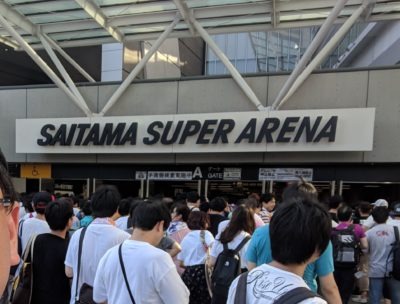
Saturday’s merchandise sales, known as buppan, were a testament to the extreme weather. Arriving at the line at 7:45 AM, I had already lost a significant amount of fluids due to the heat. The entire queue was in a state of hazard management, with everyone visibly drenched. The sun beating down, with little shade for much of the lineup, made the wait a draining ordeal, even when standing still. This continued until around 3 PM when I finally entered the venue, turning Day 2 into a considerable chore.
The heat made energetic activities like “oshi-jumping” in Keiyaki Hiroba a grueling task. It was suggested that this might explain why the atmosphere wasn’t as frenzied as the previous year. Conversations with friends revealed a stark contrast to events like Animax Musix, which offered proper “anikura” (anime song club) experiences. The thought of attempting such an activity in Anisama’s sweltering conditions seemed almost dangerous. Tragically, this concern was validated when a fellow attendee succumbed to heat stroke and had to be taken out of Keiyaki Hiroba on a stretcher, highlighting the severity of the situation.
This experience was a stark departure from my buppan experience in 2017, where a balmy 80°F with 100% cloud cover provided comfortable napping weather. Despite the humidity, the 2017 conditions were far less life-threatening. In contrast, this year, friends rushed from the station directly into the arena to escape the oppressive heat.
The perennial complaint of “eventer oshi whine” also surfaced. While last year’s Anisama was an exceptional experience, this year felt more like a standard Anisama, with its share of hits and misses. For those who appreciate anisong in general, it remained an overwhelmingly positive experience. However, for attendees focused on specific groups, a significant portion of the performances might be considered filler. Even for devoted fans, certain segments, like the farewell to Milky Holmes on Day 3, while musically enjoyable, could leave a bittersweet taste, especially for those who had similar farewell experiences with their favorite groups.
However, the core purpose of events like Anisama transcends individual group preferences. Discerning attendees recognize that the major anisong festivals in Japan—Anisama, Animax Musix, and Lisani—each possess distinct niches and approaches. Ideally, one would enjoy each event for its unique strengths. The practical limitation, of course, is the finite resources of time, money, energy, and attention span that prevent attending all of them.
Furthermore, the performance quality of some artists can vary significantly between their solo concerts and festival-style appearances. The venue acoustics, stage presence, and overall atmosphere of a live house differ greatly from a large arena. Therefore, while seeing an artist at Anisama is a valuable experience, it may not fully represent their capabilities or typical performance style.
Similarly, those attending solely for specific artists may miss the broader appeal and significance of Anisama. The emotional impact of seeing The MONSTERS perform “Snow Halation” or other moments that draw attendees to Anisama might be lost on such individuals. These deeper connections and experiences might warrant a separate discussion.
The question of whether Anisama is a “place to be” for the broader international anime fan community remains open. Unlike other major Japanese events such as Comiket, Wonfes, Cosplay Summit, Chokaigi, or TGS, Anisama is rarely highlighted in these discussions. This is a sentiment the author wishes to see change. For a long time, Anisama has been one of the most direct expressions of anime otaku fandom outside of celebrating it through Comiket or cosplay. However, these other fandom expressions have matured and established their own identities.
Anisong, conversely, still largely operates as a top-down, producer-to-consumer cultural export. Without robust marketing, a significant scene struggles to emerge. The Western scene often relies on importing this marketing, alongside the music itself, which is increasingly becoming a marketing tool. Unlike video games, anisong remains a relatively unknown category outside of Japan, a precious commodity within Japan itself, which partly explains Anisama’s existence.
Anisong represents a relatively new genre. Unlike anime conventions that can focus solely on music, or events centered around dealer’s rooms, artist alleys, or cosplay meets, Anisama fills a unique gap in the anime event landscape. This gap is also mirrored in the Western desire to import “anikura” experiences, suggesting a similar unmet need.
The setlist for Anisama 2018 can be found here.
The festival aspect of Anisama is particularly noteworthy, largely due to the creative influence of producer SaitoP. Interviews with him featured on “Anisong Station” (Anisute), which is available subtitled on Crunchyroll in the US and Canada, offer valuable insights into Anisama and the current anisong scene. This accessibility is crucial for understanding the cultural nuances that are often missed in the West, as previously mentioned.
SaitoP has articulated that Anisama’s core is dedicated to artists who perform anisong. The festival carefully balances its lineup with a mix of established and emerging artists, rare and common acts, and surprise and anticipated performances. A key philosophy is to prioritize original performers over cover artists, thus minimizing the need for covers of songs that the original artists could perform themselves. This approach explains the inclusion of acts like EZ Doo Dance in previous years, City Hunter songs, and Do As Infinity in 2018.
While the author admits to playfully criticizing Animax Musix, another major anisong festival in Japan, it’s primarily because Animax Musix tends to focus more on current hits and collaborations among popular anisong artists. Anisama, on the other hand, is willing to delve into more niche or unexpected performances, such as “Bad Apple” or “Hellshake Yano,” as demonstrated this year. The author’s playful jabs are partly in response to someone who criticizes Anisama without having attended it.
Skipping Day 1 meant walking through the setlist without direct experience, leading to a more free-flowing discussion of random thoughts, beginning with Day 2.
“ORE NO AIBA GA.” This phrase hints at the significant draw of the Umamusume franchise for many anisong fans on Day 2, particularly those attracted to its 3D elements. For fans like the author, who appreciate quality female voice actors, the appeal of Umamusume is undeniable. The series’ structure, reminiscent of THE iDOLM@STER and developed by Cygames, further enhances its appeal, even with its horse-girl racing theme.
The “intro to horses” served as the unofficial “first song,” though it wasn’t explicitly listed on the website. This segment involved the Umamusume cast running laps around the arena, with surprise guest Stefuji providing commentary. A spotlight was placed on Stefuji in a VIP box, complete with a themed backdrop and camera. The iconic brass intro to “Umapyoi Densetsu” played as background music. The segment concluded when the team returned to the main stage and performed the final chorus of “Umapyoi Densetsu,” with the performers running in character.
This performance was a highlight for the author, largely due to the surprise appearance of Fujii Yukiyo, whose work the author has come to admire. The element of surprise, coupled with the author’s seating location near the first corner of the racecourse, provided a closer view of the performers. “Umapyoi” is known for its extensive call-and-response sections, and the song’s conclusion with only the final chorus left many feeling a sense of anticlimax, as the calls were omitted.
The author had also woken up early that day to purchase limited edition Umamusume Anisama T-shirts, acknowledging their popularity and the luck of those who managed to acquire them. This effort underscored a strong, albeit short-term, attachment to the series within the context of Anisama.
The other two Umamusume songs performed were the standard opening and ending themes from the anime. These were enjoyable and featured typical audience calls. The earlier “blue-balling” from “Umapyoi” was somewhat mitigated by the Aniuta booth in Keiyaki Hiroba, which played the song at times, drawing crowds and enthusiastic calls.
Day two’s other notable performers were Ayachi and Aocchi. Both appeared as solo artists and also performed together as Petite Milady, contributing a significant number of songs. Taketatsu Ayumi performed two songs from Dagashikashi, her usual energetic style complete with mace twirling. Yuki Aoi, however, made a striking appearance in the first half, dressed in a fantasy outfit with prominent horns, likely for her performance of the theme song to “Piano no Mori.” In the second half of Day 2, she delivered “Los! Los! Los!” in a faux Nazi uniform, standing before a pulpit – a performance that was both visually striking and, to the author’s American sensibilities, somewhat awkward. In between, she performed a peculiar song where she pretended to be a cat. Many songs this year featured their respective music videos playing on the main stage, evoking a similar feeling to watching the original promotional videos.
The Petite Milady segment, featuring Ayachi and Aocchi, was particularly memorable, culminating in a skit that was a direct parody of “Pop Team Epic,” including the song from the anime.
You might also be interested in : Otakon 2018: Conclusion
While the song itself lacked the male dub, the MC segment incorporated it, with the two female performers mimicking the motions from the original skit using their voices.
Adding to the comedic elements, Ayachi also made a cameo during fhana’s performance of “Aozora no Rhapsody,” appearing as a patron in their maid cafe. According to Waga Yuki, she was enjoying A5 Kobe beef during the song, a detail that might not sit well with Otsubo-pro.
The “First plus Best” approach was evident for many artists on Days 2 and 3, and looking at the setlist, it was also a strategy for Day 1. For instance, fhana performed “Que Sera Sera” and “CHU-CHU YEAH,” Minami sang “Precious Memories,” True delivered “Dream Solster,” and Hasshi performed “YES.” These are all excellent choices for introducing new attendees to these artists.
Trysail was a group the author supported significantly on Day 2, with fhana a close second. They also followed the “First plus Best” format, opening with “Adrenaline,” arguably their most popular song, surpassing the already popular “High Free Spirits.” The song’s energy was infectious, and the Anisama crowd had clearly mastered the accompanying calls. The intro to “Wanted Girl” was also solid and perfectly captured the spirit of Trysail.
Interestingly, the male performers truly shone on Day 2. SideM was a definite highlight, though Miyamo Mamoru stood out as the most talented performer of the entire day. While not fully up-to-date with SideM, the author recognized the three songs they performed at Anisama, including an impressive rendition of “Glorious Ro@d.”
Revue Starlight exceeded expectations. Their theatrical approach scaled exceptionally well with the venue, and the grandeur of their orchestral arrangements filled the space. Not all musical acts translate effectively to a large arena setting in a festival format.
The fact that they covered “TeiGeki” was particularly revealing, essentially stating their identity. This embrace of spiritual successors to the Sakura Taisen legacy is welcomed, even if their battles are fought in surreal dreams rather than as imperial forces. Despite potential improvements needed for the Revue Starlight 99th troop, their Anisama set could serve as a powerful main attraction, captivating audiences even without prior fandom.
The duo Mimo x Mino made a return this year, performing “JOINT” in sleek, black outfits. While not a personal favorite song, Kawada Mami’s covers are always a welcome addition.
Day 3 was characterized by a few standout moments: THE MONSTERS, HELL YEAH, and the Milky Holmes farewell.
The day kicked off with a high-energy performance by iRis and Milky Holmes, with each subsequent guest adding to the growing excitement. This approach made sense, as these artists are highly anticipated by the audience, offering a solid display of anisong artists and voice actors delivering engaging stage performances.
The farewell to Milky Holmes at Anisama required a special touch. While the author missed the WUG farewell on Day 1, the abrupt hiatus announcement of Altima two years prior remained a perplexing and disappointing moment. In contrast, Milky Holmes’ farewell on Day 3 felt exceptionally well-executed and well-deserved, reflecting their long tenure in the industry. It evoked comparisons to MLB players receiving farewell tours upon retirement.
Sister’s performance was somewhat unusual. Although unfamiliar with the UMR project, the author recognized Kageyama Akari from a previous convention. Her presence on stage was a surprise, and it wasn’t until they performed UMR songs that the connection became clear. The performances were highly energetic, with two enthusiastic young fans in the audience providing a source of amusement.
THE MONSTERS was another highlight of the day. Their rendition of “Snow Halation” was described as unparalleled. The performance began with a large platform rolling onto the stage, displaying “THE MONSTERS” on the main screen. The five members of JAM Project performed on the platform, with Makkun MCing and introducing each member with their “MONSTER” name, such as Monster Bomber on drums (Fukuchan). The three front members then took to the stage with microphones, delivering a powerful performance of “Snow Halation.” The author noted its “dad rock” aesthetic.
Immediately following was Hellshake Yano, presented as a live adaptation of the “Pop Team Epic” skit, tailored for the SSA venue. The AC-bu members rallied the crowd to chant Yano’s name, which was readily obliged. Sumipe then joined the stage, firing imaginary shots for the “Pop Team Epic” opening, a performance that was both peculiar and captivating, embodying Sumipe’s unique style.
A significant portion of Day 3 was dedicated to the Card Captor Sakura block, featuring Suzuki Minori and Hayami Saori performing “Catch You Catch Me.” Their performances included songs leading up to this, with both artists having contributed to the new CCS anime. This programming felt perfectly suited for Animax Musix, but it was also a welcome addition to Anisama’s lineup.
The author expressed satisfaction with Naobou’s new songs, noting that unlike the previous year, her anime tie-ins this year were not disappointing. Hayamin’s newer songs were also deemed more suitable for her, with her previous foray into big jazz being considered a misstep.
A recurring theme at Anisama this year, building on the previous year, was the presence of first-time performers who were once attendees. ZAQ served as an honorary dreamer spokesperson last year, and YURiKA, who attended as a child, took on a similar role on Day 3. Suzuki Konomi provided a strong closing performance for the first half of Day 3 with the “Watamote” opening, making up for the previous year’s “Lost Song” disappointment.
While Day 3 offered many exciting moments, few were truly standout. The surprise guests Mocho-Ten-Nan, performing as solo artists, were memorable primarily due to the rarity of such an opportunity. Those who weren’t already fans might not have been as engaged. Mocho made an announcement during the MC before the intermission, concluding with her signature “owaridayo” line. This was followed by her appearance on a cart, leading to a performance of “Pripri Chiichan.”
The author was disappointed that the cart did not reach the back of the arena, where they were seated. However, the knowledge that Nansu would have her solo at Anisama meant that Fuwakoro (Fuwari, Korori, Karan, Koron) would be featured, a moment anticipated by many.
The performance was excellent. Nansu emerged from the center stage accompanied by a troupe of elementary school girls who provided backup dancing. Meanwhile, Tenchan had made her solo entrance from the top of the center stage, her humongous dress adding to the spectacle.
The three surprise guests concluded their performances quickly, without MC