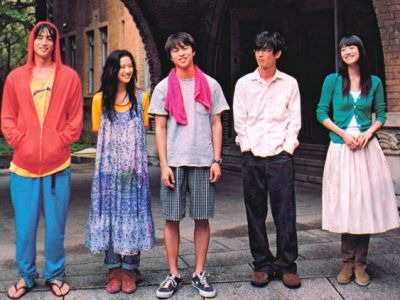
UlasanAnime.com – My recent trip to Japan in December 2018 was primarily driven by attending two major events: CG 6th in Nagoya Dome and Wake Up, Girls! Final Tour in Iwate. However, I also leveraged my Japan Rail Pass to explore the country for tourism purposes in the days between these events. The frequency of my visits to Japan this year was such that I found myself dating my trip by the month rather than just the year or quarter.
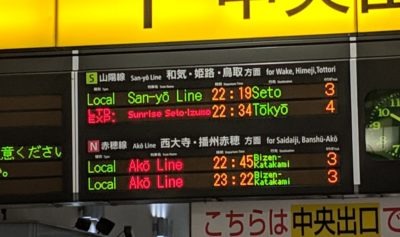
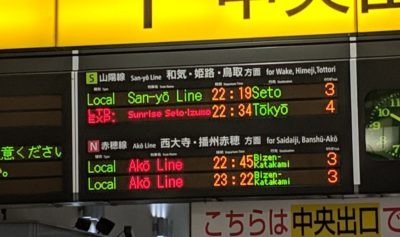
I traveled extensively, more so than my usual weekend excursions, which afforded me ample thinking time during my Shinkansen journeys. The Shinkansen trains are truly remarkable. I witnessed the Hayabusa and Komachi trains detach at Morioka, with their nose cones transforming to cover the latches. A child behind me exclaimed, “Shinkalion da!” I also experienced an overnight train from Okayama to Tokyo. My travels allowed me to finally see the Seto Inland Sea while riding a bus around Mihara, and I savored okonomiyaki in Hiroshima. Most significantly, I finally had the opportunity to visit a Japanese car museum.
Among Japan’s global accolades, I believe Japanese cars are arguably the most renowned. Even before discussions of peculiar cultural traits, sushi, ninjas, or anime, these powerful machines have facilitated the daily lives of hundreds of millions worldwide. It’s akin to observing in “Jack Ryan” how affluent terrorists drive Land Cruisers while less privileged ones opt for Tacomas. Jokes aside, Toyota’s position as the world’s number one car company is a testament to something significant. It likely encapsulates post-atomic bomb Japan’s economic resurgence and its current global standing.
It was a rewarding experience to journey back in time and witness the humble origins of these modern automotive marvels. The Toyota Automobile Museum in Nagoya surprisingly dedicated about a third of its space to textile manufacturing equipment, which felt like a subtle boast. After all, Toyota’s genesis was in manufacturing textile machinery. While a full tour might be available at their main campus, time constraints prevented me from visiting. I spent a couple of hours before the Nagoya live event examining a massive metal press and observing how remarkably small a Prius battery is compared to the skate-style batteries in newer BEVs. The museum offered many fascinating details for car enthusiasts and, more broadly, for a general and youthful audience.
My connection to the Mazda factory tour was more emotional. Although the museum space in Hiroshima is smaller, the English-guided tour includes access to their primary assembly line. This experience strongly reminded me of my previous car, which was also manufactured in Hiroshima—the sole location for MX-5 production, and possibly the only assembly line. The Mazda company occupies a substantial portion of Hiroshima city, with sprawling complexes encompassing ports, warehouses, factories, schools, dorms, hospitals, and gyms. Despite being in a somewhat remote area, it was a source of local pride. The tour also welcomed many school children.
You might also be interested in : Importing Japanese Eventing Culture: Chara Expo USA 2018
Watching an MX-5 being assembled was quite impressive, and I admit to shedding a single tear. This was one more tear than I shed at CG 6th. The sentiment reflects the common joke that the franchise is no longer the small, agile, fun-to-drive entity it once was.
Cinderella Girls 6th Live was a breathtaking visual spectacle. Having attended a few concerts at the Seibu Lions’ home, Metlife Dome, I found it lacking in comparison. Metlife Dome, despite its innovative and eco-friendly semi-open design resembling a UFO embedded in the Japanese hillside, is a subpar venue. Nagoya Dome, however, was a significant improvement. I particularly appreciated the acoustics, even with the outfield bucket seats. The full dome roof also enhanced the visual presentation, making it less jarring.
There is much I could elaborate on regarding CG 6th, but I was particularly pleased to witness TriPri’s powerful performance and how “AAAAAARu” Field seamlessly transitioned into Nagareboshi Kiseki. I thoroughly enjoyed “Treasure” and found the appearance of Kirarin Robo in a metaphorical sense quite entertaining. The portrayal of villain Acchan with a frying pan was also memorable. Curiously, there were many exposed bellies throughout the performance. I am glad I had the opportunity to be part of such a well-executed event and fulfill a personal promise made at AX.
I intend to discuss the Wake Up, Girls! (WUG) concert in Iwate and my time in Morioka separately, as the entirety of that visit forms a cohesive experience. Therefore, I will dedicate a distinct section to it.
This trip also included several other minor objectives. One was to stay at the “famous” Economy Backpacker Hotel New Koyo in Minami-Senju. I would only recommend this establishment to those comfortable with dormitory-style living in a somewhat run-down environment, especially considering its price of 2900 JPY per night. The primary appeal seems to be its affordability and English-speaking staff. There are similarly priced single-room hostels that appear less dilapidated and might even be closer to the station for a slightly higher cost. Budget business hotels typically start around 5000 JPY. The true reason for my stay, however, was the number of acquaintances who had stayed there, prompting my curiosity.
I also attempted to work remotely while in Japan. This endeavor proved only partially successful. I found that having a desk and chair is crucial, as staying awake is challenging when confined to a bed for extended periods. My frequent meetings often required me to be online during Japan’s sleeping hours. New Koyo is not conducive to such activities, and I plan to retry remote work in a more suitable hotel setting on future trips.
Another experience I incorporated into this journey was taking an overnight bus. Japanese buses offer an interesting range of options. I have now experienced the standard mass transit version, shuttle buses, tourist buses, and the overnight sleeper bus, which includes a restroom. I opted for a more luxurious experience by choosing a 3-seat-per-row configuration, providing a premium economy-like seat for personal use. This type of seating is uncommon in the United States. My primary reason for choosing the overnight bus was its feasibility for reaching Tokyo in time for my morning flight, originating from Morioka.
In terms of destinations, beyond the automobile museums in Nagoya and Hiroshima, I visited Takehara as an anime pilgrimage site. The journey was somewhat complicated due to the Kure line being affected by earlier flooding and typhoons, necessitating a bus from Mihara station to reach Takehara using the JR Pass. Alternatively, a direct bus from Hiroshima was available but cost approximately one thousand yen one way. Mihara station itself is noteworthy as a Shinkansen stop, built atop castle ruins. The bus route to Mihara followed the coast, offering scenic views, though it extended the travel time for this side trip.
Regarding events, I also attended Machico’s solo live performance on December 1st in Yokohama, as well as a mini-album release event at HMV Shibuya for Komagata Yuri, in addition to the previously mentioned live events. In retrospect, I could have potentially scheduled more activities, but the existing itinerary was already quite full.
A significant portion of this trip involved solo travel, which I found refreshing after my September trip. My previous tourist excursion to Japan was largely confined to a tour bus, adhering to a schedule dictated by the tour company. While enjoyable and eye-opening, it was restrictive. This trip offered greater freedom to pursue my own interests, with the quality of the experience directly correlating to the preparatory research I conducted. If the opportunity arises, combining both approaches seems like a viable strategy.
PS. On my departure from Japan, I took a Monday 10 am flight from Haneda to JFK. While awaiting boarding, I spotted the renowned video game developer Hideo Kojima in the first-class queue. Although initially uncertain, it was indeed him, a fact later confirmed by his tweets later that week.