UlasanAnime.com – As the seiyuu unit Wake Up, Girls! embarks on their farewell tour, it evokes parallels with the poignant farewells of retiring Major League players. The unit, much like these athletes, is experiencing an extensive send-off across various events, including Animelo Summer Live and Animax Musix Yokohama earlier this year. The anticipation for their appearance at AnimeJam this coming weekend adds to the sentiment.
While the official disbandment is slated for the end of March 2019, the Wake Up, Girls! intellectual property will persist, notably through a mobile game. The voice actresses’ contracts for the main project will conclude, though they are expected to continue contributing to the franchise. This involvement may not extend to live performances or as extensive media opportunities as before, such as their ongoing radio shows, live-action theater, or solo artist endeavors, particularly concerning new songs and concerts.
The actual farewell tour, structured in three parts, commenced after the disbandment announcement. Part 1 included stops in Chiba, Kanagawa (Zama), and Saitama (Omiya). Part 2 is set to cover Osaka, Iwate (Morioka), and Kanagawa (Yokosuka) again. Part 3 will visit Kumamoto, Osaka (again), Nagano, Tokushima, Aichi (Nagoya), and conclude in Miyagi, specifically Sendai. This extensive itinerary features at least two shows per stop, with the Aichi stop boasting five. Osaka will host a total of eight shows across Parts 2 and 3. While some dates have sold out, tickets for less frequented locations remain available.
The choice of tour locations holds significance as the farewell tour brings the Wake Up, Girls! members back to their home prefectures. Yoppi’s home in Kumamoto presents a particularly long journey, making its inclusion noteworthy. Kaya hails from Iwate, and this tour marks the group’s second visit to Morioka. Minyami and Myu are from Kanagawa and Chiba, respectively. MayuC’s hometown is Osaka, a city that has hosted Wake Up, Girls! more than any other outside the Tokyo region. Nanamin is from Tokushima, a less common tour stop, though the group has frequented it due to Machi Asobi. Aichan, a native of Sendai, will naturally be the focal point of the final tour stop in Miyagi, which is the second most frequent tour location outside of Kanto for the group.
Sendai holds a special place for Wake Up, Girls!, being the birthplace of the group and the project. A core mission of the team has been to promote the Tohoku region, which has faced ongoing challenges. The formation of the group in 2012-2013 was as much about promoting Japan’s rural areas as it was about representing them within the niche of seiyuu idols and media mix projects. It is heartening to see the management remain committed to this aspect of their mission. The author, for instance, would not have had a reason to visit Sendai until the following year, but for Wake Up, Girls!, a good 3.5 years after their initial visit. This engagement has provided insights into numerous places to visit, both past and future, and sights to recommend. The TUNAGO solo tour earlier this year exemplifies this, where fans traveled across Tohoku to attend solo events in small rural halls. This was followed by a bus tour that included visits to rebuilding areas along the eastern coast, surveying the reconstruction efforts in the wake of the 3/11 tsunami.
In a similar spirit, the visit to Morioka for the Wake Up, Girls! Final Iwate event was as much about the group as it was about Morioka itself. The author’s decision to attend was primarily driven by timing, rather than a particular affinity for Iwate or Morioka, acknowledging that another reason to visit this part of Japan might not arise.
The concert was scheduled for Sunday afternoon and evening. To catch a morning flight back home from Haneda on Monday, the most practical transportation option was a night bus. This was both affordable and convenient, with the bus depot located directly at Morioka Station, a short walk from the hotel. The overnight snowfall on Saturday was a minor concern, but it did not pose any significant issues, as the weather in Morioka was still milder than at home. Unlike the Kanto region, this part of the country regularly experiences snow, making transportation disruptions less common.
Arriving in Morioka by train on Saturday morning, the journey via the Tohoku/Akita line was swift, taking approximately 2.5 hours. In Morioka, the Hayabusa and Komachi Shinkansen trains separate, a process that can be observed. The Komachi train in front decouples, moves forward, and then both trains retract their latches and aerodynamic covers, a phenomenon akin to Shinkalion.
At the station, a well-known local delicacy, the fukuda pan, is available. These are essentially bread rolls with various fillings, similar to enhanced buttered breads. The author sampled chestnut and plain butter flavors, finding them quite enjoyable due to the quality and freshness of the bread.
Transportation within Morioka is limited to JR lines, with no local rail mass transit. Buses are available and inexpensive, but they are not significantly faster than walking. JR local trains primarily serve the suburbs, offering little utility for city travel. While a tourist bus operates, the author opted to walk between JR Morioka Station and the main castle park area.
During the visit, a Salmon Festival was underway in the park. Unfortunately, most of the offerings were not portable, requiring immediate consumption or the purchase of whole fish or shellfish. The salmon, however, looked appealing.
You might also be interested in : Japan Trip Dec 2018
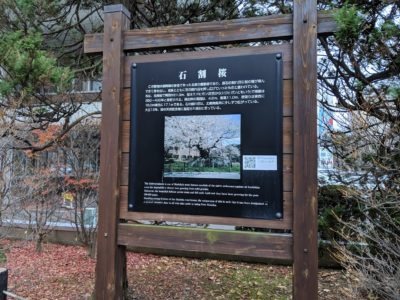
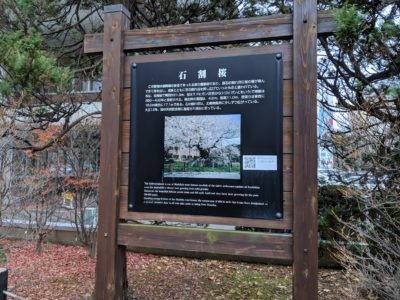
The main park area encompasses three elements: a park, the remnants of Morioka Castle, and a temple. While not particularly scenic on a dreary December weekend, it is imagined to be beautiful during cherry blossom season. Nearby are a historic house and museum, along with older pre-war buildings. A few blocks away stand government buildings and the famous Rock-Breaking Cherry Tree, which has grown through a boulder. As is often said, this tree encapsulates the spirit of Iwate.
Morioka itself offered limited major attractions. The author took a walk to get a feel for the city, finding it cold and walking a considerable distance. Despite being somewhat rural, it presented a more urban facade than expected. The older town area, where the walk took place, felt distinctly “Morioka,” reminiscent of Sendai and Hakodate, perhaps due to its geographical position between the two. The area across the JR Shinkansen tracks felt more like a modern, newly developed suburban district, featuring large stores like Bic Camera and Round 1 near the author’s hotel, contrasting with the densely zoned businesses and residences on the other side of the station.
Instead of further walking, the focus shifted to dining. Morioka is renowned for three types of noodles: jya jya men, reimen, and wanko soba. All three were sampled.
Reimen is a Korean cold noodle dish. While variations have been encountered across the USA and Taipei, the Morioka style is served as a cold ramen with sweet seasonings. It is typically accompanied by apple or pear in the broth during winter, and watermelon in summer. It is best enjoyed in hot weather or after Korean BBQ/yakiniku to provide a cooling effect. Although not paired with BBQ, the reimen was still delicious. The author recommends ordering it spicy, with the caveat that Japanese establishments generally tone down their spice levels.
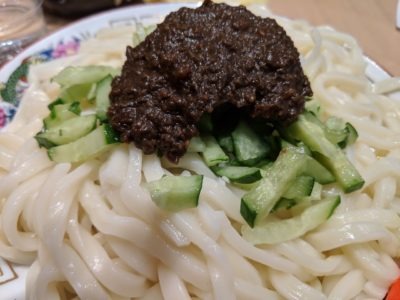
Morioka’s jya jya men is similar to its Chinese and Korean counterparts, with the key difference being the use of miso instead of black soybean paste or fermented flour paste. This results in a meat miso that is mixed with the noodles and served with similar toppings. Due to miso’s milder flavor profile compared to soybean paste or fermented flour paste, a wider array of toppings like umeboshi, grated ginger, or rice vinegar can be added. The noodles are thicker, akin to udon. It offers a cost-effective and filling meal, with a 600 JPY serving providing ample satisfaction, complete with chi tan tan, a complementary soup made by mixing an egg with hot noodle water in the same bowl.
The jya jya men was so enjoyable that it was consumed three times. The dish is available at the station under the name Pairon, and its convenience made it an easy choice for meals throughout the day. Beyond these noodle establishments, most places in Morioka close early, making jya jya men a suitable alternative to ramen.
Wanko soba is presented more as an experience than a mere dish. Servers deliver small portions of soba one after another until the diner is full. This process involves a certain ceremony, making it an ideal opportunity for photos. The author’s group was served over 300 portions by their server, creating a visually striking, albeit potentially overwhelming, spectacle. The pace is rapid, with the next serving arriving immediately after consumption. A brief respite occurs when the server’s plate runs out of noodles, but these rounds can be intense. Wanko soba is lightly seasoned with soy sauce, and additional condiments like ground chicken, grated daikon, or other options are provided. However, the rapid consumption often leaves little time to appreciate these additions. The entire experience can conclude in under an hour if the meal is not drawn out. The unique experience of a Moriokan waitress continuously serving noodles proved to be surprisingly entertaining. To signal the end of eating, a specific procedure involving placing the lid on the bowl is followed. The server’s tactic is to continue serving noodles even when the bowl is presented as empty, continuing until the diner finishes the contents of the bowl.
This experience leads to speculation about why Kayatan might have a somewhat “S” personality.
While wanko soba is best enjoyed as a proper meal, most establishments close relatively early, around 8:30 PM. Reports suggest that wanko soba in Tokyo does not match the quality of Morioka’s rendition, though this remains unverified. The author visited Azumaya near JR Station, which is also featured in a CNN article.
The live performance itself was a significant highlight.
Set list here (again)https://t.co/RALsE9fqCP
WUG is too good to deserve this final tour crap. Go see this Japanese group before they get dismantled!
? omo@KawaiiKon2024 (@omonomono) December 9, 2018
The author decided to adapt a setlist from a previous post, making minor character adjustments.
- M1. Suki no Skill / all (Suki no Skill outfit)
- M2. outlander rhapsody / all (PART II new outfit)
- M3. Little Challenger
- MC: (day: wanko soba mascots added http://www.iwatetabi.jp/wanko/ )
- M4(day). Unmei no Megami
- M4(night). knock out
- M5. Jewelry Wonderland
- Live Reading??WUG 7 sisters?
- M6. Polaris
- (Day: Begins with Ame ni mo Makezu, WUG audition look-back with a letter read, with images of Kaya, Iwate/Morioka.)
- (Night: Messages from each WUGchan, in order of Yoppy, Nanamin, MayuC, Aichan, Myu, Minyami, Kaya.)
- M7(day) Ihatov no Kaze / Ihatov Singers & Okuno Kaya
- M7(night). Tabidachi no Toki / Ihatov Singers & Okuno Kaya, second half of the song the other 6 joined in
- M8. Kotonoha Aoba / Ihatov Singers & Okuno Kaya & the other 6 & the audience (the 6 were in the aisles). Day version has the 6 join in half way, night version has all 7 from the start + audience half way
- (Same video as Osaka/Kishiwada ? Wake Up, Girls! MEMORIES 2017, 2018)
- M9. 7 Girls War / All (5th outfit, during bridge they went into the aisle 1F)
- M10(day). Tachiagare!
- M10(night). 16sai no Agape
- (MC)
- M11. Shizuku no Kanmuri
- M12. Beyond the Bottom
- (Encore)
- EN1. Seventeen Crisis / MayuC, Aichan, Nanamin, Kayatan, Myu with Minyami, Yoppy (Part II T-shirt + Anisama skirts). Half way through Minyami and Yoppy left and reappeared in 2F stands (Yoppy) and 3F stands (Minyami)
- EN2. Heart Line / all
- (MC. No announcement.)
- EN3. Shoujo Koukyoukyoku
The segment featuring the Ihatov Singers and Kaya was exceptionally moving, creating a heartfelt Iwate special, particularly the country girl Tohoku version. The execution was superb, and the rendition of “Kotonoha Aoba” in a choir format, accompanied solely by piano and evoking abundant tears, was profoundly impactful, making the flight worthwhile even for a Myu oshi.
Ihatov Singers are a choir based in Iwate. The meaning of “Ihatov” was eventually deciphered by recalling Miyazawa Kenji’s works, leading to the realization that it might be more accurate to say “what anime did Miyazawa.” The author contemplates watching “Spring and Chaos” for further context.
This marked the second and third performances of “Suki no Skill,” which was described as a lovely skill. “Outlander rhapsody,” with its lightsabers and dragon imagery, was deemed 10/10 entertainment.
The moments when the Wake Up, Girls! members walked through the aisles were consistently met with delight from the audience, suggesting this practice should continue.
The “7 sisters” skit followed the typical seiyuu material format, with a heavily scripted narrative and interspersed pre-determined ad-libs and mutual teasing. It was highly entertaining, especially Myu’s quirky dance moves.
During the night show, the author’s seat was in the second row of the center section on the second deck, adjacent to the kankeisha section, which was sparsely populated. It was later realized that Mikoi was present, though unrecognized due to her mask.
For the day show, a last-minute ticket acquisition from Twitter led to a seat in the back corner of the first floor. The author opted to move to the last two seats in the section for more space, acknowledging that forfeiting three rows made little difference from that vantage point. The two-seat set in the back corner was occupied by the author, facilitated by the show not being sold out.
The audience’s “ore mo” call during “16sai” was deafening and appreciated. The night version of “17 Crisis” was described as exceptionally hype, amplified by Minyami and Yoppy’s energetic movements. While the same occurred during the day show, it was perceived as more surprising than hype.
Regarding merchandise (buppan), the availability of fanclub-exclusive items and a stamp rally within the fanclub area, along with pre-orders for an alarm clock, was noted. The usual fanclub sign-up referral was also present, with prorated pricing. The author intentionally limited purchases to avoid reaching the 15,000 JPY threshold for a special item, questioning the utility of acquiring merchandise for a group disbanding in four months.
Overall, the experience in Morioka was highly enjoyable. The day prior was spent exploring the city, as Sundays in the countryside are typically quiet, with most establishments closing by the time the show concluded. Despite missing out on some desired events (like ZAQ Osaka?), the author emphasizes that events are transient and Morioka’s sights are worth exploring. Attending with a group is also recommended for a more enjoyable wanko soba experience.
PS. Iwate is also known for another otaku-related reason: Miyazawa Kenji. The author maintains a vague interest in the career of seiyuu Kuwashima Houko, and Miyazawa Kenji’s work is considered one of her most significant roles, with a deep connection to Iwate. A pilgrimage related to this is considered premature, making the visit to Morioka for Wake Up, Girls! an appropriate level of engagement for a first-time visitor.