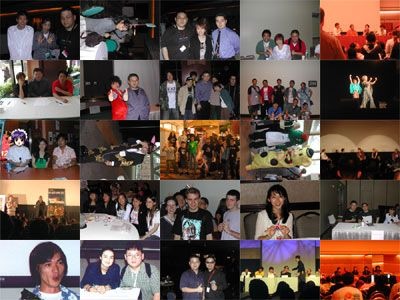
UlasanAnime.com – The International Fan Festival Toronto, held two weekends prior, marked its inaugural year in the city. While the convention itself had a technical run in Osaka in 2018, coinciding with October Machi Asobi and WUG Final Tour part 2 Osaka, its presence in Toronto was a debut. The author recalls the Osaka event due to the scheduling conflict it presented with photo sessions for some veteran seiyuu, which also clashed with other significant events.
More significantly, IFF Toronto was organized by the same team behind AniRevo Summer. This was evident from the familiar faces among the interpreters and guest liaisons, many of whom the author had encountered during their attendance at AniRevo in Vancouver. The overlap extended to some guests, notably Ueda Kana, and Takadera Takeshi, who played a crucial role in managing various aspects of the convention from the Japanese side. Takadera was a constant presence backstage throughout the event, often seen accompanying the Japanese guests, whose appearances were the primary draw for many attendees.
As a first-year anime convention in Toronto, IFF Toronto experienced the typical growing pains. However, the attendee base was notably dedicated for a debut event, with badge sales heavily leaning towards premium tiers. The Master tier was priced at 5000 CAD, and the Diamond tier at 2000 CAD. The most popular choice among significant spenders was the Platinum tier at 400 CAD. A more cost-effective option, the Gold tier at 250 CAD, was also available, though Platinum pass holders appeared to outnumber Gold pass holders by a ratio of two to one. While specific benefits for each tier were not detailed here, most of the author’s acquaintances and friends opted for either Platinum or the general admission (“pleb”) tier, with a few choosing Gold.
In terms of guest lineup, it is argued that no other first-year North American convention could boast a stronger roster of Japanese guests. This impressive lineup was partly facilitated by the significant “weeb” and Asian population in the Greater Toronto Area (GTA). The convention also featured a wotagei game, which added considerable fun to DJ Kazu’s sets, both for spectators and participants. In addition to DJ Kazu, the event hosted Tokyo Active Neets (TAM and Akai Ryusei), known for their doujin anison cover performances. A major highlight was the presence of the main cast from Fate/Stay Night – Saber, Shiro, Rin, and Sakura (Kawasumi Ayako, Sugiyama Noriaki, Ueda Kana, and Shitaya Noriko). Nakajima Megumi and Suzuki Konomi also participated in panels and performed at the Saturday Concert.
Beyond the Japanese guests, the convention featured local Japanese anime-adjacent actors, some of whom might be recognized from Sailor Moon, though the author could not recall their names. A personal highlight was a photo opportunity with ProZD, an influencer and YouTuber known for his expertise in the anime community, facilitated by the Platinum badge entitlement. Cosplayer guests were also in attendance.
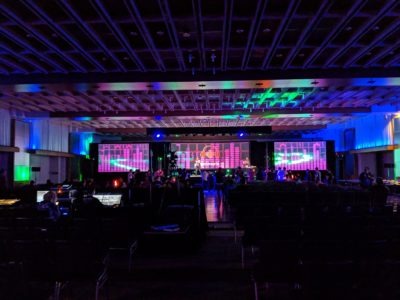
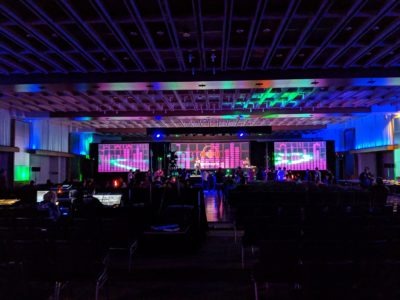
The convention was held at the MTCC, a venue deemed excellent for an event of this size, with an estimated attendance likely under 2000. The author and many out-of-town attendees stayed at the Intercontinental hotel, conveniently located just a five-minute walk from the convention center, allowing for quick transitions between the hotel and the event. While parking in downtown Toronto incurred costs, attendees had the option of utilizing public transportation or walking to nearby dining establishments, as numerous options were available.
The author traveled to Toronto with three friends, departing on a Thursday night and stopping overnight in Rochester. They resumed their journey around 8 AM the following day, arriving at the convention by 11 AM. Since the Friday schedule was not a priority, they opted to visit the CN Tower and enjoy lunch at its renowned revolving restaurant. The experience, though somewhat expensive, was deemed worthwhile. The CN Tower’s proximity to the convention center and Rogers Centre was notable. The Blue Jays were out of town, and the weather was damp and dreary, contributing to a relatively quiet downtown weekend, coinciding with Easter festivities, as elaborated in the postscript.
The author admits to spending minimal time outside the convention. On Friday night, local wota/anikura enthusiasts hosted a DJ set panel, which served as a good warm-up. Apart from taking a photo with ProZD, the author did not engage in many other activities. The dealer’s room was described as essentially a large artist alley with a few dozen booths offering little of significant interest. This was considered somewhat unavoidable, given the concurrent events of Sakuracon and Anime Boston. Consequently, time was spent watching live performances and socializing, often while enjoying ramen or other local fare. Toronto’s ramen scene was noted, though its quality was ambiguously assessed.
A screening of MechaUde was attended on Friday night, an event the author found engaging. With CyberConnect2 now involved, there’s a possibility of a proper release in the future. Takadera, serving as the sound director for MechaUde, was present to introduce the screening. Having backed the Kickstarter and watched it previously, this screening served as a welcome refresher.
Saturday morning marked the convention’s first surge in activity. Approximately fifty Platinum pass holders and a few dozen Gold pass holders queued to ascend the escalator to the exhibit hall, which housed the artist alley, photo booths, and autograph areas. The queuing system was somewhat disorganized, with lines often not forming until about 20 minutes before the scheduled start time. While this approach worked reasonably well due to the manageable crowd size, it did create some confusion, particularly with the need to stage three separate lines (Platinum, Gold, and general admission) which consumed considerable space, especially during staggered session timings.
From a Platinum pass holder’s perspective, the experience was generally smooth. One Diamond tier attendee, who was absent until the Kawasumi Ayako autograph session and panels, became a point of amusement. The entire Platinum contingent cheered him on, and even Ayako joined in on Sunday. This attendee effectively bypassed all queues to get his items signed. The “Diamond guy” became a running gag throughout the con, a humorous legend in his own right, and the author notes it was not perceived negatively.
A community stage was also present in the dealer’s hall, where DJ Kazu delivered his first set. Building on the established atmosphere from Friday night, this performance was well-received. The only issue was the author’s decision to leave midway through the 30-minute set to attend an autograph panel.
The autograph sessions proceeded without significant incident. The author opted for a more relaxed approach on the third day, allowing the schedule to dictate their activities and choosing to skip some autograph sessions in favor of panels.
Focusing on the highlights, the Fate-related content stood out. The author attended the live dubbing panel, featuring the four main cast members. The sound director provided a perfunctory explanation of the dubbing process, including adjustments, the quiet approach to the microphone, and script page flipping. The panel culminated in a live dubbing of iconic Fate/UBW lines, which was greatly appreciated.
Despite the presence of a screening for Heaven’s Feel II and a related Q&A panel, the author missed them, as well as panels featuring Ueda, Sugiyama, and a significant portion of Ayako’s sessions. The author’s focus remained on Shitaya Noriko’s content, including a two-shot opportunity. This scheduling choice was influenced by the desire to attend all of DJ Kazu’s events.
The AniMaple segments were mentioned, but DJ Kazu was a primary point of interest for the author at this convention. His DJ set was attended, though his other content was limited, making his presence somewhat unusual. On Friday, he appeared on stage wearing a happi featuring the cover of his Heisei Anisong Taisho album, a CD the author owned and used as a prop.
The final significant programming elements involved Konomin (Suzuki Konomi) and Mamegu (Nakajima Megumi). Mamegu had a large fanbase, with some fans rushing the center aisle during her Saturday performance. Konomin’s performance saw one fan attempt a solo rush to the center but hilariously broke his penlight while trying to activate UOs on the ground. The author found this scene amusing from row two, noting it as a display of extreme embarrassment. The Saturday night show was effectively a four-act performance, featuring TAN, DJ Kazu (with a WUG WUG WUG theme), Konomin, and Mamegu. It was suggested that DJ Kazu’s energetic set had primed the audience, leading to heightened enthusiasm for the subsequent performances by the other two artists.
The individual panels for Konomin and Mamegu were considered somewhat unengaging, though Konomin’s panel concluded with a WTSK segment, which was a welcome addition given her limited other events, such as autograph sessions. Several singles were also mentioned.
Apart from the anikura events, seiyuu guests, anisong performers, visiting friends, and local dining, IFFT felt somewhat sparse. The dealer’s room consisted of approximately 90% artist alley and 10% actual vendors, some of whom were selling bootleg merchandise. The artist alley, however, was notably diverse, featuring a chikaidol scene from Toronto, with several groups performing. The ability to visit idol group artist alley booths and purchase chekis was an interesting aspect.
Despite its perceived hollowness, the convention was deemed acceptable, being a first-year event that was highly tailored to the author’s specific interests. The long-term viability of the convention and its potential for future success remain questions. International Fan Fest Toronto likely appealed to many locals, offering a contrasting experience to ANorth. Furthermore, its accessibility via car made it a highly convenient option for the author.
PS. The primary dining recommendation featured on the blog is the aforementioned 360 restaurant at the CN Tower. Located conveniently near the convention center, this establishment is a relatively high-class tourist dining experience that includes a lift ticket, effectively bundling approximately 42 CAD into the meal cost. The author enjoyed a three-course meal with a drink, totaling around 100 CAD (just under 90 USD after tip), which was considered a good value for the experience. The food was deemed good for its category but also overpriced, which was a mild surprise. The views were spectacular, despite occasional zero visibility due to low-hanging clouds and rain. Wisps of clouds could be seen moving in and out with the wind, but most of the time, the immediate surroundings, including the airport and downtown high-rises, were visible. The menu allowed for some à la carte ordering, potentially reducing costs, but was structured to ensure patrons spent at least the equivalent of the lift ticket price.
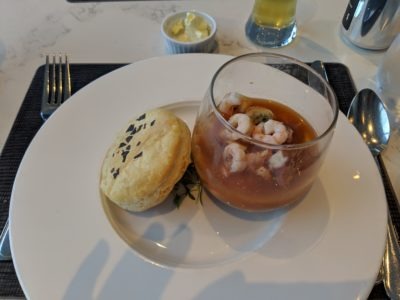
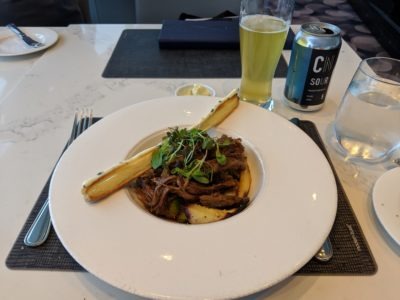
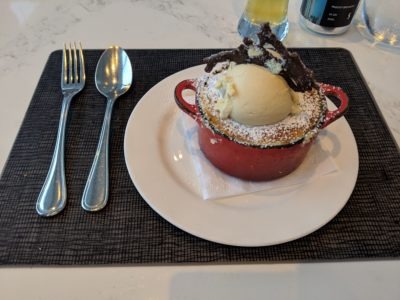
Below is a photograph of the convention center and the attached Intercontinental hotel, accessible via a short skywalk to Union Station. Regarding the dining experience, the dessert was a highlight: a proper temperature gradient featuring a local peach cobbler (though the peaches were only fair, as they were out of season) topped with maple syrup ice cream, clearly catering to a tourist palate.
You might also be interested in : Sex and Media Freedom: Unrestrained
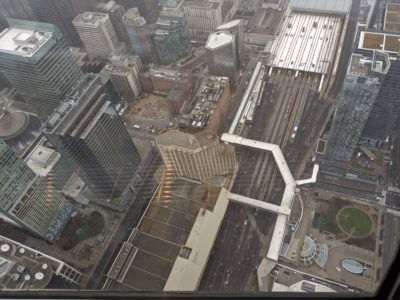
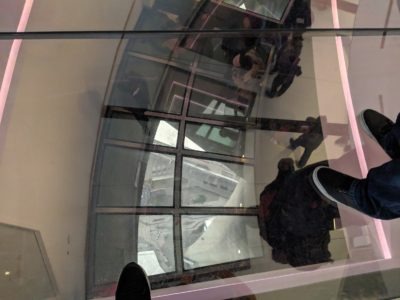
After the meal, a leisurely stroll is recommended to aid digestion and allow adrenaline to subside, especially when contemplating the transparent floor panels. Fortunately, the suboptimal weather meant no difficulty securing a window table at the 360 restaurant or encountering significant crowds on the observation deck, which the author considered a positive outcome.