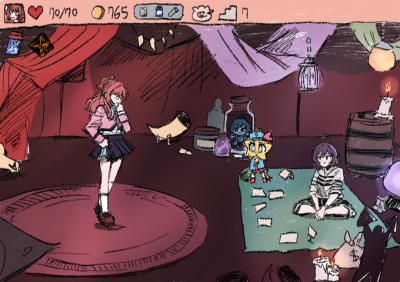
UlasanAnime.com – Barely one month into its release, Gakuen IDOLM@STER (Gakumas) has already showcased enough of its unique gameplay and features to warrant discussion beyond the initial pre-release excitement. This new installment, the first brand for the IDOLM@STER series in six years, proves to be an enjoyable experience, and it also provides a platform to share successful gacha pulls.

Regarding gacha results, I’ve managed to acquire every Producer (P) SSR released so far, with the exception of Kotone’s current banner (Big Bang) and her base SSR. I have since obtained the base Kotone P SSR through farming. It seems the game and I aren’t particularly aligned with her character. Initially, the purpose of rolling for P SSRs wasn’t clear, but they offer stronger items, higher starting stats, and generally more potent special skill cards. It’s possible that the ultimate goal in Gakumas is player-versus-player (PVP), where players assemble three teams to compete against others.
A crucial aspect of Gakumas is that a significant portion of the game is locked behind Producer level progression. This includes access to many powerful SR and SSR skill cards, as well as the advanced “pro” produce mode. The available gameplay mechanics differ from many previous IDOLM@STER titles, making it beneficial to outline them before delving deeper.
In most IDOLM@STER games, players acquire characters and outfits through gacha. However, Gakumas focuses its gacha on outfits, music, and SSR skills. This approach is more akin to IDOLY PRIDE, where the cast of characters is limited and readily available, or nearly so. Possessing SR and SSR P cards does indeed facilitate more successful produce runs and allows for the creation of stronger “memories.”
Memories are the tangible outcomes of each produce run. Each memory is associated with a skill card usable in subsequent runs, a collection of skills to enhance the current run, and a deck of items for PVP. Additionally, a photograph from the final performance of each run can be captured to serve as the memory’s icon. Therefore, the game’s core revolves around these memories.
From a gameplay perspective, Gakumas functions as a roguelike battle card game, where skill cards are vital tools carried over between runs. Certain strategies involve playing in normal mode to obtain a B or B+ memory with just one SSR+, increasing the odds of acquiring that same SSR+ (or SR+) card in the resulting memory deck. Instead of striving for the highest scores, aiming lower can allow players to succeed with just a single SSR. This approach is worth exploring once a specific special card is obtained that players wish to preserve, especially since thinning the deck through various means while maximizing stats is also a key consideration.
Playing more conventionally, players would engage in numerous runs, hoping that the inherited skill card (to use a common term) is one they desire and, ideally, is already upgraded. Achieving higher score levels yields greater boosts for subsequent runs, making memories with desired skills and the highest tier of boosts (of the correct types) the ultimate objective.
The distinction between (P)roduce SSRs and (S)upport SSRs was first introduced in Shiny Colors, and it’s commendable that Gakumas largely retains this concept. In Gakumas, both P and S SSRs are available on the same banner, making it a less exploitative system than either of the Shiny Colors games. Currently, there is the base banner and a new banner featuring rate-ups for new cards, which appear to be absent from the base banner. Free roll tickets also seem to be exclusively usable on the base banner, raising questions about its update frequency or potential roll resets.
You might also be interested in : IDOLM@STER Shiny Colors: The Anime
Support SSRs function similarly to memories, but they exclusively provide either an item or a skill card, offering significantly stronger boosts that scale with the support card’s level. Blue support tokens, earned through achievements and runs, along with various in-game shops and kuji pools, are required to level them up.
From a gameplay standpoint, Gakumas can be described as a “Slay the Spire, IDOLM@STER version.” While stats heavily influence midterm and final scores, efficiently winning training games is also crucial for stat accumulation. Reducing the number of slots dedicated to gameplay mechanics allows for more slots to be allocated to stats. However, progress is currently limited by the difficulty of obtaining level 60 SSRs, which requires up to five copies plus a borrowed one.
In terms of content delivery, Gakumas distinguishes itself from previous entries by adopting a more anime-like presentation. This might be attributed to QualiArt’s involvement, but the main story content resembles “shuraba-kei” writing, reminiscent of the OreImo anime scriptwriter, presented as a video that can be skipped line by line. Some might liken this style to “Iori-core,” especially with Saki taking the lead as the Red character. Temari embodies a dorky personality, while Kotone often reflects the audience’s perspective, leading to dramatic developments. The game features character-specific commus that unlock based on affection levels, which are tied to specific achievements. These commus can be unlocked mid-run, presenting a continuous narrative. This creates an “anime as you play” atmosphere, particularly when reaching the “ending” commu at affection level 10, complete with an ending sequence.
A significant factor contributing to its anime-like quality is the extensive interaction between idols from the outset. The game introduces Ume, the True Red character, who initially appears as the archetypal main IM@S Red character, only to later reveal Saki as the actual main Red. After reading the SSR+ level 10 commus for both Saki and Ume, it becomes evident that Ume was originally intended as the main character, with Saki positioned as her ultimate rival, a role she held until late in the production process. This was partly due to Ume’s own countercultural traits, which mirrored Saki’s. Ultimately, Saki would have made more sense as the main character if the narrative had unfolded differently, and indeed, it appears to be progressing in that direction. This is in addition to the diverse cast of characters, including China, Hiro, and Temari, all of whom are quite eccentric and provide amusing interactions with the other idols, as do Saki and Ume.
It’s difficult not to commend Gakumas for staying true to its IDOLM@STER roots while simultaneously breaking new ground in all the right ways. While not flawless, it is generally executing its vision effectively. The gameplay itself might be considered a mixed bag due to its Slay the Spire foundation, a genre-defining game. This approach aligns with the 2020 zeitgeist, which has seen increased popularity for board games in Japan and indie titles, and it seems to work well within the context of Gakumas.
Similarly, while I invested approximately 40 hours into Slay the Spire before taking a break, reaching affection level 10 for every character in Gakumas can also be considered the content cap, likely requiring a similar 30-40 hours. This is quite impressive for a free-to-play gacha game where progression isn’t strictly gated, though it naturally takes longer without stronger cards. The limited-time events thus far haven’t followed a set pattern, and they generally revolve around the straightforward objective of “getting stronger by playing the game more.” It remains to be seen what the future holds and whether this franchise possesses the longevity to sustain itself.
For what it’s worth, I’m still undecided on my ultimate favorite character (oshi). I’m leaning towards Rinami based on personal preference, but Ume, with her endearing “riceball rolling straight into my heart” charm, is a strong contender. It’s certainly a welcome dilemma to have.