UlasanAnime.com – As 2012 draws to a close, it’s time to embrace tradition and the subtle pressure to reflect. While I’m not usually one to dwell on specific dates, this occasion serves as a perfect excuse for both celebration and introspection. Though, in truth, we rarely need a reason to party!
Looking back, 2012 was a good year, largely due to the quality of its anime offerings. We saw the release of “Evangelion: 3.0 You Can (Not) Redo,” or “Eva Q,” and Goro Miyazaki’s directorial debut, “From Up on Poppy Hill,” which truly felt like a piece of heaven on earth. The seasonal anime also provided plenty to discuss. I caught an episode of “Lupin the Third,” revisited “K-ON!!,” and enjoyed more “Strike Witches.” Other notable series included “Seitokai no Ichizon,” “Daily Lives of High School Boys” (“Danshi Kokousei no Nichijou”), the thrilling conclusion of “Fate/Zero,” and the visually striking “Guilty Crown.” We ventured into space with “Space Brothers” and “Rinne no Lagrange,” and sought a hidden sibling while quoting Shakespeare in “Zetsuen no Tempest.” The latter series, coincidentally, aired during what felt more like winter than summer, a playful observation on its title, “Waiting in the Summer.” Online gaming also consumed a significant portion of our time, with an overwhelming number of anime titles released. I still managed to watch an average of 20 series per season. On the related front of non-anime adaptations, there was even a live-action “Kenshin” movie to accompany the re-releases of the “Kenshin” OVAs and films.
It’s no exaggeration to say that the landscape of TV anime has fundamentally shifted. We are now firmly in the post-moe era. This isn’t solely due to series like “Psycho-Pass,” although its airing concurrently with “Love, Chunibyo & Other Delusions!” (“Chuunibyou demo Koi ga Shitai!”) is significant. When “chuunibyou” itself becomes a commercialized concept, complete with a production committee, it signals that this trend is nearing its saturation point and losing its genuine appeal as a fandom item. The mention of “moe” in “Psycho-Pass,” and the subsequent lack or anti-moe sentiment, further highlights that the absence of moe is the new “dead” trend. The rise of Gen Urobuchi, following his success with “Puella Magi Madoka Magica,” was already a clear indicator for major industry players to pivot their strategies, at least for those not primarily focused on game development.
You might also be interested in : Guns and People: The Dual Killers in Jormungand
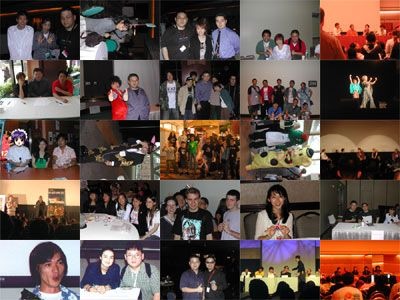
Speaking of Urobuchi, it’s always a pleasure to see him acknowledged. The convention circuit in 2012 was enjoyable as usual, though Anime Expo felt a bit subdued. However, I had a fantastic time at other conventions, including New York Comic Con. Personally, I feel it might be a good time to scale back my convention attendance slightly. We’ll have to see what 2013 brings; I’ve heard that Otakon already has a major guest lined up for January. Still, I’m most excited about the potential for the Otakon music fest to become a regular feature, though my impression is that it might not be a guaranteed event. This contrasts with how AFA, for instance, can reliably bring in a massive lineup of wota idols. Sphere’s appearance was an incredible get, and I can only imagine the envy of those in Singapore who attended on that fateful date.
And yes, we “outsiders” do enjoy ourselves and don’t always feel the need to pay for access. This has been our way for decades, and 2012 was no exception. However, I believe the one thing that has remained constant is that I’ve partied enough. It’s time for a vacation, or something similar. Perhaps I will take one, or at least try something different. The industry is beginning to showcase the fruits of new media paradigms like “Shonen Jump Alpha,” while their established counterparts continue their operations. FUNimation, Anime Network, Crunchyroll, and even Aniplex all made significant strides in 2012.
The world is undoubtedly evolving. This fact alone might leave some with a sense of unease. However, I prefer to believe that we are, on average, significantly better off in 2012 than at any previous point in anime’s history or the history of this fandom.
Because, up next, we delve into the topic of… ladies?
Year in review 2012:
- Introduction
- iM@S
- Sengoku Collection
- Tsuritama
- Music
- Seiyuu
- N-list