UlasanAnime.com – The appeal of Asatte no Houkou, also known as “The Day He Comes,” lies in its dual nature. On one hand, it presents a provocative premise involving a “loli incest” theme, a love triangle with an ex, and implications of a young girl transforming into an adult and becoming a magnet for mature attention. This sensational aspect is acknowledged but will be set aside for deeper analysis.
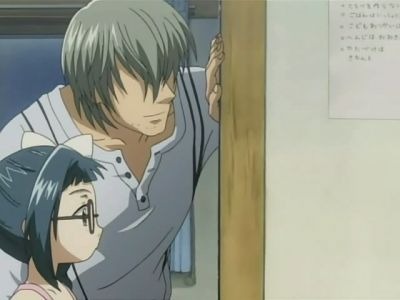
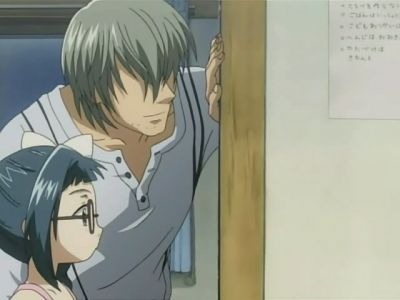
The other, more profound layer of appeal resides in the show’s central mystery. Asatte no Houkou gradually unveils the past events concerning Hiro and Shoko, allowing viewers to connect the dots and understand the motivations behind their enigmatic actions. The slow revelation of these cards is what kept many viewers engaged, including the author, who found the initial uncertainty to be a significant hook precisely because the full motivations were withheld.
To better understand Asatte no Houkou’s thematic depth, it’s helpful to draw parallels with successful characters like Ruri Hoshino from Nadesico. Ruri’s popularity stemmed partly from her passive-aggressive, rebellious attitude towards adults, showcasing how elitism can lead to loneliness and independence can preclude reliance on others.
You might also be interested in : Celebrate Comics with Yotsuba
Applying this to Asatte no Houkou, we examine the three main characters: Karada, Shoko, and Hiro. Let’s begin with the fundamental elements.
The recurring phrase “grasping and slipping away” is presented in every episode. While its exact interpretation within the show’s narrative remains elusive, by episode 5, it becomes clear that this theme is crucial. It serves as a guiding principle for understanding the characters’ journeys and the show’s thematic direction.
Focusing on Karada first is essential. She is the most straightforward character to understand and, thus, provides a crucial boundary or limiting condition for making educated guesses about the plot and thematic development. Karada is an orphaned girl cared for by Hiro. She yearns for independence, feeling like a burden to the person she believes she owes a significant emotional and physical debt. Her transformation into an adult highlights that maturity is not solely a physical change.
Shoko, conversely, returns to Japan only to discover that her ex-partner has abandoned everything they shared to raise Karada. She experiences confusion and hurt but, understanding the situation, dedicates herself to Karada’s well-being. Shoko is characterized by her subtle, passive-aggressive nature. While she expresses herself more openly in the first episode, her childhood flashbacks in episode 5 further illuminate her behavior. These revelations offer two key insights.
Firstly, jealousy plays a significant role. Shoko is clearly troubled by Hiro’s affection for Karada. She is also bothered by the perceived reason for Karada’s condition: that as a helpless child, she naturally receives the affection needed for healthy development. However, as revealed in episode 5, Shoko learns that this simplistic view is not entirely accurate.
Secondly, Shoko’s reaction to her own transformation is explored. How would one react to becoming a child again, while their ex’s foster sister becomes an adult due to a wish on a mysterious stone? Shoko’s usually composed demeanor falters when confronted by Hiro, but this seems more connected to her unresolved resentment towards him and her unaddressed personal hurts. The author expresses uncertainty regarding Shoko’s initial easy-going acceptance of the situation.
Indeed, as an introvert, Shoko does not outwardly express her emotions in the typical anime character fashion. However, understanding her inner world and thoughts is vital to grasping the unfolding events in Asatte no Houkou. The comparison to Ruri Hoshino is intended to provide a helpful framework for this understanding.
Tetsu and his family also offer valuable clues to the viewer. We are introduced to his family dynamics and circumstances, learning that he was raised with a strong sense of propriety. He has a cousin who serves as a foil to him, and his sister acts as a foil to Hiro. Given the limited screen time of minor characters, their dialogue often carries significant weight. For instance, when Kotomi discusses her upbringing and its impact on her personality, it provides a crucial revelation.
Ultimately, all these threads converge on Hiro. His personal history and motivations are among the last pieces of the puzzle Asatte no Houkou reveals. How will his past explain his change of heart? Was he also orphaned like Karada? Will he have to rediscover a cherished value that the person who gave him his life’s chance wanted him to possess, a value he has since abandoned? These questions remain unanswered but point to the central importance of Hiro’s character arc.
For the author, exploring Hiro’s story is essential to continuing their engagement with the show. The hope is for more genuine drama and less of the saccharine elements, akin to “Strawberry Otome Eggs.”