UlasanAnime.com – This is a neat idea, but the author doesn’t have the time for yet another trend, though it does present an opportunity to evoke a mix of excitement and apathy among mecha otaku, especially from someone who admits to occasional moe obsessions. Despite not having the time for extensive participation, the author acknowledges that mecha is the very foundation of their anime fandom.
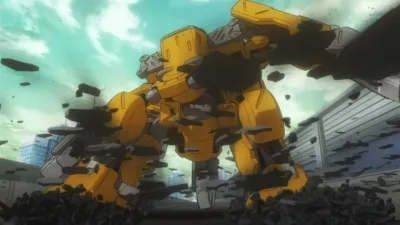
The author’s first anime love was Go Nagai’s Mazinger Z, which features some truly glorious designs that have remarkably stood the test of time, possibly due to continuous re-releases with slight redesigns.
While the 6-year-old author found the rocket punches, super kicks, and chest beams of Mazinger Z impressive, they were more captivated by its wings and Aphrodite A’s iconic boobie missiles, suggesting an early inclination towards “moe.” Realistically, the wing attachments were the coolest element at that age, and missiles were perceived as futuristic weaponry. The enduring relevance of these concepts, even as actual laser weapons are still in early development, highlights the author’s childhood preference for wargames and military technology over pure fantasy.
Interestingly, this fascination with advanced weaponry led to a dislike for the use of swords in giant robot shows, as it seemed anachronistic given the futuristic nature of the mecha themselves.
This inclination, however, did not translate into a preference for “real robot” over “super robot” when that distinction became clear years later. In fact, the perceived “unrealism” of real robots became a significant turn-off, with only the Aestavalis system’s focus on logistics managing to be convincing. The author’s primary interest in mecha anime lies in design and setting elements, and when it comes to “sexy” mecha designs, Shoji Kawamori’s work in anime is unparalleled. Concepts like Macross-style folding for FTL travel and variable fighters are highly appealing.
The author’s initial favorite Macross mecha/spacecraft was probably Focker’s VF-1, essentially an F-14 in an alternate future. Despite the F-14 being an aging aircraft, it represented pure, jet-engine-fueled fantasy. The Guardian form was initially perplexing, a jet with legs, and concepts like vectored thrust and the mechanics of flight, such as attack and lift, were not fully understood in the early 90s. Nevertheless, the swept wings, the transformation sequence, the accompanying toys, the “calves” of the ship contributing to vector thrust, and the overall lines and curves were captivating.
The author attributes their ability to overlook the complexity of Macross to a lack of detailed understanding at the time, allowing them to focus on the visual appeal. The presence of arms on the mecha was at least justifiable due to the need for hard mounting points on robotic arms for the Valkyrie’s range of motion.
Speaking of arms, curves, and Macross, the author was also a big fan of the VR-052Fs in Mospeada, particularly drawn to the depiction of action scenes and battles that combined motorcycle and robot elements. This feeling wasn’t replicated until much later with the “moe moe” fusion designs of Priss & the Hardsuit girls, a concept credited to Shinji Aramaki. If sexy models and car ads were considered staples, Aramaki’s motorcycle-inspired designs were the equivalent of buttered croissants, masterfully combining streamlined curves with an expressive articulation of function.
As the author matured, their fervor for mecha gradually waned, partly due to a perceived lack of variety. The author found Gunpla unappealing because most models looked similar, and the proliferation of variants and different grade releases was off-putting. Other franchises also failed to reignite the childhood excitement for mecha, with fewer designs matching the initial perception of coolness.
Despite this, the author acknowledges the existence of many interesting mecha designs, from Escaflowne’s pulley-driven artifacts and CLAMP’s crystalline beasts to the impressive visual elements found in the early scenes of Gundam 00. The author muses that perhaps they outgrew Gundam Wing and grew into appreciating Syd Mead’s work, particularly the innovative but not necessarily “awesome” designs in Turn-A Gundam. While appreciating the variety in classic Mobile Suits like the GM and Guntank, the author finds them good but lacking the “moe” quality.
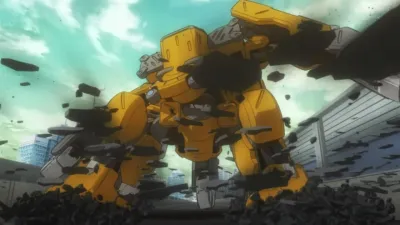 The author appreciates strong industrial design but is not particularly drawn to designs like the “glorified forklift from Alien 2.” However, they were delighted by Railgun’s depiction of a forklift weapon with grapple rocket punches, referring to the GAMA (Gigantic Advanced Movement Armor). While the MAR hardsuits were neat, they were considered a minor element compared to the final boss, which is seen as superior to a “weird alien fetus.”
Regarding Railgun, the author experienced a disconnect where other viewers were focused on the middle school characters, while their own interest lay elsewhere. The show is recognized as solid, offering something for everyone (like a cool final boss), but not necessarily what the majority was seeking.
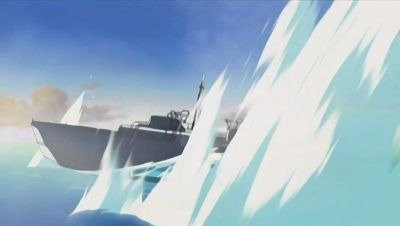
Confining the discussion to humanoid mecha, the author finds many Guild ship designs from Last Exile superb and desires a submarine like the one in Ao no Rokugo. Replicas of the ND-001 Nadesico or its sister ships are likely unattainable. The Kildren fighters in The Sky Crawlers are considered unique. Macross Frontier’s reinvention of the mothership/carrier concept with the Macross Quarters makes it a personal favorite spacecraft, even though it’s technically a humanoid mecha, it’s not perceived that way.
You might also be interested in : Run, Ichika, Run
The author concludes by stating they could continue indefinitely, but they no longer actively follow new developments in anime mecha, as their “database-animal receptors” for mecha are fully functional and that is what truly matters.