UlasanAnime.com – This post serves as a personal user review of Mandarake, based on a single instance of use. The author reflects on the significant financial impact of their spending habits, drawing a contrast between the seamless shopping experience offered by Amazon and the more complex, flea-market-like approach of Mandarake.
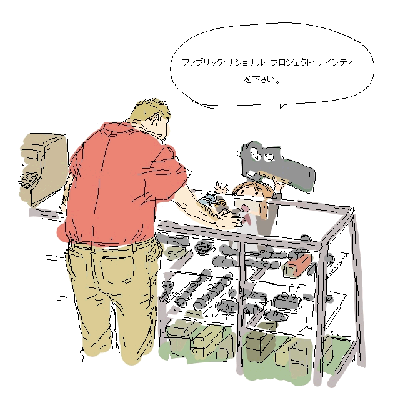
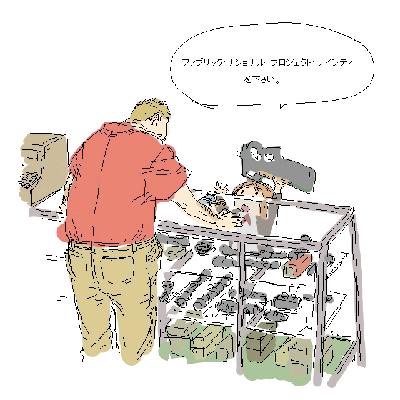
Mandarake operates on a paradigm akin to a Chinese flea market. When purchasing items internationally, it’s crucial to be knowledgeable to avoid being overcharged, a common pitfall for tourists. While bargaining isn’t typically an option, the author notes that waiting for a price reduction might be feasible for some items. Customer service expectations should also be managed, though the experience is free from the unpleasantries of a physical flea market, such as theft or pickpocketing, and importantly, it offers an RSS feed.
RSS feeds are highlighted as a foundational element of the Web 2.0 revolution, enabling users to organize the vast amount of online content through filtered syndicated feeds. For users like the author, RSS is invaluable for tracking niche products not available in regular stores or for finding discounted second-hand goods, particularly in home video and music, but also books. It can also act as an “incidental proxy” for items sold by Mandarake that are not available from other Japanese stores that do not ship overseas.
In essence, Mandarake’s online platform provides an RSS feed of its inventory, updated by their data entry staff. By combining this with tools like regular expressions or Yahoo! Pipes, users can create personalized notification feeds for items on their watchlist. The author plans to offer a basic tutorial on this process later, assuming readers possess sufficient Japanese language and logical reasoning skills.
Before delving into the technical aspects, the author wishes to share their general impressions of Mandarake from an online shopping perspective, covering some fundamental aspects that readers likely already understand.
Mandarake is a chain of stores specializing in used “otaku goods.” This term extends beyond just manga and anime merchandise to encompass items related to hobbies like idol merchandise, vintage plastic figures, old Japanese movie posters, literary doujinshi, and costumes. The primary revenue streams, however, come from used figures (especially PVC figures released since 2004, as well as dolls), artbooks, adult-oriented doujinshi, and used DVDs, Blu-rays, and CDs. The author clarifies that “doujinshi” refers to works created by fans, for fans, regardless of age or gender preference.
It is crucial to understand that Mandarake comprises a series of physical stores, with the online store acting more as a portal rather than a centralized entity typical of large chain stores. This structure is largely due to Mandarake’s focus on used goods, eliminating the need for a traditional distribution chain or centralized warehousing. Their primary source of stock is items sold to them by individuals, and each Mandarake location maintains its own inventory.
A significant consequence of this decentralized model is that when purchasing from Mandarake online, customers are effectively dealing with individual stores as separate sellers. This means that if a shopping cart contains items from multiple stores, separate payments are required for each. While the website attempts to streamline the process by consolidating shipping information when logged in, it doesn’t eliminate the need for multiple transactions. This becomes particularly noticeable with handling fees; for orders under 5000 yen, there’s a 500 yen fee, which can be incurred multiple times if items are from different stores, a cost that could be avoided if all items were from a single location. Shipping costs are also calculated and paid separately for each store.
Another side effect of this system is the inconsistency in data entry. The quality and format of product information depend heavily on the individual entering the data, their affiliated branch, and the specific item. Since every item in stock requires individual entry, including details about its condition and accompanying photos, there’s a lack of standardization in data formats. The author primarily relies on keyword searches to find specific items, which works well for targeted purchases but becomes challenging when trying to filter broader categories, such as separating all doujinshi from the main RSS feed into a distinct feed.
The author perceives this lack of standardization as a significant business opportunity. They suggest that Mandarake could benefit from hiring individuals skilled in data structure design to address these issues. However, they acknowledge that such opportunities might remain untapped, similar to the delayed emergence of truly powerful and compact laptops. The author humorously notes their ongoing wait for an ultraportable laptop capable of gaming, rather than the current “not-netboo-v2-ultrabook” offerings.
Regarding the actual purchasing process on Mandarake, once a desired item is identified and located, the inputting of information is relatively straightforward. Unlike many Japanese online retailers, Mandarake accepts overseas credit cards (reportedly Visa and Mastercard only, excluding debit cards, and potentially others). If one has a credit card that avoids foreign transaction fees, it’s a preferable payment method over PayPal, which Mandarake also accepts.
You might also be interested in : Anime Remakes and Sequels
After placing an order, payment is deferred until Mandarake confirms the item’s availability and prepares it for shipping. Customers then receive an email with a payment link to complete the transaction via credit card or PayPal. The author has only used credit cards and cannot comment on the PayPal process.
Items marked as “store front” items are physically present in the brick-and-mortar stores. If such an item is added to a cart and checked out, there’s a possibility the customer might not receive it if it’s sold to an in-store customer between the last inventory check and the time the online order is processed. To mitigate this, Mandarake offers the option to cancel the order if the item is no longer available at the time of payment confirmation.
Shipping options include EMS, FedEx, and SAL. SAL shipping is noted for its considerably longer transit times. Packages are typically boxed and lightly packed, although the author observes variations in packaging quality between different Mandarake stores. They also speculate that the Osaka store might offer the best prices.
Ultimately, the decision to purchase from Mandarake hinges on whether one can accept the premium pricing for used goods. The author finds Mandarake’s prices to be generally high, with mint condition items often priced very close to their new counterparts. In some cases, the price difference between a used item and a new one (e.g., on Amazon.co.jp) is only 10% to 20%. While this might seem illogical for certain items, it could still be worthwhile for those prioritizing savings. However, individuals concerned about value would likely opt to wait for better deals or shop around more extensively. The author believes that prices generally decrease over time, influenced by market indicators like Yahoo! Japan auctions, and that patience can be rewarded, provided the item doesn’t become excessively rare or impossible to find.
The author then transitions to a practical tutorial on using Yahoo! Pipes to filter the Mandarake RSS feed, humorously noting that the title of the section is “The pipes!”
For a quick Yahoo! Pipes tutorial, the author advises finding Mandarake’s English portal. The RSS feed link can be found in the footer of the page. Once on Yahoo Pipes, users should create a new pipe and drag in the “fetch” widget to read feed content, inputting the RSS URL. Next, a “filter” widget should be added and connected to the fetch widget. Within the filter widget, users can specify criteria, such as “allow only (??く?)” to retrieve all Ichiban Kuji items or “block ?中古???” to exclude certain books. The author encourages experimentation with more advanced filters.
After setting up the filters, they should be chained together and connected to the “output” widget. Saving and running the pipe generates a new URL for the customized Mandarake feed. This URL can then be added to feed readers like Google Reader or other services that provide alerts for new items. The author also mentions the possibility of sharing these custom pipe links.
The author suggests this method is ideal for holiday shopping, even mentioning that it’s already November. They anticipate writing less on their blog this year due to a busy schedule and limited free time for online activities, though they might still post occasionally.
Finally, the author opens the floor to readers, asking if they have any superior methods for achieving similar filtering and notification goals, expressing eagerness to hear their suggestions.