UlasanAnime.com – The creation of anime remakes and sequels is a topic that sparks much discussion, and exploring the underlying reasons behind these decisions can be an intriguing exercise. Many anime productions are, at their core, adaptations of existing source material. A common observation is that anime often struggle when they exhaust their source material within the scope of a single adaptation. While “filler” content can sometimes bridge these gaps or enhance fan service, its effectiveness varies. Exceptions like K-ON! and Fate/Zero stand out in this regard.
It’s also frequently noted that sequels tend to be more prevalent than prequels. The commercial viability of both sequels and prequels is generally recognized, making them attractive options for production companies.
Furthermore, the existence of copyright laws and established business practices significantly influences how companies and intellectual property owners plan their ventures, including anime production. This aspect, though seemingly obvious, is crucial to understanding the industry’s dynamics.
Production companies are often organized into umbrella pipelines, where affiliated companies are likely to collaborate. For instance, Aniplex might frequently utilize other Sony-associated companies for shows it produces. Adaptation plans are likely to be shaped by these internal structures, though this is speculative.
When soliciting funding for anime or media-mix projects, the distinction between a direct sequel, a reboot, or a hybrid can impact how a work is presented and financed. Funding decisions often hinge on the past performance of not only the production committee but also the franchise itself, asking if a previous installment was successful and if a new iteration can surpass it.
A prime example for discussing sequels versus remakes is the Rebuild of Evangelion series. It’s important to note that Evangelion is not a typical anime adaptation; it’s Gainax’s intellectual property, and Studio Khara is now handling its production. This case might be better understood as a reboot akin to Batman or Superman, where copyright, artistic consistency, and branding are central concerns. This differs from the reasons behind remaking a series like Hunter x Hunter, where the motivations might be less clear. Similarly, Columbia’s decision to reboot Spider-Man had a multitude of reasons, not all directly tied to the profitability of the Sony films.
The question arises whether this logic applies to other series, such as the new Saki series, which is also a reboot. The motivations behind such decisions are not always transparent.
You might also be interested in : Fate Zero Tribute Regular Edition
Beyond commercial considerations, there are also artistic reasons that favor reboots over sequels, particularly when aiming for a wider audience. For instance, a reboot of Yamato might attract a new generation of viewers who might find the original series too dated to engage with. The original series, while a classic, can be perceived as slow-paced by contemporary standards.
John’s point about the age of source material is valid. Just as there are scientific reasons for the existence of Star Trek: The Next Generation and Star Trek: Enterprise, rather than simply more footage of William Shatner, the aging and eventual retirement or passing of original voice actors presents logistical challenges. Remakes and reboots offer a way to overcome these limitations, at least until advancements in technology allow for robotic actors.
Another artistic justification for remakes is the concept of retconning, or essentially treating a remake as a second draft. For instance, watching three Mobile Suit Gundam movies might be more palatable today than enduring the entire TV series. This is even more pronounced with Turn-A Gundam, and the ZZ films present an even more drastic case. Other significant examples include Do You Remember Love, Utena the Movie, and Futakoi Alternative.
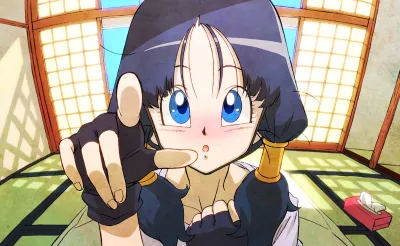 Undeniably, reboots are created today because there’s a market gap for it. In a linear narrative kind of sense, it makes more economic (and other sorts of) sense to redo some shows and sell it again, since the old version may have some limits purely as a result of the long time that has elapsed. In a technical sense, it avoids some problems sequels have, such as copyright ownership and production consistencies. In a creative sense, it frees the reboot from the character, plot, and setting limits of the original work. So when I read this:
Reboots may generate more revenue, but they limit creative progression. However, if creative evolution is the ideal goal, then even sequels are less constructive than focusing effort on creating entirely new franchises and new adaptations instead of resurrecting older titles for either remake or continuation. […] However, right now, when titles like Dragon Ball Kai seem as popular, if not more popular, than Dragon Ball Z, and anticipation is high for the forthcoming Berserk theatrical remake, consumer support seems to validate and encourage the continued production of remakes and reboots in place of sequels.
The notion of “creative progression” can be questioned, especially when a franchise like Dragon Ball Z has already been extensively adapted. The existence of numerous movies and variations of the series suggests that the potential for further narrative expansion might be limited. In such cases, reboots can be seen as a natural progression when original sequel avenues have been exhausted.
The preference for sequels over remakes can be interpreted as a form of “otaku fetishism.” It raises questions about the social acceptance of craving narrative constructs without necessarily prioritizing the creative integrity of the original work, over concepts like artistic freedom or the creator’s intent regarding copyright. It also bypasses the opportunity to improve upon an existing work. This desire can be seen as akin to a craving for gratuitous fan service, but with the added complexity of fans being fiercely protective of “their” stories and characters. It risks becoming a self-destructive cycle, where the demand for continuation inadvertently erodes the essence of the original existence. Remakes, in this context, can serve as a potential escape from this trap.