UlasanAnime.com – The continuation of the analysis on anime opening sequences, focusing on those that have been listed for various reasons, sorted by their release date.
For those who wish to revisit the earlier parts of this discussion, you can access Part 1 and Part 1.5. This installment will continue the somewhat arbitrary evaluation of these openings.
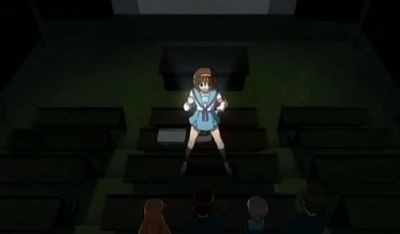
This opening embodies a distinct theme: summer, sunflowers, cheerful faces, film, and flight. It complements a narrative centered on an unexpected birth secret that remains unknown to most, alongside developing romances and the emergence of individual identities struggling to recall past events. The sequence includes typical teenage antics and subtle references to its predecessor, “Please Teacher.”
While the song might not be as impactful as others on this list, its personal appeal remains high. The fact that it is a duet adds a special touch. If one were to encapsulate the essence of “I’ve Sounds” and “Summer” into a single track, this would be it. The harpsichord melody is vibrant, reminiscent of high-end furniture in an exclusive import showroom, yet with an underlying hint of affordability, like discovering it’s from IKEA. Despite this, the elements coalesce harmoniously, with rapid cuts and precise musical notes that evoke a sense of returning to where it all began.
One wonders how this visual experience would translate to Blu-ray.
- Pleasing? The name itself suggests it.
- Teaser? Certainly.
- Pitch? Its pitch is elusive, perhaps unknown to many.
- Pace? An excellent 10/10.
- Marketing power? Could be stronger.
Rank: A-
Rank comment: It’s a track that resonates frequently.
This entry almost didn’t make the list due to its excessive popularity within Western anime fandom, often leading to overexposure. By 2012, its constant presence had become tiresome. While tracks like “What Planet Is This!?” offer a similar vibe with less fatigue, the “Cowboy Bebop” OP itself is undeniably compelling. Its memorability stems not just from the music but significantly from its animation.
The animation possesses a whimsical, almost improvisational quality, akin to jazz. The clever interplay of dark and light spaces, the stylish animation, and the humor are all noteworthy. There’s a minimalist approach, where the animation is the focal point, aiming to convey its message rather than to overwhelm with spectacle.
- Pleasing? No longer so, due to overplay.
- Teaser? Highly effective.
- Pitch? Black, perhaps?
- Pace? Perfectly executed.
- Marketing power? Immense and enduring.
Rank: A
Rank comment: Please, avoid looping it excessively.
Himiko-den OP (any variety)
For an anime from the late 90s, this opening is remarkably effective, conveying a significant amount with minimal action. It gained considerable attention for its star, a model turned idol known for her sweet voice. It’s important to differentiate this work from later productions (like Shaft’s and Kana Hanazawa’s), as it primarily relied on elaborate illustrations stitched together with a catchy tune and simple cuts. The pulsating hair-in-the-wind and longing gazes were strategically used within the 90 seconds to capture the attention of the “moefag” audience.
However, beyond the songs and appealing visuals, the anime itself didn’t quite live up to the opening’s promise. The OP successfully conveyed a fleeting sense of fantasy that made the show somewhat exotic. The failure to match this expectation lies more with the anime’s execution than the opening itself, which could have benefited from a production closer to the quality of Shaft and Kana Hanazawa’s work.
- Pleasing? 9/10
- Teaser? Absolutely.
- Pitch? Was there one?
- Pace? Smooth yet distinctive.
- Marketing power? Abundant.
Rank: A
Rank comment: I would loop it, primarily for the music.
Arguably the most universally catchy opening ever, the song and visuals work exceptionally well together.
You might also be interested in : So Close, Justin!
Creating an opening for a long-running series that remains engaging throughout is a challenge. The tie-ins with CLAMP’s music videos truly shine when viewed from this perspective.
- Pleasing? Quite good.
- Teaser? I suppose.
- Pitch? Do you want to be a magical girl, darling?
- Pace? Perfect.
- Marketing power? CCS MERCH AVAILABLE NOW.
Rank: A
Rank comment: It’s impossible not to sing along.
Reaching the level of digging into an OVA signifies a deeper appreciation for anime history. This particular OVA, likely unknown to many, was subtitled by dedicated fans who painstakingly worked from LaserDiscs. The effort involved in subtitling from LDs is considerable.
What makes this opening stand out is that, typical of late 90s anime, significant resources were poured into the opening and the initial minutes of the first episode, even for an OVA. It’s a prime example of a best-yet-totally-generic piece. Its appeal lies solely in its animation and direction, delivering exactly what was expected, and it’s not a bad offering by any means.
- Pleasing? Certainly.
- Teaser? 7.5/10
- Pitch? Unsure; it’s a generic robot theme.
- Pace? Just right.
- Marketing power? Assumed.
Rank: B-
Rank comment: It’s an earworm.
Similar to another Yoko Kanno composition, this song’s impact will be set aside to focus on the animation. The visuals are richly colored, possessing a consistent and thematically relevant sheen, characteristic of its shoujo-esque fantasy genre. This framing, however, presents a potential issue: presenting a fantasy anime from a girl’s point of view can feel like a ploy to inspire BL doujinshi, a topic that has been extensively discussed.
Beyond the montages of attractive characters, the opening truly takes flight when the giant robots appear, which, as anyone who has seen the show knows, is a central element. This is complemented by seemingly random scenes of catgirls gazing at stars and a villain’s perpetually tear-stained face. The Escaflowne OP skillfully merges two concepts, or perhaps subordinates one to the other, set against a cheerful, piano-percussion beat that evokes girly fantasies.
- Pleasing? Only if not overanalyzed.
- Teaser? Arguably.
- Pitch? Could be more effective.
- Pace? 8/10
- Marketing power? Laughable.
Rank: B+
Rank comment: A Yoko Kanno OP song once again overshadows a Shoji Kawamori story.
This opening is memorable for reasons similar to CCS OP3, though it is considerably less extravagant. It maintains a cute aesthetic, despite its otaku-oriented nature. Set in the mid-90s, before the full impact of the economic bubble burst, it blends contrasting elements: the unsettling specter of “moe” with wholesome magical girls. [This evokes a skit from the recent “Inu x Boku SS” anime.] Regardless, the visual appeal is largely universal; evocative direction and charming character animation consistently attract fans, irrespective of marketing trends.
The sequence just before the title card is notably ambitious, appearing within the first 13 seconds. The blend of computer-generated effects and fluid animation suggests an attempt at a charmingly off-kilter, gap-moe aesthetic. However, this is where the show deviates, or perhaps, is a deviation itself.
- Pleasing? For some.
- Teaser? So-so.
- Pitch? The show’s premise is clear.
- Pace? Good.
- Marketing power? 8/10
Rank: B
Rank comment: Not a masterpiece, but a benchmark for comparison.
Beyond its status as a “kami anison” (divine anime song) and its ubiquitous presence in karaoke systems since 1996, Gainax clearly invested significant effort into this opening, as expected for a serious giant robot anime. Like the other entries, its strength lies in the music, which introduced Yoko Takahashi to a wider audience.
The animation itself was groundbreaking due to its extensive use of on-screen text. This served as an effective shortcut, providing early glimpses of the show’s unique terminology and maintaining viewer intrigue by symbolically representing plot points. For dedicated fans and conspiracy theorists, it became a fertile ground for speculation. However, for many, it functions as a tribute to the typical “real robot” anime that often reveals the entire plot within the opening sequence.
- Pleasing? Acceptable.
- Teaser? Massively so.
- Pitch? 9/10
- Pace? It flowed well without overstaying its welcome.
- Marketing power? Moderate.
Rank: B+
Rank comment: The song you can’t help but sing in the shower.
Does anyone recall Sonia? The phrase “I’m a Pioneer” likely rings a bell. Going further back becomes less meaningful as one encounters works like this, which, while not disliked, represents the peak of that era, making direct comparisons less productive.
Tenchi Muyo is a title that, though vaguely remembered, was a landmark for its production values as a harem show, possibly the first truly enjoyable one, unless one prefers a certain esper and his… companion. The 80s present a significant barrier to personal interest; I might even prefer watching the OP (1) to Mobile Suit Gundam over most 80s content, despite its relative mediocrity. This era roughly precedes trends like AMG or the appearance of an elf character.
- Pleasing? It’s more soothing than exciting.
- Teaser? Not particularly.
- Pitch? All sorts.
- Pace? 7/10
- Marketing power? The English version might have had more.
Rank: B
Rank comment: This feels like something entirely different.
The original “crack” – both visually and aurally. It’s included primarily for sentimental reasons, as it was the opening that fundamentally shifted my perspective and led me down the path of becoming the otaku I am today. Its availability on Blu-ray is a bonus. Dating back to 1994, it’s difficult to find older openings that match its visual quality. The only real contender is OP3, which would have made the list if its latter half matched the excellence of the first 30 seconds. It wasn’t merely a display of animation prowess; both OP1 and OP3 exhibit a methodical direction that enhances their compelling nature.
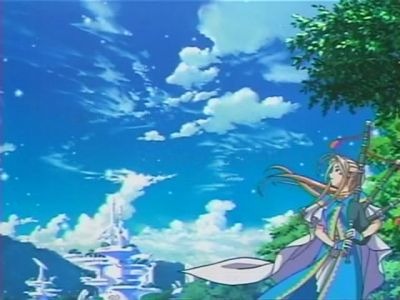
Magical girl shows often feature the most “anime-ish” openings, characterized by vibrant colors and catchy beats. This style seems to have influenced modern late-night otaku fare, shaping our preferences for opening and ending sequences.
- Pleasing? If you enjoy pain?
- Teaser? Slightly.
- Pitch? Quite clear.
- Pace? Steady.
- Marketing power? Not its strong suit.
Rank: A
Rank comment: Primarily nostalgia at this point.
Wrap-up
Ranking this list objectively is challenging, and frankly, it lacks a clear purpose. I find joy in all these works and would gladly rewatch them, discuss them, purchase their singles (I likely own most, if not all), and acquire the DVDs. This exercise, however, is more than just an exercise in vanity; it has revealed a key insight: ending sequences (EDs) are generally more interesting than opening sequences (OPs). OPs tend to be more conventional, serving as a formal introduction to the show’s offerings. Even in unconventional cases like “ef-melo,” the OP remains faithful to the show’s content and structure, mirroring the same elements as a poorly executed OP. It’s typically after the series concludes that EDs become more daring. Reflecting on my favorite EDs during this process made it impossible to even consider repeating this exercise; the list would likely be twice as long.
Another observation is that comparing animation from different eras is more neutral and level when examining OPs. Given that a significant portion of the budget was often allocated to the opening, it functions as the most “OVA-like” component of a TV series, usually receiving considerable care. Surprisingly, despite this, the average quality of OPs today often surpasses that of 15+ years ago. However, this comparative framework falters around the early 90s. Ah, the 90s anime era.
Here is a consolidated list of the OPs discussed across all parts:
Part 1 (2011 to 2008)
Then we have: ef-memo OP1 OP2 ef-melo OP1