
UlasanAnime.com – The concept of “lorejacking,” where existing fictional elements are reinterpreted and repurposed for new narratives, is explored in this analysis, drawing parallels to familiar tropes and their evolution within the anime landscape. The piece questions the audience’s reception to these transformations, particularly when traditional archetypes are infused with “moe” aesthetics.
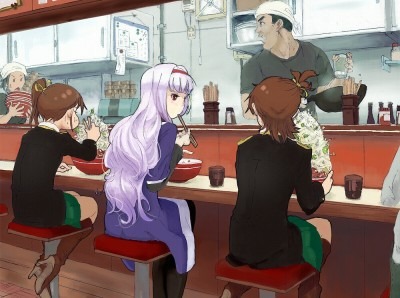
- Dusk Maiden of Amnesia: Explores the reimagining of a ghost trope into a 15-year-old girl who exhibits both ghastly and endearing qualities, with a specific mention of her connection to the character Takane.
- Nyaruko-san: Another Crawling Chaos: Discusses the transformation of the cosmic entity Nyarlathotep into a cute alien girl with romantic intentions.
- Upotte!: Highlights the concept of turning assault rifles into anthropomorphic military girls.
- Sankarea: Examines the premise of a tragic girl becoming an undead girlfriend, questioning the genre’s appeal.
- Is This a Zombie?: Details the scenario of the protagonist becoming a zombie, cared for by a necromancer, a magical girl, and a vampire ninja, presenting a complex domestic dynamic.
- Mouretsu Pirates: A brief mention, suggesting a less elaborate premise compared to others.
- Fate/Zero: Addresses the portrayal of King Arthur as Saber, a stoic female knight, noting her canonical role and her interactions within the series.
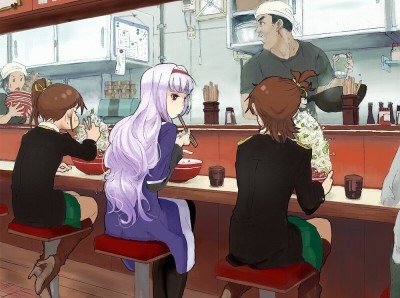 The author acknowledges that some anime, like Tsuritama, might defy simple categorization and require further observation to establish comparisons.
The article posits that this trend of reinterpreting established genre tropes into unique anime stories is not new. It references Hiroki Azuma’s work from over thirteen years prior, which explored similar thematic elements. The core question posed is whether there’s a specific appeal to characters presented in this “moe” fashion, even when their origins are fantastical or horrifying. The piece uses the example of the undead trope, questioning if the “moe” interpretation is intended to be more amusing than a straightforward horror scenario. It extends this idea to other concepts, suggesting that even entities like Lovecraftian elder gods can be transformed into “moe-moe” girlfriends.
The article suggests that in a culturally animistic society like Japan, the possibility of deistic representation for everyday objects—from doorknobs to parking lots—can pave the way for matching “moe” mascots for virtually anything.
The distinction between mundane daily life scenes and a “moe harem” is presented as a matter of corporate funding and backing.
You might also be interested in : Administrivia, April 2012
On a more positive note, the author observes that these shows often make a concerted effort to integrate these unconventional character choices into the core narrative, lending them a degree of meaningfulness. For instance, Nyaruko-san is noted as being reference-heavy due to the challenge of incorporating Nyarlathotep’s identity into the character. The appeal of Rea in Sankarea is more straightforward, as her resurrection is a plot point. In Yuuko’s case from Tasogare Otome x Amnesia, her nature is presented as a driving mystery, but the article questions if her identity will be fully explained.
The title of Is This a Zombie? is highlighted as being self-explanatory, implying that the show directly addresses its premise without further complexity.
The author expresses appreciation for the works of authors like Nasu and Kyogoku, who delve into these themes, even while acknowledging that they are also significant contributors to this trend, citing Nasu’s transformation of King Arthur into a “moe-moe” character as an example, and suggesting that the events in Fate/Extra are even more extreme.
The article concludes by suggesting that this phenomenon is pervasive and inescapable, prompting the reader to consider what new interpretations might emerge and how the act of “moe-ification” can be further integrated into storytelling.
PS. The author humorously notes that applying this “moe-ification” to younger sisters seems rather commonplace these days.





















