UlasanAnime.com – When first encountering discussions about the anime adaptation of Jormungand, some viewers drew comparisons to Spice and Wolf. Initially, I didn’t find this comparison particularly strong, beyond a superficial resemblance in featuring a formidable female character within a narrative centered on bartering and intrigue. However, after viewing three episodes, the deeper similarities have become apparent.
Koko, in essence, embodies the “wolf” archetype. She represents the wolf that Horo, from Spice and Wolf, never quite seemed to be, at least based on my reading of the first three volumes of the novels.
By “wolf,” I am referring to the prevalent portrayal in anime, often drawing from the fable of Little Red Riding Hood. This interpretation casts the wolf as a human-like figure, a predator masking its true intentions to achieve its goals. These objectives typically revolve around survival, a desire to consume, or similar primal urges.
A notable example of this Little Red Riding Hood symbology is found in Jin-Roh. In my opinion, Jin-Roh offers the most compelling fictional depiction of what it means to be a “wolf” within the context of Japanese pop culture. It delves into a more psychologically complex portrayal than the simple “ronin” or lone wolf concept, which is more aligned with American individualism. To appear wolf-like in this context, characters must coexist and even collaborate with ordinary humans. It’s challenging to maintain an aloof and deceptive demeanor when there’s no one nearby. This is why the Big Bad Wolf engages in dialogue with Little Red Riding Hood. Japan’s cultural emphasis on fitting in facilitates the wolf’s ability to blend seamlessly into its surroundings, serving as a disguise.
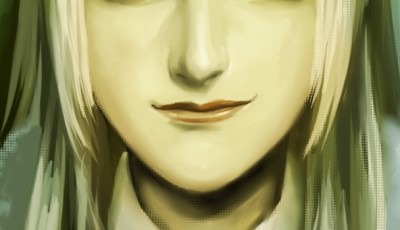
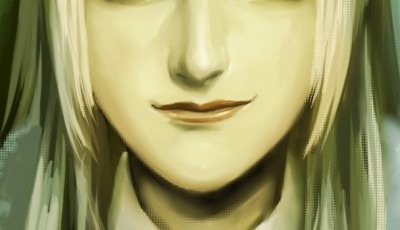
Koko, however, stands out as a significant exception. At first glance, she is immediately noticeable. Her manic smile is a clear indicator that something is unusual about her. Some might even perceive her as “moe,” which seems incongruous in a setting reminiscent of Black Lagoon. Koko’s unusually wide mouth prompts the question of its purpose. This childlike and girlish exterior belies a calculating and pragmatic mind. To this extent, she is less of a wolf in sheep’s clothing and more of a wolf that happens to resemble a sheep. She is clearly a wolf among wolves, but one that appears as a sheep.
You might also be interested in : Jacking Lore for Young Beginners
Indeed, Koko, why do you have such a big mouth?
The narrative setup is quite compelling, particularly as the story unfolds through the relationship between Koko and Jonah. Jonah also possesses a wolf-like appearance, though it remains to be seen if this is merely superficial. For starters, he might not even project the same aura as Koko.
There are many aspects of Koko and the Jormungand anime that I find appealing. It’s a pleasure to hear Iwasaki’s work again. While it’s unfortunate that the original radio drama cast did not return, I can adapt. Koko’s shotacon tendencies further contribute to her “wolf-ness,” don’t you think? It’s as if she’s going to devour him whole! LOL. I believe White Fox has another solid hit on their hands.
P.S. If you haven’t experienced Oshii & Okiura’s masterpiece, Jin-Roh, I highly recommend seeking it out on Hulu. Alternatively, consider importing the re-release Blu-ray from Amazon.co.jp!