UlasanAnime.com – This post contains some light spoilers.
Here are a few opinions for your consideration:
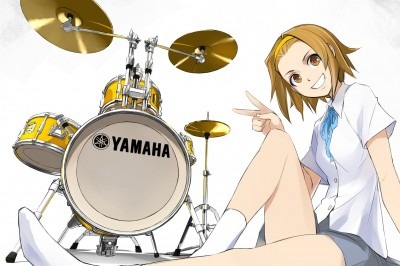
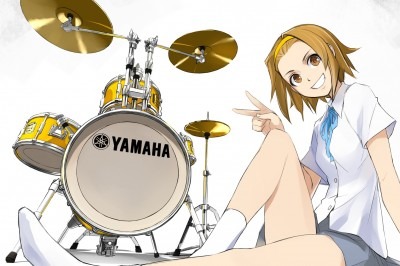
- K-ON! is not a narrative about girls aspiring to become musicians. Instead, it focuses on music culture and the unifying power of music.
- AKB0048 is not a story centered on music. Its core theme is entertainment.
- The iDOLM@STER is not precisely about idols. It chronicles a production agency and its inhabitants, some of whom happen to be idols.
- Kids on the Slope is not about jazz or classical music. It’s a period shoujo romance that employs music to imbue a situation with cultural context, bridging the gap between an uptown boy and a downtown boy.
- Hikaru no Go revolves around the game of Go and the tale of a ghost.
- Macross Frontier is a story about inter-species crossover where music can lead to significant conflict. (This is a jest, of course.)
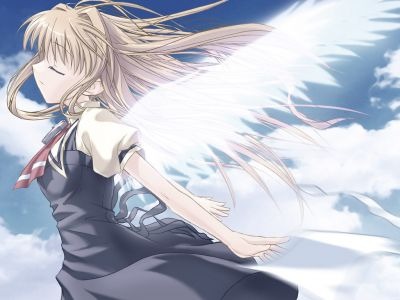
- Sola is about beings composed of paper.
- Beck is about the allure of rock music. It’s not a story about a rock band per se, but rather about an urban legend and the romanticization of it by a rock band.
- Nodame Cantabile is a story about music and a girl’s endeavor to play it.
- Piano no Mori explores the magical essence of music.
- Honey & Clover is about the significance of Spitz’s music.
Alright, the jest is concluded. To break things down a bit further, I believe anime franchises dealing with music can be categorized into three distinct types.
You might also be interested in : A Week Filled with Challenges and Setbacks
The first type, which I consider the most obvious, are what we typically refer to as music shows, such as Nodame Cantabile, K-ON!, and Beck. These series only truly make sense when the nature of music is taken into account. What they tend to capture are elements that are transient and, much like good ideas, often fleeting. These narratives aim to convey simple yet profound insights about the human experience in relation to their respective niches of music and culture, and therefore, music must be an integral theme. They usually delve into specifics like history, artistry, technical aspects, or other related details because it’s essential to their storytelling.
The second type of shows are those where music primarily functions as a device tangential to the main plot, like in Soranowoto and Macross. In these series, our understanding of music is generally as superficial as tuning into the right radio station. We recognize it, we hear it, and it serves its purpose. Often, these shows make valid points about the role of music in society or use music as an analogy for larger thematic concepts. Occasionally, these shows might explore details related to music, but these are usually tangential to the central narrative.
And then there are the third type of shows where music serves as a motif. Examples include Hachikuro, AKB0048, Natsuiro Kiseki, and Kids on the Slope. In these series, the story often utilizes music both as a plot device and as a means to observe the narrative’s development. I view this as similar to the first type, except that the stories themselves often have little to do with music in a direct, foregrounded manner. Sometimes, music is merely part of the show’s background. Therefore, one way to contrast these shows with the first group is to consider where the focus is on the music and its interaction with the main characters.
I do encounter challenges with the third type. While I enjoy them immensely, there are moments when it can feel somewhat disingenuous. It can be akin to how foreign languages are sometimes used in anime; at times, it’s brilliant, while other times, it’s almost unbearable. Fortunately, music is a universal language that transcends borders, so Japan generally doesn’t falter too badly in its depiction.
I often wonder where Eureka Seven (and its sequel, Ao) would fit into this classification.