
UlasanAnime.com – The journey through Fate/Zero has concluded, leaving a lingering sense of satisfaction. As the final credits rolled in episode 25, the feeling was simply, “that was nice.”
This review contains spoilers for Fate/Zero. I’ll be breaking down my thoughts into distinct sections marked by bold titles.
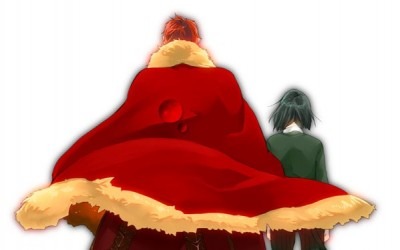
Episodes 24-25
The question of whether the destination can truly outweigh the journey is a central theme, especially when considering Fate/Zero as a prequel to a series that, at best, underwhelmed. For devoted fans of Fate/stay night, the issue isn’t merely about the anime adaptation of Fate/stay night itself, but rather the entire sprawling multimedia franchise originating from Nasu’s creative endeavors, from the early Fate/prototype concepts to the numerous video games featuring Nasuverse characters in death matches.
However, this is understandable, as one of Fate/Zero’s primary appeals is its ability to resonate with Fate/stay night enthusiasts. The thrill of seeing Avalon presented in a simple wooden box, for instance, is a moment that speaks directly to this audience. Fate/Zero omits the injuries Kiritsugu sustained during his initial confrontation with Kayneth, leaving viewers to only infer his extreme reaction to the cold during his final battle with Kotomine, describing it as “OMG IS THIS FREEZING.”
I must give credit where it’s due; the portrayal of certain moments was “square,” which is certainly preferable to “quadruple.”
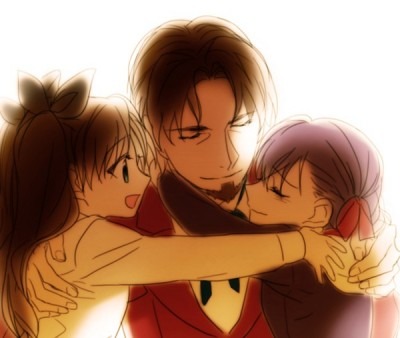
Instead of delving into the typical review elements like story, plot, music, production value, digital composition (arguably the production’s strongest suit), storyboards, or other conventional aspects, let’s consider a more unconventional angle: the possibility that ufotable’s animation team is heavily comprised of female artists. This might explain the striking Gilgamesh fanservice in the final episode. The inclusion of equal-opportunity fanservice is a commendable touch, especially since the novels tend to be more neutral in this regard, focusing their fanservice energy on plot and character details, as exemplified by the Rin x Sakura scene in episode 25. The anime’s adaptation of this, while a departure, was handled with taste for the most part, adding a unique characteristic that further distinguished Fate/Zero from its contemporaries.
Indeed, while some viewers might react to dialogue involving Shiro with apprehension, others find it exciting, and some simply desire more content.
You might also be interested in : National DVD Ripping Day, September 30
The motivations of the various characters offer fertile ground for discussion. Iri’s motivations, in particular, stand out; after all, she is an android capable of dreaming. This is a topic I may explore further later, or perhaps leave for others to dissect.
Remember the OP animation that spoils everything? The OP song is kind of like that, but for reviewers.
The true value-add, in my opinion, lies with Kalafina. While not the sole contributor, their presence is significant. Regardless of one’s stance on Yuki Kajiura’s musical style or the project born from Kara no Kyoukai, it’s evident that Japanese animation is a rare mass-market production engine capable of investing substantial resources in artists and musicians for its soundtracks. The trio’s vocal performances in the theme songs elevate the experience, creating a distinct entity. In this context, the lyrics of “To the Beginning” eloquently capture the sentiments of approximately 80% of the audience regarding Fate/Zero. As I quote [translation only; click the link for the full lyrics]:
[Emphasis, kanji, and romanji removed]
A miracle will surely occur just once more
In a gentle voice you imagine a warped futureIn order to create a world where no one will cry again
Without reaching anyone your screams and prayers
disappear into the tainted crimson sky
and you’re able to go on having abandoned all hope of comfortThe beautiful light of the moon
sinks to the beginning
Towards that distance
which is yet so far away
I hold out my hands
with closing eyes,
believing in your lamentationThe truth is you want someone to save you
Your lost heart bores a hole in the skyIf I could choose you
and search for happiness for the two of us alone
No matter what cold flames burned my body
Your smile would be close byThis writhing dream is my reason for living
I wish to return this world of fear
into the clearness of the waterSadness is the only thing one can never erase
As I cut through even the logic
of such a person’s heart
down to zero we goThe beautiful light of the moon
simply erodes quietly to the beginning
My locked away desire
is still far away
within the darkness
All the days in which
I lived together with you
are a gentle song
Now, imagine these lyrics from the perspective of a Type-Moon fan dissatisfied with the Fate/stay night anime. It becomes understandable why there was such hope for Fate/Zero to be exceptional. The lyricist likely penned these words with an understanding of the novel, particularly Kiritsugu’s internal struggles, rather than having seen the anime adaptation.
The “beautiful light of the moon” serves as a recognizable identifier for Type-Moon, akin to “Type-Moon Blue,” a concept that could even be marketed as a paint color for fans. Fate/Zero represents the collective prayers of Fate fans, hoping for an anime worthy of their dedication. The core essence of Type-Moon’s appeal is what enables Fate/Zero to exist, thus resonating with the line, “The beautiful light of the moon/simply erodes quietly to the beginning.”
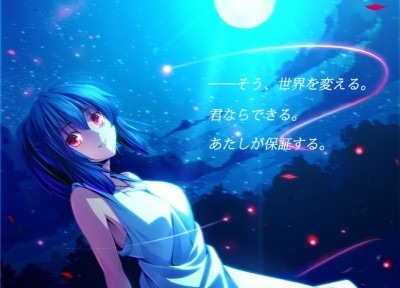
The prequel was intended to be a unifying force, a source of salvation, not a point of contention. Unfortunately, Fate/Zero is anything but gentle. Instead of uniting fans, it highlights how much more magnificent the franchise could have been. It represents a void, a false hope machine, and ultimately, a deluge of death.
Does it sell?
Fate/Zero Blu-ray box 1 experienced strong sales. It’s reasonable to assume similar, if not better, numbers for box 2. This question arises from the memory of ufotable’s decision to adapt Rakkyo into seven films rather than a TV series, an experiment that is unlikely to be repeated.
During my viewing of the anime, I had several complaints, primarily concerning the pacing. The initial half felt somewhat drawn out, leading to a compressed second half where more dramatic moments could have been effectively exploited. Kiritsugu’s true nature wasn’t fully revealed until Lancer’s death, which occurred nearly halfway through the second half.
I posit that if Fate/Zero had been presented as three films instead of 25 episodes, its quality might have been different, or at least, it leaves one pondering that possibility. Perhaps the theatrical route for Rakkyo was chosen because it wouldn’t translate well to television? It’s more likely that a TV series would have generated significantly more revenue, a potential they could have capitalized on.
Hopefully, we will see more quality content unearthed from Nasu’s creative backlog, as it is inevitable.





















