UlasanAnime.com – Instead of dedicating my Thanksgiving vacation to productive activities, I found myself re-watching Bakemonogatari, specifically the American release from Aniplex. I have now completed the series and am about one-third of the way through the commentary tracks.
Some notes:
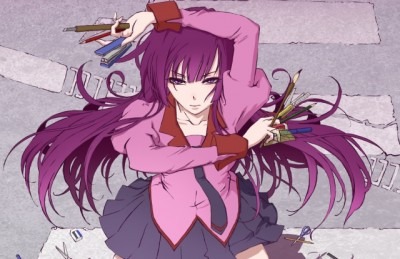
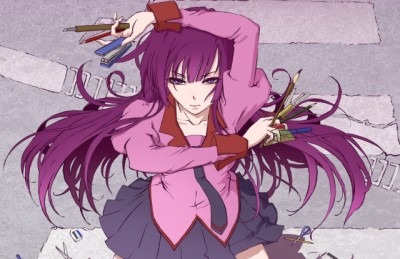
Senjyogahara. Even on my first viewing, I recognized her as a formidable character, deserving of the admiration she receives, as evidenced by the numerous fans who adore her. I believe this sentiment is well-placed and justified. Personally, I find her character to be somewhat unsettling, though I acknowledge this is a deliberate narrative device employed by creators like Nisio Isin. They skillfully deconstruct and reimagine ancient Japanese folklore and names. This is precisely what makes her so captivating. Hitagi is crafted to be tougher, better, faster, stronger, and ultimately more appealing, offering an efficient dose of moe appeal, so to speak. How each individual perceives her appeal or likability as a meta-construct is a separate matter. However, she serves as a benchmark for normalcy, or perhaps she simply acts out what normalcy might entail in her own unique and unconventional ways. This second viewing allowed me to truly delve into her character, moving beyond the dense dialogue that often serves as a flourish for a relatively straightforward plot. It’s akin to using a piano for percussion. Hitagi embodies that elusive yet expressive guitar solo that you miraculously nail on your first attempt on Expert difficulty in Rock Band 3. It’s an artifice that brings genuine joy. Her presence is impactful, and I only wish characters of her caliber were more common.
Commentary tracks. Speaking of embellishments, a series already rich in dialogue hardly needs additional verbal content running on its own separate tracks—often not even parallel to the main narrative—commenting on the existing flood of spoken words within the show. You’re familiar with the factoid about human vision and how our brains are wired to filter out non-essential visual cues to prevent overload? This sensory overload can occur with other senses as well. Consequently, I found it challenging to fully enjoy the commentary tracks, as I had to dedicate significant attention just to process everything unfolding. Perhaps a dub would have been beneficial in this instance. It was doubly difficult as I was simultaneously trying to listen to the Japanese dialogue, interpret it as I heard it, and read the subtitles. The content of the commentaries wasn’t inherently problematic, though they felt somewhat unfocused, and the humor was hit-or-miss, leaning more towards miss. It’s evident that some segments were pre-planned, and I highly doubt Nisio Isin was the author of these scripts. That said, I will likely persevere through them, as they possess a certain charm and intrigue.
There are boobies. I had hoped to obtain the creditless version of the Tsubasa Cat opening sequence, but it seems that wasn’t made available. I had completely forgotten about it until I watched the two episodes that featured it. Its inclusion was somewhat of a surprise, given that the series primarily revolves around extensive dialogue. Following the initial two episodes, the fanservice is notably subdued (even accounting for Nadeko’s performance). It’s as if late-night anime became even more “late-night” after the series transitioned to web distribution. The proper opening for Tsubasa Cat is also quite graphic, for that matter.
The packaging is somewhat underwhelming, but, as is typical with most Japanese releases, it showcases meticulous attention to detail. Its excellence is primarily apparent to those who look beyond the basic specifications. It’s likely not worth the $150 if your sole objective is ownership. However, for any fan of Bakemonogatari, it offers significant value. The accompanying booklet includes the expected spreads dedicated to story arcs and character profiles. The only other notable inclusion is a list of all the end cards, which arguably justifies its existence. In the realm of bare-bones import Blu-ray box sets, this one is indeed very bare-bones. Anything less would be excessively so, but I have no significant complaints. One further observation: the back cover features a rather appealing image of Koyomi Arararagi, which is unfortunately obscured by the glued-on spec sheet at the top of the box. While I appreciate the aesthetic of the spec sheet itself, I dislike that it covers what is potentially the most striking image on the box.
Overall, this is a series that rewards a re-watch. However, it did not offer a superior experience compared to my initial viewing.
You might also be interested in : Ghibli Retrospective 2012: Spirited Away and Ocean Waves
PS. Otakon should really consider inviting VOFAN or Poyoyon Rock to create some crossover artwork.