
UlasanAnime.com – The English language offers a fascinating duality with the word “last,” capable of signifying both “final” and “previous.” This linguistic flexibility, particularly evident through translation, often leans towards the “final” interpretation in common usage, as in “the last episode.” Consequently, a statement like “The last episode was good” can carry a subtle, pun-like implication. This piece, however, specifically delves into episode 11 of Genshiken Nidaime.
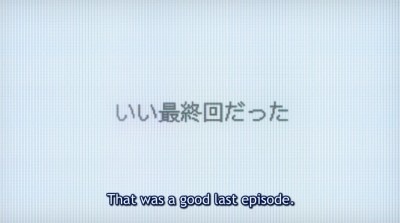
While the accompanying image might suggest a scenario with eleven items remaining, a depiction of a box with such a specific quantity is uncommon. Instead, the scene features five mouths engaged in eating. For the sake of balance, this will be considered an even exchange.

A bonus point is awarded to those who can recall the owners of these five mouths.
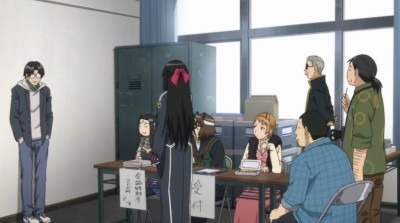
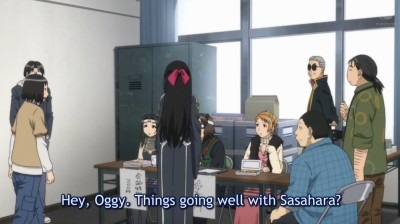
Oggy emerges as the new Iggy in this context. This episode recap is made possible by Crunchyroll. It would be beneficial if Crunchyroll credited their subbers more prominently, or at least in some discernible way. The origin of the subs remains unclear. Given that this is a NIS/NISA title distributed via CR, it is reasonable to assume that the R1 DVD/BD subs will be derived from the same source material, with only minor modifications.
Curiously, with Saki positioned at the forefront, the narrative addresses several key meta-points directly. Hato’s sexuality, for instance, is brought into the spotlight, perhaps reflecting a public interest in such matters.
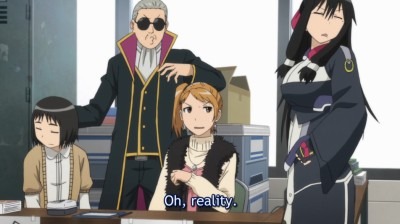
This situation can be likened to viewing one’s college anime club through rose-tinted glasses, a perspective that may not accurately represent societal realities, especially concerning non-normalized behaviors like sexuality. Saki’s commentary likely stems from her own experiences and maturity. While presented as a jest, it lands with enough distance to prevent the serious social issues from disrupting the enjoyment of this anime and jolting the otaku audience out of their escapism.
The consequences of such situations unfold as follows. Indeed, this scenario bears a striking resemblance to the dynamics seen in Servant x Service.
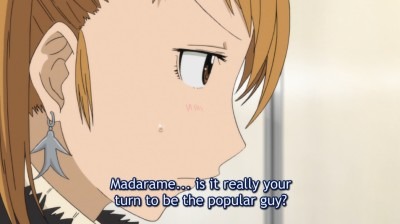
The last time I experienced similar enjoyment from an anime where the protagonist’s harem potential was so pronounced was with a series about a little sister who couldn’t be that cute. Madarame, in this regard, fits rather well into those shoes. This reflects the meta-narrative I was considering before watching episode 11. It essentially mirrors an internal dialogue:
- So, what kind of a harem would you assemble if it needed to possess a touch of realism?
- Perhaps if you were an otaku? Wouldn’t the individuals around you also be otaku? Wouldn’t they naturally get along better? After all, otaku couples tend to be more realistic.
- Does this imply that a significant portion of them are also fujoshi?
- So, your romantic interests would be engaging in slash fiction with you and any other male friends you might have?
- What if one of them were, in fact, a trap?
And thus, the scenario is established. Fortunately, while Madarame’s situation is depicted as a source of suffering, Genshiken swiftly shifts to a compelling relationship drama to resolve the meta-commentary, effectively concluding the central Saki x Mada plotline. The underlying theme and lesson are quite clear, rendering further elaboration unnecessary.
However, an overabundance of confidence often leads to the following outcome:
You might also be interested in : Dehumanizing the Eccentric Family
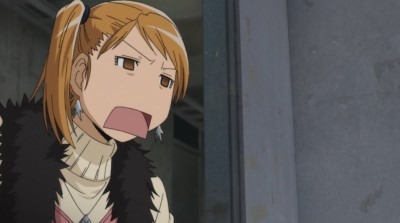
The sequence immediately preceding this scene was arguably the highlight of the episode. This includes not only the montage featuring Sasahara-imouto and Hato as they enacted their plan but also, more specifically, this moment:
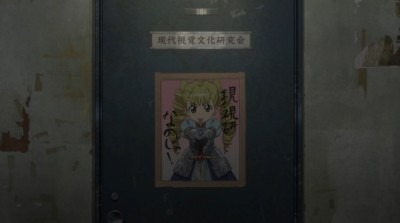
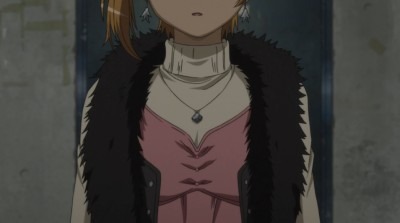
This particular scene is noteworthy for two reasons. The abrupt cut also serves as a perspective shift, evoking a sense of déjà vu reminiscent of Ocean Waves, especially considering the preceding CG zoom through the tunnel.
And that, in essence, concludes the episode. The new voice actress for Saki is Rina Satou (known for My Railgun Can’t Be a Middle Schooler), and while her performance may not warrant accolades, she complements Okitsu’s portrayal effectively. The sound design played a crucial role in distinguishing Saki and Madarame’s conversation from the rest of the episode by modulating the background white noise. While seemingly a simple technique, it contributed a distinct atmospheric effect.
Furthermore, while Sue continues to exhibit her characteristic plot-driving prowess, she displays a surprisingly sweet demeanor this week.
Finally, two more references are presented.

While this might be intended as a joke, the prospect of a yuri romantic comedy centered on these two characters is appealing. The feasibility of such a narrative is uncertain, but regardless, even if Kugayama referenced Aoi Hana, NISA’s approach remains consistent with the Genshiken ethos. This theme reappears below:
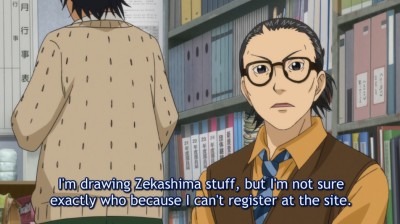
For those unfamiliar with “Zekashima,” it is essentially Kancolle, a highly popular web game where players cultivate anthropomorphic battleships. Its prevalence is such that it has been discussed on platforms like Kotaku. The humor here lies in the server’s inability to handle the immense demand, leading to login rationing, where only a limited number of users can connect simultaneously. Consequently, new prospective players often find themselves relegated to browsing artwork on sites like Pixiv.
For a brief moment, the discussion seemed to allude to Final Fantasy 14, though whether this was due to a perceived lack of otaku appeal or another reason remains unclear.
PS. I almost forgot to mention a significant issue I had with this episode. Specifically, I found it difficult to reconcile Keiko’s ability to deliver such sharp remarks when speaking to Hato. Her lines felt more aligned with what Saki might say, assuming Saki were the more eloquent member of the group. This suggests a degree of authorial bleed-through. Similarly, the apparent bonding moment between Keiko and Hato raises a question: how exactly did Keiko achieve this?





















