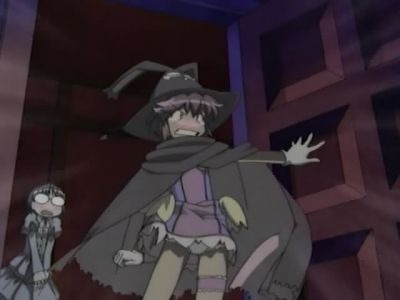
UlasanAnime.com – The concept of “dehumanizing” Uchouten Kazoku might be more accurately termed “tanuki-fying” the characters.
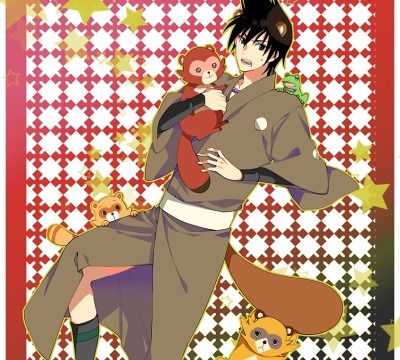
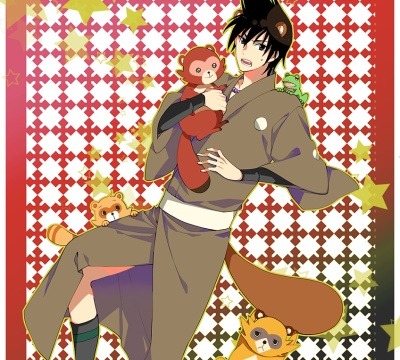
Consider this thought experiment: rewatch Uchouten Kazoku. Each time you encounter a tanuki in human form, try to visualize them as they truly are – in their tanuki form.
What impact does this shift in perspective have? When Yasaburo gazes longingly at Benten, perhaps during the ending sequence or while they walk under the moonlight, the underlying meaning becomes strikingly clear.
Similarly, when Yashiro looks at Benten behind his brother’s back and takes her doughnut, what does this gesture signify?
You might also be interested in : Uchoten Kazoku: A Taste of the Unexpected
Could this be the reason Soichiro struggles to maintain his physical shape? Or, from a thematic standpoint, does it offer an explanation for his condition?
The tanuki family adopts human forms to navigate society, yet they are fundamentally unable to betray their true nature. They remain tanuki, fools, or whatever essence defines them. When their mother lived with her rescuer, the way she looked at him conveyed a universal message that transcended their respective species.
This sentiment is akin to Yasaburo’s filial devotion to Akadama-sensei, even though Akadama-sensei is not one of them. However, this is where the discussion ventures into uncertain territory, as the exact relationship between tengu and tanuki remains unclear.
It also mirrors the necessity for 8Ken to eat in order to love and to live. And you thought I was entirely joking, didn’t you?
A parallel concern arises: if we do not remain mindful of the “blood” connection and the true nature of a tanuki, a significant layer of the story might go unnoticed. This is particularly true for Western audiences, where it’s easy to overlook the fact that these human-looking beings do not possess human minds and hearts, despite exhibiting admirable qualities.
In essence, think of Natsume’s Book of Friends. A tengu is a youkai, but the specific qualifications for a transforming tanuki are less defined. It might be best described as a man-animal-supernatural sandwich.
Crucially, we cannot apply the same standards to Yasaburo and his family as we would to other human beings in similar contexts. Conversely, this distinction is precisely how we can discern when the story intends to convey a specific point.
For instance, Yasaburo demonstrates a profound affection for humans. Consider this: he is the only visibly prominent tanuki who engages extensively with humans within the narrative. The only other character who comes close is their mother, whose backstory elucidates her actions.
What does this reveal about Yasaburo’s character? And what does it suggest about Benten?
PS. This line of reasoning aligns with the concept of “blood of the fool,” as I draw overarching themes across various shows I’ve recently watched. It’s a testament to the human cognitive ability for pattern recognition and formation.