UlasanAnime.com – The concept of “P Culture” is a complex and evolving phenomenon, particularly within the context of Japanese idol and anime fandoms. While its roots are often traced back to the THE IDOLM@STER (IM@S) franchise, understanding its scope requires a closer look at the multifaceted nature of modern otaku culture.
The term “otaku” itself has become increasingly fragmented in post-boom Japan. Instead of a singular identity, it now encompasses a vast array of sub-niches. These can range from specific anime genres like mecha, to intense interests in “waifus” and moe aesthetics, or the unique fandom surrounding 2.5D idol culture (combining anime, voice actors, and real-life idols). Other examples include dedicated fans of military hardware, trains, Boys’ Love (BL), or Yuri genres. These are not mutually exclusive but rather elements that fans can subscribe to, much like curating an RSS feed of various interest streams.
This fragmentation is vividly illustrated by the evolution of the otaku concept, which the author likens to the now-defunct Google Reader Shared Items – a collection of diverse content aggregated by individual preference. In this vein, P culture can be defined as a specific bundle of these “feeds” that overlap and coalesce. What’s novel about P culture is this convergence, where fans engaging with this particular set of loosely defined ideas find a shared sense of identity and unity, akin to other subcultural affiliations like gothloli, kogals, or even broader categories like “anime fans” and cosplayers in the US.
More specifically, P culture encompasses a confluence of:
- Idol/entertainer culture, with a particular emphasis on anison (anime song) culture and wota (idol fan) culture.
- General 2D otaku culture.
Interestingly, being a “Producer” (P) in the IM@S context, which traditionally meant being a fan of the games, doesn’t automatically equate to being part of P culture. One can be a fan of the IM@S games or anime without necessarily engaging with the broader cultural phenomena associated with P culture. This distinction is highlighted by the shift from older gaming styles on platforms like the Nintendo DS or Xbox 360 to the mobile-centric grinding found in newer iterations like Million Stars. A significant gulf exists in how IM@S fandom manifests and whether all fans find common ground for interaction.
This is further differentiated from the role of a “P” in the Vocaloid scene, despite the similar nomenclature. The demands and experiences of a Nicom@sP (a producer on Niconico Douga for Vocaloid content) can be vastly different from someone who simply enjoys the anime. This complexity might explain the strong emphasis on “danketsu” (unity or solidarity) within the IM@S fandom.
You might also be interested in : Sakura-Con 2014: A Summary
The diverse nature of this fandom is perhaps best understood by observing the explosion of the 2.5D fan category, particularly in the post-AKB48 era, a prominent idol group that significantly shaped the landscape of idol culture.
To gain a deeper understanding of P culture, a deductive approach involving profiling individuals and their motivations for identifying as Ps could be beneficial. This ethnographic perspective, ideally supported by Japanese-language data, would offer richer insights. The author suggests that experiencing and appreciating P culture is most effective on a personal level. For those who live a life intertwined with otaku sensibilities, P culture is simply another “vertical” or dimension of their engagement. This involves modern-day rituals and activities that facilitate the process, alongside spontaneous actions driven by personal inclination, such as buying flowers.
The author poses rhetorical questions that probe the underlying motivations behind these fan activities. Why do fans buy flowers, beyond the practical aspect of enhancing the concert venue’s ambiance? Why do they create business cards, beyond their utility for networking and follow-up online? These actions, where expression and identity are deeply intertwined, beg the question: what does P culture reveal about the individuals who participate in it?
The question “Is The World All One?” reflects a philosophical inquiry into the interconnectedness of these cultural expressions and identities.
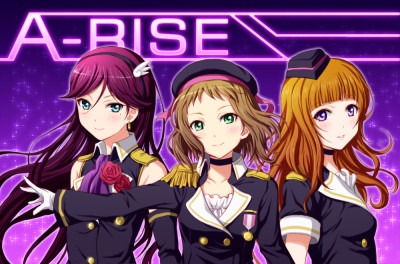
Reflecting on the format of anime convention panels, the author finds it less than ideal for delving into the intricate details and complex questions surrounding P culture. While practical for its accessibility and resemblance to informal fan gatherings (offkai), a panel format might not adequately serve the diverse audience of a convention. Moreover, P culture itself is not a clearly defined entity, and even within the IM@S fandom, the group remains loosely defined.
In the author’s view, and acknowledging that numerous alternative approaches exist, the simplest method to present P culture is through a pure fan panel. This approach accepts P culture as a specific subcultural vertical, comparable to other niche panels like “Ask Hetalia” or “Anime Parliament.” This allows for easy integration into the broader convention culture, which itself is a distinct subcultural vertical.
The author expresses enthusiasm for organizing a panel at Otakon that would explore the intersection of IM@S, Love Live! (LL), Wake Up, Girls! (WUG), and Hatsune Miku, suggesting a potential draw for diverse fan bases.
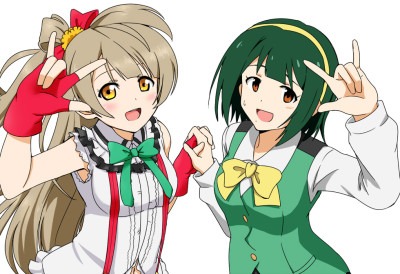
More seriously, such a panel would focus on P culture, providing a platform for fans to interact and leverage the “offkai” nature of conventions. It would also offer an opportunity for the author to connect with Live Lovers who are also Love Livers, thereby gaining insights into that specific facet of the fandom. Beyond a few notable pairings of voice actors and their characters (like Maki/Pile, Umi/Mimorin, Eri/Nanjo, and Honoka/Emitsun), the author admits limited knowledge of LL seiyuu. This contrasts with their familiarity with the Wake Up, Girls! cast, knowing them by name and even by face.
With a deadline approaching at the end of April for the initial submission to Otakon, the author anticipates the usual challenges of scheduling at the convention, known for its complex conflicts. However, they maintain the option to withdraw if necessary, acknowledging the inherent difficulties in panel organization.