UlasanAnime.com – The concept of theme restaurants, which offer a unique dining experience centered around a specific theme, bears a striking resemblance to the appeal of well-executed mobile games, particularly those with a strong thematic focus.

The author draws a parallel between visiting a place like Swallowtail, a renowned butler cafe in Ikebukuro, and playing a game like IM@S Million Live. Both, in their own way, provide an immersive and engaging experience driven by a carefully crafted theme.
While theme restaurants might be perceived as gimmicky, they are essentially regular eateries that emphasize a particular concept. Andrew Zimmern’s exploration of a prison-themed restaurant and the author’s own experience at an IDOLM@STER themed cafe highlight this. The distinction lies in the focus and the type of cuisine offered, but the underlying principle of thematic immersion remains.

Social and mobile games, when viewed through this lens, can be seen as games where the gameplay itself is a secondary offering, with the theme taking center stage. The success of these games hinges on how effectively they execute their chosen theme, a factor that significantly influences player engagement for many.
For a theme restaurant patron, like one dining in a prison-themed establishment, the expectation is an environment that evokes the theme while still being comfortable. This could translate to thematically appropriate food, a prison-like atmosphere, and other elements that reinforce the concept.
The term “secondary offering” here simply means that the gameplay isn’t the sole focus. Instead, it’s as crucial as the theme in delivering an enjoyable user experience, which is the ultimate purpose of these games and restaurants. The author emphasizes that this perspective doesn’t diminish the value of these experiences, just as a delicious meal served by cosplayers wouldn’t be devalued.
When evaluating such experiences, whether dining out or playing a game, certain criteria come into play. For restaurants, these include service quality, food taste, value for money, atmosphere, and wait times. Similarly, video games are assessed based on fun factor, complexity, learning curve, narrative integration, code polish, and overall gameplay.
You might also be interested in : Seiyuu Nicknames, Spring 2015
It’s entirely possible to rate a game based on metrics like the number of characters available, much like one might evaluate a buffet by the variety of dishes offered. While this might seem odd from a casual perspective, it reflects the specific ways in which these themed experiences are consumed and appreciated.
The author questions the validity of such ratings, comparing it to judging a buffet by its dish count. This analogy suggests that the way video game reviews are sometimes framed from a “casual” viewpoint can appear peculiar.
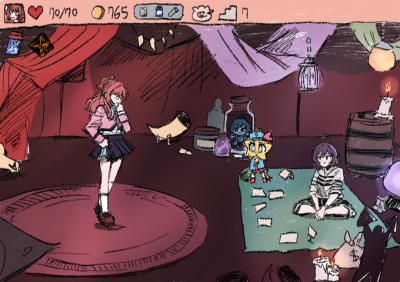
However, the details are crucial. For instance, in a game like IM@S Million Live, the precise color of a character’s card or the selection of images used in an in-game collage can be significant to fans. The coordination between CD releases and in-game events, or in-game cards referencing fan-made jokes, are other examples of these finer details.
These elements are standard for character-collecting social games. What sets a game like Million Live apart is the extra effort it puts into these details, impressing players more than other games. This principle extends across the genre, especially for mixed-media franchises that offer ample opportunities for collaboration and thematic integration.
For those who are easily pleased or open to these experiences, the value lies in the execution, the exquisiteness, and the finer details. Whether one is engaged in rhythm-based gameplay or strategizing in-game purchases, the ultimate satisfaction comes from what the experience provides. For players who can invest time and money into acquiring items that bring them happiness, the question of worthwhileness arises.
This type of engagement can be closer to a lifestyle and entertainment choice akin to gambling, rather than simply buying a book to read at one’s leisure. The author believes there’s a place for both options, catering to diverse preferences. Yet, observing establishments like those in Atlantic City or Las Vegas, which can be quite ostentatious, prompts a reflection. When a seemingly simpler mobile game can deliver a similar experience on a budget device, it might be time to re-evaluate the perception of these entertainment forms.
This also sheds light on the resistance from some traditional “gamers” towards mobile gaming. The author doesn’t see it as a binary choice but rather as a matter of comfort with different forms of entertainment coexisting.
The scarcity of theme restaurants like maid cafes in the US is attributed to similar reasons, which the author views as a pity.