
UlasanAnime.com – In the year 2015, the mobile game industry was a battlefield, with idol-themed games vying for attention. This article delves into one such game, IDOLM@STER Million Live, offering a comprehensive guide for players.
Mobile games can be broadly categorized into two types. The first, often referred to as social games, primarily focuses on content delivery. The second type integrates gameplay mechanics with accompanying content. This can be visualized as a spectrum, similar to casino games, ranging from pure random number generation (RNG) to more engaging mini-games like solitaire or blackjack, where outcomes are influenced by in-game elements.
The “content” in question refers to narrative material and character depictions, particularly those of beloved idols. For those interested in the lore and character details, resources like the Project IM@S wiki and the namassuka site are readily available.
This post will focus on the long-term, mid-term, and short-term goals for players of IDOLM@STER Million Live. The author adheres to the game’s Terms of Service, avoiding practices like botting, multi-accounting, or real-money trading. Account creation is assumed knowledge for players. A key caveat is that trading is disabled without a confirmed Japanese phone number, which may present certain challenges.
Common long-term goals in Million Live include building a strong deck (or multiple decks) for Player vs. Player (PVP) and Player vs. Environment (PVE) content, or collecting cards to complete personal idol collections. This guide is tailored for players pursuing these objectives. Casual players seeking enjoyment will find alternative playstyles.
Achieving these goals necessitates acquiring high-end and rare cards. Fortunately, other cards are more accessible. Top-tier cards can be obtained through the in-game bazaar, paid gacha/gasha pulls, and events. Success in events often requires a substantial quantity of consumables, detailed below. Some events may necessitate real-money spending for participation or gasha pulls. A strong deck can also be advantageous in certain events. Notably, some untradeable cards, such as those from the ML 1st Live and ML 2nd Live events, can now be acquired using star medals.
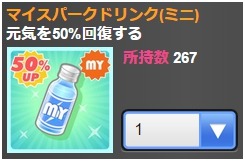
Million Live features the following consumables:
- My drinks and My candies: These are non-tradeable items used to recover energy and BP. They come in 50% or 100% potency for drinks and 1 BP or 3 BP for candies. They are essential for stockpiling. Drinks restore energy (50% or 100%), while candies restore BP.
- (Tradeable) Drinks and Candies: Similar to their non-tradeable counterparts, these are available for trading. While 50% drinks and 1 BP candies exist, they are less common in trading and distribution. The prevalent items in trading are 100% drinks and candies, with 100% drinks serving as the primary currency in ML.
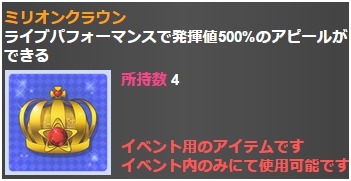
- Event items: These vary depending on the event. Examples include chocolates for Chocolate events, Million Crowns for “end of season” events (replacing last year’s Platinum Heart), and BP Holders for IM@S Cups. Events also sometimes grant drinks and candies that function like the “My” versions, and event-specific 1BP yellow candies that expire after the event.
- Other items: While gasha tickets, bazaar tickets, kuji tickets, card holders, and audio commus exist, rarer items like ML 2nd penlights are less critical.
- Money: Similar to other mobage, money is used for lessons, a process of consuming cards and lesson points to rank up cards. Cards can be leveled up and skilled up. Skilling up is generally considered less important in ML unless the objective is to create the absolute strongest deck.
- Gasha Points: These are used for normal gasha pulls. Players traditionally receive one free normal gasha pull daily. ML is a quintessential mobage, akin to Cinderella Girls but with a more modern interface.
As players progress, gasha points and in-game money become less significant. The auto-sell feature for N cards is a testament to this. The primary focus shifts to accumulating “my drinks and my candies,” along with their tradeable counterparts.
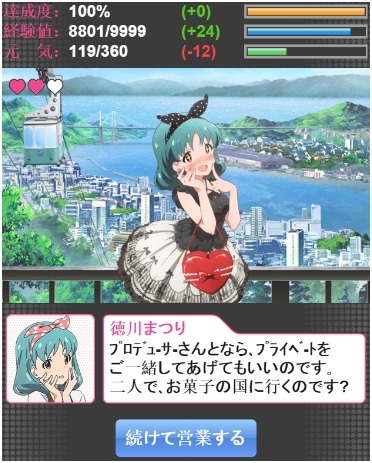
Events are the driving force behind Million Live. Before delving into events, it’s important to understand the basic gameplay loop, known as Normal Eigyo. This mode consumes energy, providing double experience. As players advance through stages, they can acquire N cards or encounter festivals. Battles consume BP (up to 3), with each additional BP increasing the deck’s power. Normal Eigyo offers valuable drops throughout the story and, crucially, festival encounters that yield fest kuji tickets. These tickets are the primary means of acquiring blue candies (1BP My candy). For basic stats, maximum stamina is 360, maximum XP is 9999, and stamina regenerates at 1 per minute, while BP regenerates at 1 per 30 minutes.
Events in Million Live manifest in several forms:
- “Kizuna” type events: These BP-focused events involve playing through special event eigyo to obtain event items for summoning event festivals. There are two types of festivals, with the more challenging one being the focus for event points and ranking. Kizuna tokens, primarily from event kuji, boost festivals by 1% each. A player’s PVE deck power is crucial for efficient ranking. Low-tier event eigyo fests can also yield one event candy per encounter.
- “Chocolate” type events: These stamina-focused events do not rely on decks or BP. Progress is made by expending stamina, with 100% drinks enabling “2x” time that requires careful management. Recent iterations of these events have introduced score multipliers for special encounters based on “unlocked” gold star idols. Ranking typically involves purchasing chocolates.
- “Coaching” event: Similar to Chocolate events, this type bypasses decks and BP. Players expend stamina to level up 3 to 5 idols, earning cards at certain levels and event items equivalent to 50% my drinks or 1BP. Special event items, like Chocolates, provide score boosts necessary for ranking.
- IDOLM@STER’S CUP: This is a PVP event where lounges (guilds) compete in leagues using a Swiss system. Top-ranked lounges receive rewards, as do top individual players. The top 5 players in local leagues also earn event cards. PVP battles allow the use of up to 5 BP per match. During the Cup, players cannot join lounges.
- Other events: Various other event formats have appeared. During the LTP era, special festival-style events based on BP, deck strength, and applicable idol subunits were common. Similar events have occurred this year, though their mechanics are still being deciphered. ML 1st and ML 2nd featured individual ranking events for specific idol kizuna-fests.
TL;DR1: Stamina-only events are often considered “paid events,” making them easier to rank in but also more costly. IM@S CUP can be easier to rank in than Kizuna events due to the focus on lounge battles and the variability of opponent strength. Stockpiling candy/BP is important as more will be used, and drinks are relatively inexpensive to buy or acquired by selling cards. Ideally, players should aim to have ample amounts of both.
Participation in events is encouraged, but not necessarily for competitive ranking. Players should utilize all event items (except Million Crowns and BP Holders, which carry over). Event kuji rewards with lasting value should be prioritized, including lesson points. Cards can be sold for tradeable drinks and candy if the player’s account is verified. Competing for rankings in events is advisable only after establishing a strong deck and accumulating at least 2000 blue candies or their equivalent.
Paid gasha in ML typically comes in three forms: step-up gasha with increasing costs and rewards (including a guaranteed SR ticket), non-tiered versions, and a third type that includes a 2-step kuji in addition to the pull. Around 40,000 Gree currency is generally needed for a shot at a guaranteed SR, though this can vary. Paid gasha often includes bonuses like event consumables or tradeable candy/drinks, and monthly tickets can be exchanged for items. This is often the most “economical” way to rank in events requiring purchases.
Events are also beneficial for non-ranking players. Completing an event typically yields the event SR card, which is valuable for new players. It provides HN lesson points, essential even in the late game. Additionally, players receive free chocolates or candies (which translate to more HN points, Kotori cards, star medals, and event cards) and other useful rewards.
You might also be interested in : Why Otakon 2015 Declined
TL;DR1.5: Event candies can be converted to blue candies via normal eigyo fests. This is a very important mechanic.
This covers the core mechanics of ML as a social grinding game. The next section will focus on deck building.
Decks in ML consist of 9 cards. Deck capacity is influenced by player level and progress in Normal Eigyo. Each card has AP, used in festivals (PVE), and DP, used in auditions (PVP and PVP events). Cards also possess abilities that enhance AP, DP, or both, with effects ranging from small to super extra large. Some abilities benefit all cards in the deck, while others affect specific card types (Vo/Da/Vi) or only the card itself. While abilities can be beneficial, focusing on AP/DP values is generally more important for deck optimization.
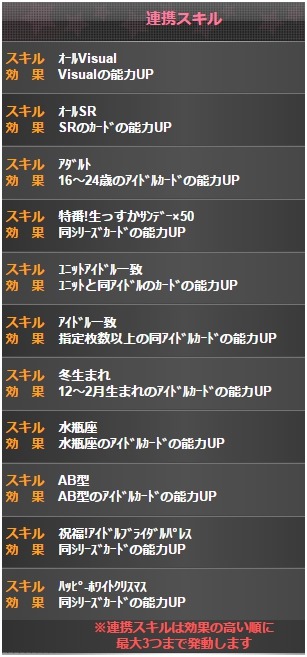
Bonus boosts are applied if criteria are met, such as same season birthdays, blood type, age group, or event origin. The most impactful boosts come from cards of the same Vo/Da/Vi type and being all SR cards.
Building a deck with nine copies of the same strong card can be an effective strategy, though potentially expensive. It might be less costly than assembling a deck with 2-3 truly top-tier cards.
Joining a lounge is highly recommended, as it provides a 3% AP boost and a significant DP increase. Friending trusted players is also beneficial, as it enables card trading after a two-week waiting period, which can be the easiest way to complete collections for verified users.
TL;DR2: For PVE, prioritize decks with the strongest AP. For PVP, focus on AP+DP. Aim for SR-only decks, then optimize based on Vo/Da/Vi types, and finally min-max based on age, zodiac, blood type, birthdays, event type, and slot-1 abilities.
Bazaar: The bazaar is the player-to-player trading hub for cards, 3 BP candies, and 100% drinks. Common trades include candy for drinks, HR for Bird/drinks, and HR Bird (Kotori). Generally, one 3BP candy is worth approximately 1.7 drinks, with fluctuations based on market conditions (e.g., ongoing BP events). HR cards typically trade for 1 drink, except for new paid gasha HRs or rare drops. The HR Kotori was initially highly valued but has since decreased in price due to increased availability.
Standard market principles apply: buy low, sell high, and check frequently. Trading volume is limited by bazaar tickets, especially for trades involving SR cards, which require three tickets. Profitable trading requires significant effort.
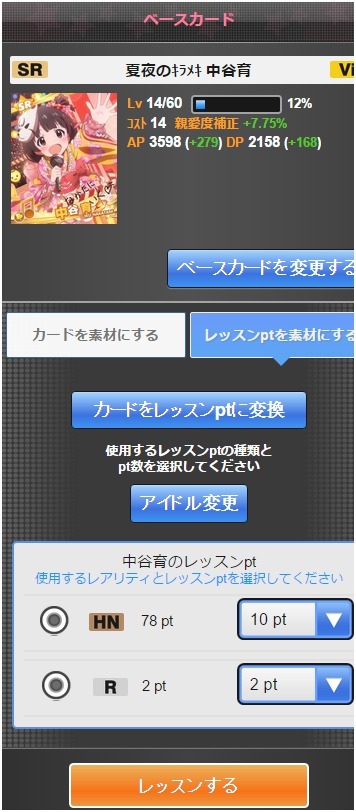
Regarding Kotori, they serve as “bonus” level-up fodder for lessons. Rare green Kotoris boost leveling, while rare yellow Kotoris enhance skills. Skilling up in ML requires cards of the same idol, making yellow Kotoris highly sought after. HR Kotori can substitute for yellow Kotoris, significantly increasing skill levels. Other lesson points can be gained by converting N, HN, and R cards into lesson points for their respective characters, preventing inventory clutter.
Moving on to other aspects of ML: the theater and caravan.
TL;DR3: Set the theater timer to 3 hours and activate it frequently. Rotate songs when they reach the 2-note mark, and slot in your highest-rated cards that match the song’s idol type. Prioritize acquiring necessary items from trades. Remember to rotate in idols with special unlocks due to events or those not yet progressed.
Caravan is a complex yet straightforward system. The objective is to field high-powered cards, select cards with synergistic units or types for the middle and right tabs, and use cards with the highest value for the left tab. The focus should be on unlocking all available tasks, with 1-hour or 6-hour tasks being particularly beneficial. Weekly counters can be exploited by timing task completion precisely to gain a significant fan advantage. While rewards are largely honorary, the top prizes for tasks are well worth the investment.
The theater and caravan, introduced sequentially, have evolved. In the “season 2″ or LTH era, the theater offered superficial unlocks and allowed players with multiple high-power teams to farm blue candies. In LTD/”season 3,” the caravan replaced the theater as the primary candy/drink farm (limited to 2 teams) and integrated audio dramas. The 8 idols featured each caravan season receive special event rewards, making them particularly relevant for fans of those idols. The older theater function now serves as a timer-based system for trading items for birds and low-end gasha tickets.
While other tips and tricks exist for ML, this comprehensive guide aims to provide a thorough overview without being overly exhaustive. Further questions can be directed to the comments section.





















